A badminton racket is a light, fast tool, and choosing the wrong one shows up quickly on court. The shuttle moves faster than any ball in racket sport, rallies are short and sharp, and the racket has to change direction constantly, so a frame that feels fine in the shop can feel sluggish after ten minutes of play. The best badminton rackets of 2026 are not the most expensive frames on the wall. They are the ones that match how you actually play: quick enough for defence, solid enough for a clear from the back line, and comfortable enough that your arm still feels fresh at the end of a long evening session.
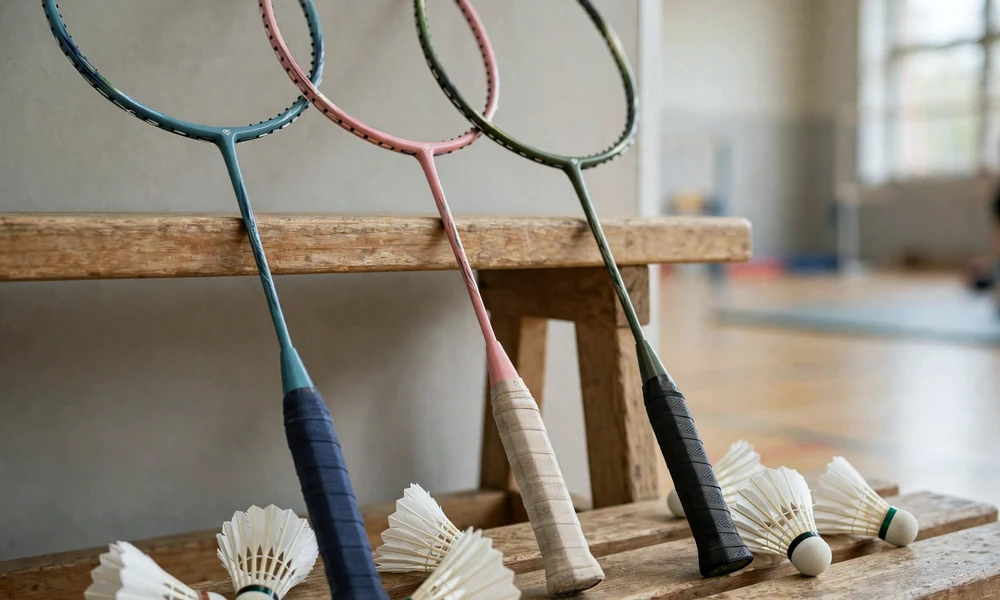
How to Choose a Badminton Racket
Weight is the first thing to get right. Most adult rackets fall between about 80 and 90 grams before strings and grip, usually marked 4U for the lighter end and 3U for the heavier end. Lighter rackets are easier to swing quickly, which helps at the net and in fast defensive exchanges. Heavier rackets carry more momentum into the shuttle, which helps with clears and smashes from the back of the court. Beginners and doubles players who defend a lot usually do better with a lighter frame, while strong singles players who like to attack often prefer the extra weight. If your arm aches after a session, your racket is probably too heavy for you, not too light.
Balance is the second decision, and it changes the feel more than the weight on its own. A head-heavy racket puts more mass toward the top of the frame, which adds power to smashes and clears but makes the racket slower to move. A head-light racket feels quick and easy to manoeuvre, which suits fast doubles play and sharp net shots, but it gives less help on power. An even-balance racket sits in the middle and suits players who do a bit of everything. If you are not sure which you need, an even-balance frame is the safest starting point, and you can move toward head-heavy or head-light once you know your game.
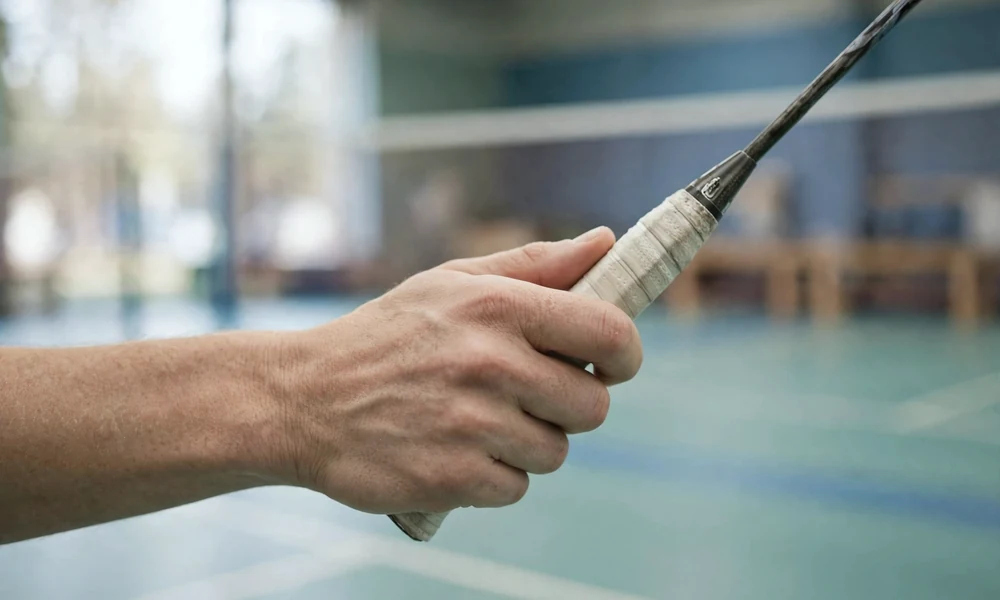
Grip size and string tension finish the setup. A grip that is too thick stops the wrist from turning freely, and a grip that is too thin makes the racket twist in the hand on off-centre hits. Most players use a standard grip with one overgrip on top, and the right size lets you hold the racket loosely without it slipping. String tension is measured in pounds, and most club players string between 20 and 24 pounds. Lower tension gives a bigger sweet spot and more power with less effort, while higher tension gives more control but punishes mishits. If you are moving from one racket to another, keep your usual tension so you can judge the frame itself, not the strings. Players who also enjoy tennis will find the same ideas about weight and balance in our guide to the best tennis rackets of 2026, even though a tennis frame is far heavier and slower to swing.
The Best Badminton Rackets of 2026
1. Best Overall: Yonex Astrox 100 ZZ
The Astrox 100 ZZ is the standout all-round attacking racket of 2026, and it is the frame most advanced players reach for when they want one racket for everything. It is head-heavy and stiff, built for players with a fast, full swing who want maximum power on smashes without giving up too much speed at the net. The frame feels solid and stable on contact, the sweet spot is generous for a racket this stiff, and clears from the back line take noticeably less effort than with a lighter frame. It is not a beginner racket: a slower swing will not load the stiff shaft properly, and the head-heavy balance can tire the arm in long doubles sessions. For a strong singles or attacking doubles player, though, it is the best single frame on this list.
2. Best for Speed: Yonex Nanoflare 1000 Z
The Nanoflare 1000 Z is built for speed, and it is the quickest racket most players will ever hold. The head-light balance and slim frame cut through the air fast, which makes it superb for defensive lifts, fast drives and sharp net kills. In doubles, where the shuttle comes back at you before you have finished the last shot, that speed is worth more than raw power. The trade-off is that smashes need a good technique to carry real weight, because the racket does not add much momentum of its own. Players who defend, counter-attack and win rallies at the net will love it, while players who want to end points with one big smash should look at a head-heavy option instead.
3. Best All-Rounder: Yonex Arcsaber 11 Pro
The Arcsaber 11 Pro is the even-balance all-rounder that suits the widest range of players on this list. It does not specialise in one area, and that is exactly its strength: clears are easy, smashes have enough weight, net play is quick, and defence does not feel slow. The medium-stiff shaft is forgiving enough for an improving club player but responsive enough for an advanced one, and the frame holds its tension well over time. Players who play both singles and doubles, or who simply want one reliable racket for every session, will find this the easiest recommendation of all. It rarely feels like the best racket for any single shot, but it never feels like the wrong racket either.
4. Best for Beginners: Li-Ning Windstorm 72
The Windstorm 72 is the best first serious racket for a player moving on from a cheap starter set. It is light, flexible and forgiving, which means the shaft helps generate power even with a short swing, and the sweet spot is large enough that mishits still travel. The frame is durable for its weight, the price is sensible, and the racket does not punish a developing technique the way a stiff, head-heavy frame would. It will not keep up with a top-end racket once a player reaches advanced club level, but that is the point: it is a racket to learn with, enjoy with, and replace with confidence once the game has grown beyond it.
5. Best for Doubles: Victor DriveX 9X
The DriveX 9X is a doubles specialist, built around the flat, fast exchanges that decide most doubles matches. It is quick to swing, stable on drives and blocks, and easy to hold up at the net for interceptions. The balance is slightly head-light, which keeps the racket moving in rapid rallies, and the shaft is stiff enough to keep flat shots accurate under pressure. It is less suited to singles, where the longer rallies and deeper clears ask for more help from the frame, but in doubles it is one of the most dependable rackets of the year. Pairs who play a fast, attacking doubles game will feel the difference immediately.
6. Best Value: Yonex Astrox 77 Pro
The Astrox 77 Pro is the value pick, and it is the racket to buy when you want most of the performance of a top-end frame without the top-end price. It is head-heavy enough to give real help on smashes and clears, but the medium flex keeps it friendly for a wider range of swings than the stiffest rackets on this list. It suits improving club players who are ready for their first performance frame, and it is durable enough to survive regular play. It does not have the razor-sharp feel of the very best rackets here, and advanced players will notice the difference on the finest touch shots, but for the money it is hard to beat.
Rackets and Buying Mistakes to Avoid
The most common mistake is buying a racket that is too stiff or too head-heavy for your swing. A professional frame in the hands of a casual player does not make them play like a professional; it makes the game harder, because the racket needs a fast swing to work properly and punishes anything less. The second mistake is buying on looks or on a famous player’s name. Sponsored players use frames customised to their game, and the shop version of the same model may play quite differently. The third mistake is ignoring the strings. A great frame with old, dead strings plays worse than a mid-range frame with fresh strings at the right tension, so budget for a restring and replace the grip when it gets smooth. If you want to see how the same good-versus-bad thinking applies to another racket sport, our best versus worst tennis rackets guide shows which tennis frames are worth buying and which to leave on the shelf.
How to Look After Your Racket
A badminton racket lasts far longer with a little care. Keep it in a cover or a racket bag, away from heat, so the frame does not warp and the strings do not lose tension faster than they should. Do not leave it in a hot car or against a radiator. Replace the overgrip when it feels smooth or slippery, because a worn grip makes you squeeze harder and tires the forearm. Restring when the strings feel dead or start to fray, even if none have broken yet; most regular players restring every few months. Check the frame for small cracks after a clash with a partner’s racket, because a cracked frame can snap suddenly on the next hard hit. And when you are not on court, a rest day is still part of training: many players enjoy a quieter pastime between sessions, and our guide to the best puzzles of 2026 is a good place to start if you want something absorbing that gives your shoulder a break.
Frequently Asked Questions
How much should a good badminton racket cost? A solid club racket costs far less than the top professional frames, and the difference in play is smaller than the difference in price suggests. A beginner can start well with a light, flexible racket at a modest price, while an advanced player who plays several times a week will get real value from a premium frame. Spend the money on the right weight and balance for your game first, and keep some budget for strings and grips.
Our Verdict
The best badminton racket of 2026 is the one that fits your game, not the one with the biggest name on the frame. For most advanced players, the Astrox 100 ZZ is the top choice, with the Arcsaber 11 Pro the safest all-round pick for anyone who plays a bit of everything. Beginners should start with the forgiving Windstorm 72, doubles players should look at the Nanoflare 1000 Z or the DriveX 9X, and anyone on a budget will be well served by the Astrox 77 Pro. Try before you buy when you can, keep your strings fresh, and choose the racket that still feels good in the last game of the evening, not just the first five minutes in the shop.