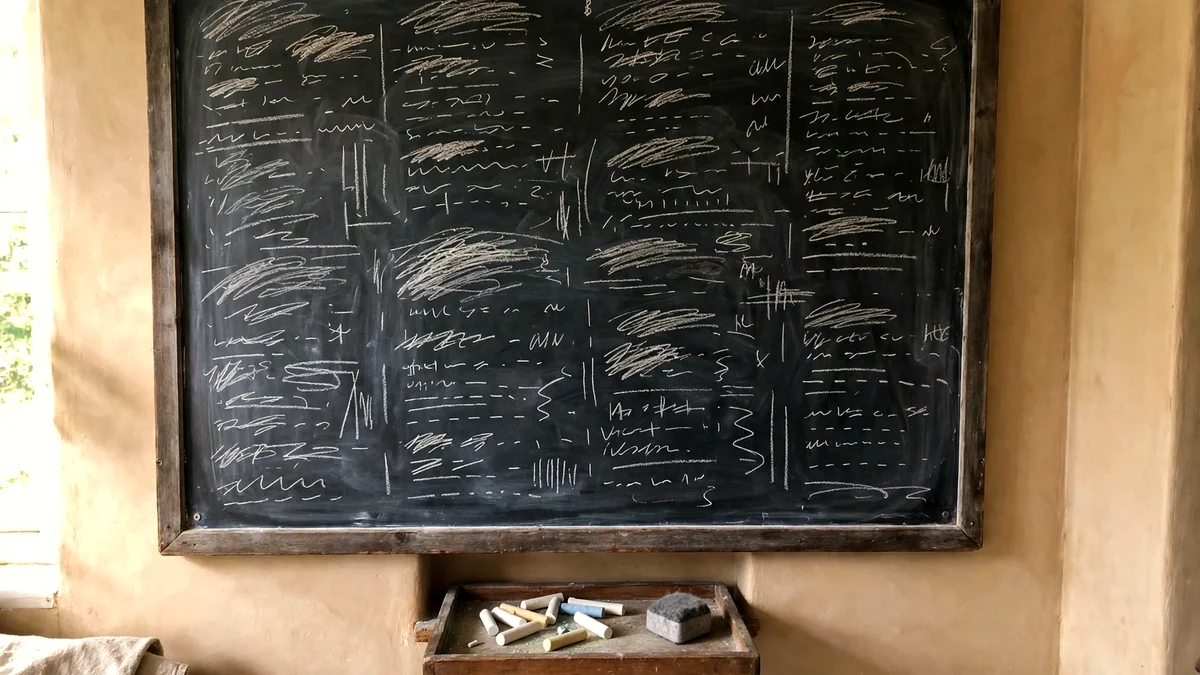
Top Chalkboards for Kitchens, Classrooms and Kids’ Rooms in 2026
The top chalkboards in 2026 are the ones that take chalk cleanly, erase without leaving a grey ghost, and suit the room they hang in. A chalkboard is the oldest writing surface in the house, and it still earns its place: a kitchen board carries the week’s menu, a classroom board holds the day’s work, and a child’s board takes a hundred drawings a week without a single battery.
Buying one is not as simple as picking the biggest black rectangle in the shop: surfaces differ far more than they look, and the cheapest boards stop erasing cleanly within months. A good chalkboard has a surface that grips chalk without drinking it in, a frame that protects the edges, and fixings that hold its weight.
Key Takeaways
- Surface quality matters more than size: slate or porcelain erases cleanly for years, while cheap painted board ghosts within months.
- Season a new board before first use by rubbing chalk across the whole surface and wiping it off, or your first writing will never fully erase.
- Buy the size for the wall and the job: a kitchen board around 90 x 60 cm suits most walls, while a classroom board must read from the back row.
- Magnetic boards earn their keep, holding notes and photos as well as chalk.
- Chalk is not dry-erase: chalkboards take chalk dust and a damp wipe, while whiteboards take markers.
Chalkboards Compared
| Board | Best for | Surface | Erase quality | Watch out for |
|---|---|---|---|---|
| Natural slate | Kitchens, classrooms, forever boards | Real stone | Excellent, for decades | Heavy; needs solid fixings |
| Porcelain steel | Busy family walls, schools | Ceramic on steel | Excellent, almost no ghosting | Costs more than painted board |
| Painted board | Light use, tight budgets | Paint on hardboard | Fair; ghosts within months | Scratches easily, stains fast |
| Chalkboard paint | Whole walls, odd shapes | Paint on any smooth wall | Good if the wall is smooth | Needs several coats and a flat wall |
| Magnetic chalkboard | Family noticeboards | Steel under a chalk surface | Good, varies by brand | Weak magnets slide on cheap boards |
| A-frame board | Cafes, shops, pavements | Double-sided chalk panel | Good, weather permitting | Blows over in wind if light |
Chalk Is Not Dry-Erase
A chalkboard takes chalk: a stick of calcium carbonate that leaves a soft, dusty line and wipes away with a felt eraser. A whiteboard takes dry-erase markers: ink that sits on a smooth coating and wipes away dry. The two look similar on a wall and behave very differently. Chalk gives a warmer, softer line that never glares, which suits kitchens and children’s rooms.
Chalk also makes dust. A chalkboard above a hob will gather grease, and a board in a room full of electronics will dust them. A whiteboard stays cleaner, which is why our guide to the best whiteboards for home offices in 2026 recommends them for desks and meeting rooms. But a whiteboard cannot give you the soft, hand-drawn look of chalk. Choose chalk for menus, lessons, drawings and daily notes, and dry-erase for planning in a room that must stay dust-free.
Surfaces: Slate, Porcelain, Paint and Steel
Natural slate is the best chalk surface ever made. It is real stone, cut thin and framed, and it takes chalk beautifully for decades: the line is crisp, the erase is complete, and the surface never wears through. It is heavy and costs more than any other board. For a board used every day for years, slate is worth it.
Porcelain steel is the modern equivalent: a ceramic coating fired onto steel at high temperature. It is hard and almost impossible to stain, and chalk wipes away completely even after weeks. Painted board is the budget option: a sheet of hardboard coated with chalkboard paint. It writes well at first, but the coating is thin, it scratches easily, and chalk slowly sinks into it. Within a few months of daily use, the board starts to ghost: faint grey shadows of old writing that no erasing will shift. Chalkboard paint on a smooth wall with several coats gives a good writing surface in any size or shape, and it is the only way to cover a whole wall. On a rough wall it disappoints, because every bump shows through the writing.

Size and Where to Put It
Size is decided by the wall and the job, not by the catalogue. A kitchen board around 90 x 60 cm suits most walls: large enough for a week’s menu, small enough to fit beside the fridge. A classroom board needs to be far bigger, because it must be readable from the back row, and a child’s board should be low enough for the child to reach the top without standing on a chair. Measure the wall first: the frame adds several centimetres on each side.
Put a kitchen board where people naturally pause: by the back door, beside the fridge, near the kettle, not on a wall nobody walks past. Keep a board out of direct sun, because glare makes chalk hard to read, and away from steam and grease if you want it to erase cleanly. A hallway board works well for family messages, because everyone passes it twice a day.
Frames and Mounting
The frame is not decoration: it protects the edges of the board, which are the first part to chip, and it carries the weight. A solid wood or aluminium frame does both jobs well, while a thin plastic frame cracks within a year on a board that is used daily. Check that the frame is screwed to the board, not just glued, and that the fixings are rated for the board’s weight.
Mount the board on a solid wall where you can, and use proper wall plugs on plasterboard. A French cleat, a wooden batten screwed to the wall with the board hanging from it, is the strongest fixing for a heavy board. Leave the board where it is once it is up: taking it down and putting it back is how frames get cracked.
Chalk, Erasers and Keeping It Clean
Soft chalk, the classic white stick, writes smoothly and erases easily, but it snaps if you press hard and it makes the most dust. Hard chalk, often sold as dustless, writes a thinner line and makes far less dust, but it can scratch a cheap painted surface, so use it on slate or porcelain.
Clean the board with a felt eraser daily and a barely damp cloth once a week. Never use a whiteboard cleaner or a household spray on a chalkboard, because the chemicals leave a film that stops chalk gripping. If the board has ghosted, wipe it with a damp cloth, let it dry completely, and season it again. That one habit is what keeps a chalkboard writing cleanly for years.

Chalkboards for Children
A child’s chalkboard is a different purchase from a family board. It needs to be low, tough, and easy to clean, because it will be drawn on a hundred times a week. A low panel at the child’s height, a magnetic board that holds drawings as well as chalk, and a tray that holds the chalks are the three things that matter. A board that is too high becomes decoration, and a board without a tray loses its chalks within a day.
Choose a slate or porcelain surface for a child’s board, because it survives hard pressing and erases cleanly after a hundred drawings. Avoid thin painted board, which scratches the first time a child presses hard. Teach the child to wipe the board at the end of the day: the habit is half the value of the board.
Chalkboards vs Corkboards: Writing vs Pinning
A chalkboard and a corkboard look like rivals on the same wall, but they do different jobs. A chalkboard is for writing that changes: menus, lists, lessons, drawings. A corkboard is for pinning things that stay: school notes, appointment cards, recipes, tickets. Chalk is wiped and rewritten daily; pins go in and stay for weeks.
A corkboard survives steam and grease better in some ways, because a pin does not care about a greasy surface, while chalk does. But a corkboard crumbles with use, shedding cork around every pin hole, while a chalkboard only needs a wipe to be new again. Our guide to the best corkboard for a busy kitchen wall in 2026 explains what makes cork survive a kitchen. If your wall carries paper, choose cork. If it carries writing, choose chalk. If it carries both, put the two boards side by side.
The Easel Is the Stand, Not the Surface
An easel is often confused with a chalkboard, because many chalkboards sit on easels. They are different things: the easel is the stand, and the chalkboard is the surface that sits on it. A freestanding A-frame chalkboard, the kind outside a cafe, works because the frame folds flat, stands on a pavement, and holds the board at reading height.
A good easel holds the board steady, locks it at the height you want, and folds away when you are done. A bad easel wobbles, and a wobbling board is hard to write on. Our guide to easels that hold your canvas steady in 2026 is written for painters, but the same test applies: press the board gently from the side, and if it shifts, it will not hold steady when you write fast. Buy the easel for the board’s weight, and the board for the writing you will do on it.
Your Chalkboard Checklist
- Choose the surface first: slate or porcelain for daily use, painted board only for light use.
- Season a new board before first use, and again whenever it starts to ghost.
- Measure the wall and buy for the job, not the catalogue photograph.
- Check the frame is solid and the fixings are rated for the board’s weight.
- Keep soft chalk for slate and porcelain, and hard chalk away from painted board.
- Clean with a felt eraser daily and a barely damp cloth weekly, never with sprays.
Frequently Asked Questions
Why does my chalkboard ghost?
Ghosting happens when chalk sinks into a worn or unseasoned surface, usually a cheap painted board. Wipe the board with a damp cloth, let it dry, then season it by rubbing chalk across the surface. If ghosting returns within weeks, the surface is worn out.
Can I use a whiteboard marker on a chalkboard?
No. Dry-erase markers stain a chalk surface and will not wipe off cleanly. Use chalk on a chalkboard and markers on a whiteboard. If a marker has been used by mistake, wipe the board with a damp cloth several times.
What is the best chalkboard for a kitchen?
A slate or porcelain board around 90 x 60 cm, with a solid frame, mounted where the household passes: by the back door or beside the fridge.
How do I season a new chalkboard?
Rub white chalk sideways across the whole surface, then wipe it off with a dry cloth. This fills the tiny pores of the surface so your first writing does not sink in and become permanent.
Are chalkboards safe for children’s rooms?
Yes, with two conditions: mount the board securely so it cannot fall, and choose dustless chalk if the child has asthma or the room is small. Chalk dust is not toxic, but it settles on everything, so wipe the ledge weekly.
Can I paint a chalkboard on my wall?
Yes, with chalkboard paint on a smooth, well-prepared wall, in several coats. It is the only way to cover a whole wall or an odd shape. On a rough wall it disappoints, so sand the wall flat first.
Bottom Line
Chalkboards are not about buying the biggest black rectangle in the shop. They are about choosing a surface that erases cleanly, seasoning it before first use, and putting it where the writing happens. Get those three things right and the board will carry a thousand menus and lessons.


