What Is a Citrus Peeler — and When Do Strips Beat Zest in 2026?
A citrus peeler is a small bladed tool that lifts the coloured skin off a lemon, lime, orange or grapefruit in long, clean strips, leaving the bitter white pith behind. It is not a grater and it is not a knife: it takes off a ribbon of peel wide enough to twist over a cocktail, candy for a cake, or drop into a jar of oil.
It sits between two better-known neighbours: a zester shreds peel into fine threads for mixing into food, and a vegetable peeler strips skin off carrots and potatoes. A citrus peeler borrows the vegetable peeler’s shape but is tuned for fruit, with a shorter, sharper blade and a shallower cut.
Key takeaways
- A citrus peeler lifts wide strips of peel; a zester makes fine shavings. Strips suit garnishes and infusions, shavings suit food you mix flavour into.
- The best citrus peelers cut shallow, taking the coloured skin and almost none of the bitter white pith.
- A Y-shaped peeler suits most hands; a channel knife is the specialist for thin cocktail twists.
- Peel cold, firm fruit straight from the fridge, because a firm skin cuts cleanly.
- Rinse the blade straight after use, since dried citrus oil dulls the edge.
What a citrus peeler actually is
A citrus peeler is a hand tool with a short, sharp blade set in a handle, designed to remove the outer coloured layer of citrus skin in strips. That layer holds the fruit’s aromatic oils, which is where the flavour lives. Underneath it sits the pith, a spongy white layer that tastes bitter and must stay on the fruit, so a good peeler’s blade is set shallow enough to skim the colour off and stop before the pith.
The tool earns its place in three jobs. First, cocktails: a strip of orange or lemon peel, twisted over the glass, releases its oils onto the drink. Second, cooking: wide strips are candied, simmered in syrup, or laid into a cake batter and lifted out later. Third, infusions: strips go into olive oil, vinegar, gin or sugar syrup, where they give up their flavour over days or weeks. In all three jobs, the peel needs to be a strip, not a shred.
The main types of citrus peeler
Every citrus peeler falls into one of three families, and most cooks need only one.
Y-shaped citrus peelers
The Y-shaped peeler is the everyday choice. Its blade sits across the top of the handle, which puts your hand in line with the pull and keeps your knuckles away from the fruit. A sharp stainless blade pivots slightly to follow the curve of the fruit. Our guide to the best vegetable peelers covers the same Y-shape in its everyday form, and the buying logic carries straight across.
Channel knives
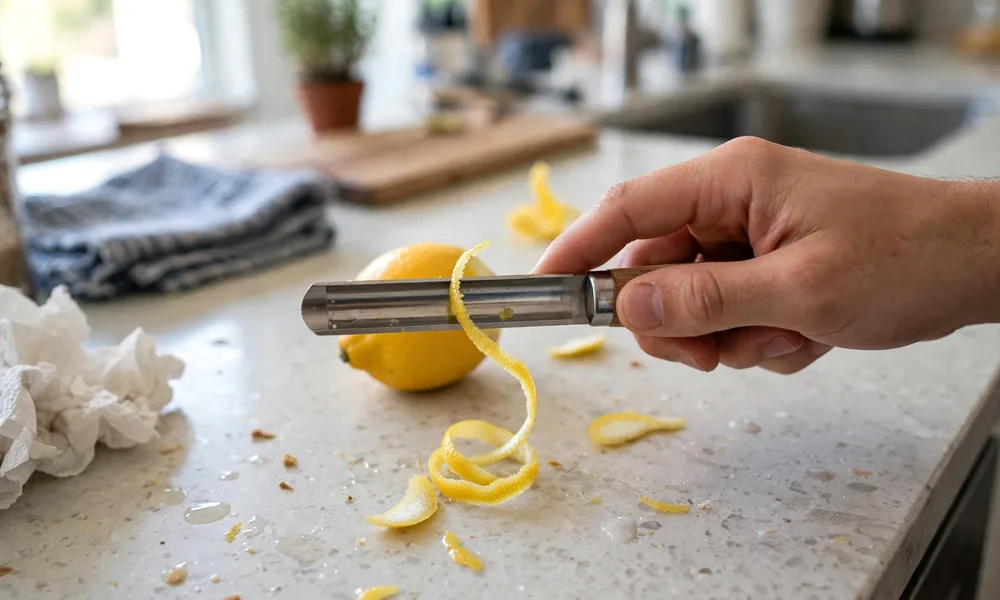
A channel knife is the specialist: a slim metal tool with a small V-shaped cutting edge at one end, drawn along the fruit to cut a long, thin ribbon of peel. That ribbon is the classic cocktail twist, narrow and even, easy to curl around a finger. It takes the thinnest strips of any citrus peeler, which is why bartenders reach for it, but it is slower and needs a steadier hand.
Straight peelers
A straight peeler holds its blade in line with the handle, like a small knife, and you pull it along the fruit in long strokes. It suits people who grew up with a straight vegetable peeler, and it takes long strips from a large orange or grapefruit in one pull. The trade-off is control: a slip sends your hand toward the edge, so the handle matters more here.
Citrus peeler vs zester: strips vs shavings
This is the distinction the whole tool turns on. A citrus peeler cuts strips; a zester makes shavings. They are not two versions of the same job, and owning the wrong one is why so many kitchens end up with peel that does not do what the cook wanted.
A zester grates the coloured skin into feathery threads that disappear into a batter or a dressing. Our guide to the best zesters explains which ones grate finest. A citrus peeler does the opposite job: it takes the skin off in wide ribbons that stay visible, so they can be twisted, candied, or fished out of a jar later. If you need flavour mixed invisibly through food, reach for the zester; if you need a strip you can see and remove, reach for the peeler.
| Tool | What it makes | Pith risk | Best for |
|---|---|---|---|
| Citrus peeler, Y-shaped | Wide, even strips | Low | Cooking, candied peel, infusions |
| Channel knife | Thin ribbons and twists | Very low | Cocktail garnishes |
| Straight peeler | Long strips | Low | Large fruit, one-pull strips |
| Rasp zester | Feathery shavings | Low if light | Cakes, dressings, marinades |
| Box grater, fine side | Coarse shreds | Moderate | Everyday grating, cheese |
Many serious cooks own both: a rasp zester for fine zest and a Y-shaped citrus peeler for strips. If you bake with citrus daily, the zester earns its drawer space first; if you make cocktails or infuse oils, the peeler does.
What makes a good citrus peeler
Four things decide whether a citrus peeler is a pleasure or a chore. First, blade sharpness: a sharp blade cuts the skin with almost no downward pressure, which keeps the cut shallow, while a dull blade needs force, and force pushes you into the bitter pith. Stainless steel suits most kitchens: it resists rust and holds an edge well.
Second, cutting depth. The blade should sit shallow, so one pull on a lemon leaves a strip of pure yellow skin with almost no white on its underside. Third, the handle. Peeling happens with wet, oily hands, so grip matters more than looks; the best handles are broad, slightly textured, and shaped so the hand does not slide forward onto the blade.
Fourth, the tip. The blade needs a point or a notch that can bite into the skin at the top of the fruit. Peelers with a small pointed tip start cleanly; blunt, squared-off blades skate across the skin.
How to peel citrus so only the good part comes off
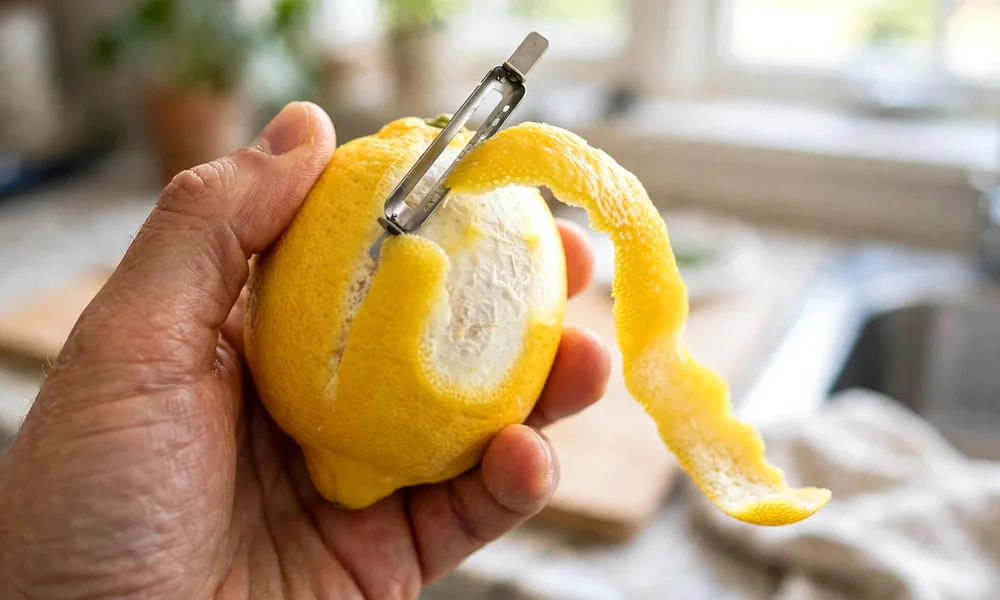
Technique decides the result more than the tool does. Start with cold, firm fruit straight from the fridge: a cold lemon holds its shape under the blade, while a warm, soft one collapses and the blade sinks into the bitter layer. Wash and dry the fruit first, since wax or dirt on the skin ends up in your strip.
Hold the fruit firmly in one hand and the peeler in the other. Start at the top, near the stalk, and draw the peeler down in one light, even stroke. Do not press hard; the weight of the tool and a gentle pull should be enough. After each strip, turn the fruit so you work on fresh skin, and stop the moment white pith shows. One strip per spot is the rule.
For a cocktail twist, take a thin strip with a channel knife, twist it over the glass so the oils spray onto the drink, and rub the peel around the rim. For candied peel, simmer wide Y-peeler strips in sugar syrup until translucent. For infusions, pack wide strips into a clean jar, cover with oil, vinegar or spirit, and leave in a cool, dark place for a week or two.
What to do with the strips
Strips of citrus peel are far more useful than most cooks realise. The coloured skin holds the fruit’s aromatic oils, and a strip carries those oils in a form you can control: drop it in, take it out, twist it, or candy it.
Cocktails are the obvious home. A twist of orange over an old fashioned, a strip of lemon in a gin and tonic: the peel adds aroma before the first sip and flavour as it sits in the drink. Candied peel is simpler than it sounds: simmer wide strips in sugar syrup, roll them in sugar, and let them dry; they keep for weeks and lift cakes and ice cream. Dried strips are the third use: crisp them in a low oven, then grind them into a powder for baking.
Infusions are where strips earn their keep over weeks. Orange peel in olive oil gives you a dressing base with no effort, and lemon peel in gin or vodka makes a clean, bright infusion. A shred would cloud the liquid and be impossible to strain out, while a strip lifts out in one piece. Do not waste the fruit underneath: once the peel is off, the lemon still has all its juice. Our guide to the best lemon squeezers covers which ones get every last drop: peel first, while the fruit is firm, then squeeze, so neither job spoils the other.

Common mistakes that spoil the peel
The most common mistake is peeling a warm, soft fruit: a soft lemon collapses under the blade, so the peeler sinks into the pith. Peel cold fruit, and the problem mostly disappears. The second mistake is pressing too hard: citrus skin is thinner than a carrot’s, so pressing hard drives the blade into the pith and tears the strip. Use a light touch. The third mistake is going over the same spot twice: one pass takes the colour off, and a second pass can only take pith. The fourth is using a zester when the recipe wants strips, or a peeler when it wants zest.
Checklist: buying a citrus peeler
- Pick a Y-shaped peeler with a sharp stainless blade for everyday strips, and add a channel knife for cocktails.
- Check the blade cuts shallow: one pull should leave pure coloured skin with almost no white pith.
- Choose a broad, textured handle that stays grippy with wet, oily hands.
- Make sure the tip can start a strip cleanly, with a point or notch that bites into the skin.
- Prefer a peeler that rinses clean under running water, with no corners where peel can hide.
- Buy the pair if you cook with citrus often: a rasp zester for shavings and a citrus peeler for strips.
Frequently asked questions
What is a citrus peeler used for?
A citrus peeler lifts wide strips of coloured peel from lemons, limes, oranges and grapefruits, for cocktail garnishes, candied peel, and infusions.
Is a citrus peeler the same as a zester?
No. A citrus peeler cuts wide strips of peel, while a zester grates the skin into fine shavings. Strips are for garnishes and infusions; shavings are for mixing flavour invisibly into cakes and dressings.
Can I use a vegetable peeler on citrus?
Yes, a sharp vegetable peeler works in a pinch, and a Y-shaped one is the closest substitute. A dedicated citrus peeler is better because its blade is narrower and set shallower, so it takes less pith.
How do I stop my citrus peeler taking the bitter pith?
Peel cold, firm fruit with a light touch, one strip per spot, and stop the moment white pith shows. A sharp blade that cuts shallow is the main defence; a dull blade needs pressure, and pressure drives it into the pith.
What is the best citrus peeler for cocktails?
A channel knife, because it cuts the thinnest, most even ribbons, which twist neatly over a glass and release their oils with a squeeze.
How do I clean a citrus peeler?
Rinse it under warm running water straight after use, before the citrus oil dries on the blade. Most stainless peelers are dishwasher safe, but hand washing keeps the edge sharper for longer.
The bottom line
A citrus peeler is a small tool with a clear job: it lifts the coloured skin off citrus fruit in clean, wide strips, leaving the bitter pith behind. Buy a sharp Y-shaped peeler, add a channel knife for cocktails, peel cold fruit with a light touch, and use the strips for twists and candied peel.