
Why cocktail picks matter is a question most home bartenders never ask until they see the difference: the same Martini, one with an olive speared on a proper steel pick and one with the olive fished out of the jar with a fork. The first looks finished and deliberate; the second looks like an afterthought. Cocktail picks are the small skewers that hold a garnish in a drink: they keep the garnish where it belongs, and they give the drink its final visual cue. They cost almost nothing, last for years, and change how every drink you serve looks.
A cocktail pick is not a toothpick and not a grill skewer. It is a short, slim pin, usually ten to fifteen centimetres long, with a pointed end for spearing and a decorative end for holding. The garnish, an olive, a cherry, a twist of citrus or a small cube of cheese, sits on the pick and rests across the rim of the glass or in the drink. The pick keeps the garnish from sliding to the bottom, keeps fingers out of the glass, and lets the drinker lift the garnish out and eat it.
Key Takeaways
- A cocktail pick holds a garnish in place and keeps fingers out of the drink.
- Steel picks are the best buy: reusable, dishwasher-safe and heavy enough to sit still.
- Match the pick length to the glass: ten centimetres for a coupe, fifteen for a tall highball.
- A pick is for garnish, not stirring: use a bar spoon to stir and a pick to present.
- Buy a set with different ends so one set covers olives, cherries and citrus twists.
What a Cocktail Pick Actually Does
A cocktail pick does three things. First, it holds the garnish: an olive speared on a pick stays at the top of the drink instead of sinking to the bottom, where it is hard to reach and does nothing for the look of the drink. Second, it presents the garnish: the pick lifts the olive or cherry into view, so the drinker sees it before the first sip. Third, it keeps the drink clean: the garnish never touches a hand, and the drinker can lift it out on the pick and eat it.
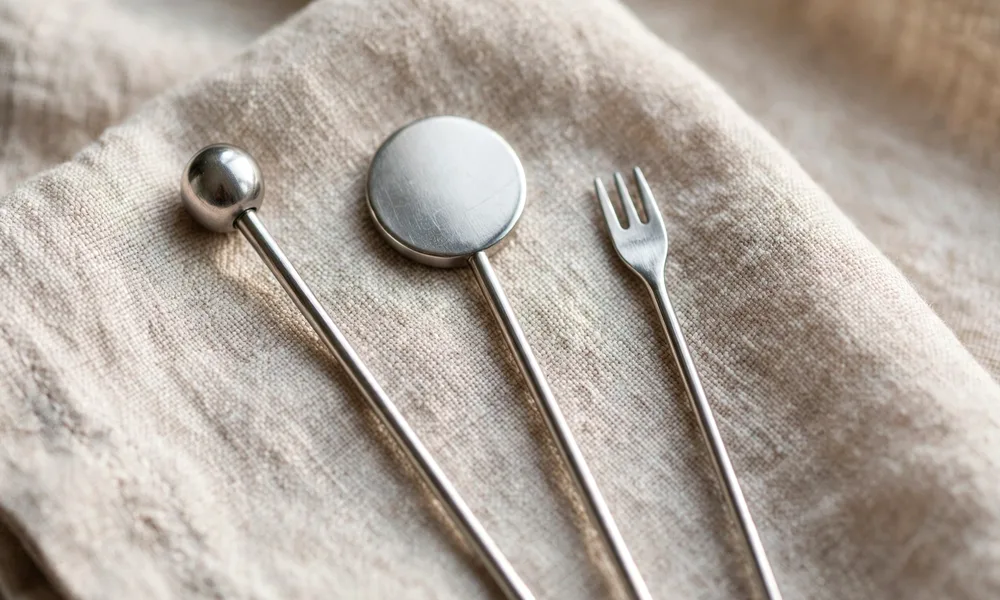
The decorative end is part of the job, not an afterthought. A ball, a disc, a tiny fork or a small bead at the top stops the garnish sliding off, and it gives the drink a finished detail a plain toothpick cannot. A slightly weighted end also keeps the pick balanced across the rim instead of tipping into the drink.
Why Cocktail Picks Beat Toothpicks
A toothpick is made for picking teeth, and it shows. It is short, light and rough, and it splinters; in a drink it absorbs liquid, goes soft, and can snap on a firm olive. A cocktail pick is made for drinks: longer, so it reaches across the rim; smooth, so it slides through an olive without tearing it; and rigid, so it holds a cherry and a twist together without bending.
There is also a question of presentation. A wooden toothpick in a Martini looks improvised; a steel pick with a ball end looks deliberate, like the drink was made by someone who owns the tools. Guests notice the difference even when they cannot name it, and the upgrade costs a few pounds for a set that lasts indefinitely.

Cocktail Picks vs Bar Spoons vs Stirrers
Cocktail picks are often confused with the other slim tools on the bar, but each has a different job. A bar spoon stirs: long and twisted, built to move liquid around ice in a mixing glass, and our guide to bar spoons explains why its length and balance matter. A stirrer also stirs, but in the glass itself: a short rod for a drink built in the glass, such as a highball. A cocktail pick does neither: it holds a garnish and presents it.
The tools overlap at the edges: some bar spoons have a fork end that can pick up an olive, and some picks are long enough to stir a small drink. But the overlap is a convenience, not a design: a fork-ended spoon is a poor pick, because the garnish slides off the flat tines, and a pick is a poor stirrer, because it is too short and too thin to move liquid properly. Own all three tools and use each for its job.
The Main Types of Cocktail Pick
Stainless Steel Picks
Stainless steel picks are the default choice and the one to buy first. They are rigid, reusable, dishwasher-safe, and heavy enough to sit still across the rim of a glass. Most are ten to fifteen centimetres long, with a sharp point at one end and a ball, disc or bead at the other. They do not absorb flavours, they do not rust if dried properly, and they suit every garnish from an olive to a cube of cheese.
Gold and Copper Picks
Gold and copper picks work exactly like steel ones and look more decorative, which is the point. They suit a bar cart where the tools are part of the display. The same warning applies as with any plated bar tool: cheap plating flakes, and the flakes can end up in a drink. Buy solid brass or solid copper if you want the colour, hand wash them, and keep a steel set for everyday use.
Bamboo and Wooden Picks
Bamboo and wooden picks are the disposable option, sold in packs of a hundred for parties. They are fine for a large gathering where washing a dozen steel picks is impractical, and knotted bamboo picks look better than plain wooden ones. Use them for crowds, not for everyday drinks.
Decorative and Novelty Picks
Decorative picks have shaped ends: a tiny anchor, a palm tree, a bead, a skull, a mermaid. They are fun, and for a themed party they are the right choice. For everyday use they are a distraction: the shaped end can be hard to grip, it can catch on the rim, and it can make the pick top-heavy so it tips into the drink.
How to Choose the Right Cocktail Picks
Length comes first. A pick should be long enough to rest across the rim of the glass with the garnish visible, and short enough that it does not tower over the drink. Ten centimetres suits a coupe or a Martini glass; twelve to fifteen suits a rocks glass or a highball. A pick that is too long tips easily; one that is too short disappears into the drink. If you own one set, twelve centimetres is the most versatile length.
Material comes second. Stainless steel is the safe default: durable, washable, flavour-neutral. Check that the point is sharp enough to spear an olive without tearing it, and that the decorative end is firmly fixed rather than glued on; a glued end will come off in a drink sooner or later. The pick should feel rigid when flexed gently; one that bends will not hold a heavy garnish straight.
Quantity comes third. Six picks cover a quiet evening, twelve cover a dinner party, and twenty-four cover a larger gathering; at that point buy two sets of twelve, so one set can be in the dishwasher while the other is in use. Finally, consider storage: steel picks are sharp, so keep them in a small jar or a case rather than loose in a drawer.
Matching Picks to Garnishes
Different garnishes suit different picks. A firm green olive suits a steel pick with a ball end, which stops the olive sliding. A maraschino cherry suits a pick with a small fork end, which grips the soft fruit without tearing it. A citrus twist suits a longer pick, so it can rest across the rim where its oils scent the drink. A cube of cheese or a pickled onion suits a sturdier pick, because a thin pick will bend under the weight.
The glass matters as much as the garnish. In a Martini glass, the pick rests across the wide rim with the olive just above the surface, which is the classic presentation. In a rocks glass, the pick leans against the side with the garnish half-submerged, which suits a cherry in an Old Fashioned. In a highball, a longer pick holds a citrus twist above the fizz. And the glass itself shapes the drink: our guide to Martini glasses explains why the wide, shallow bowl is part of the presentation, and the pick is the detail that completes it.
| Garnish | Best Pick | Best Glass |
|---|---|---|
| Green olive | Steel, ball end | Martini glass |
| Maraschino cherry | Steel, fork end | Rocks glass |
| Citrus twist | Long steel pick | Highball or coupe |
| Pickled onion | Sturdy steel pick | Martini glass |
| Cheese cube | Thick steel pick | Rocks glass |
| Cucumber ribbon | Long steel pick | Highball |
| Mixed fruit | Steel, disc end | Coupe |
Cocktail Picks vs Grill Skewers
A cocktail pick and a grill skewer are both metal pins, but they are built for opposite worlds. A grill skewer is long, thick and flat, made to hold meat and vegetables over fire and to stop them spinning when turned; our guide to skewers covers it in detail. A cocktail pick is short, slim and round, made to hold a single olive in a cold drink and to look good doing it. One is a cooking tool; the other is a presentation tool. Never use a grill skewer in a drink: it is far too long and far too heavy, and it will dominate the glass.

Checklist: Before You Buy Cocktail Picks
- Choose stainless steel for your first set; it lasts and washes easily.
- Pick a length that suits your glasses: twelve centimetres is the versatile middle.
- Check the point is sharp and the decorative end is firmly fixed, not glued.
- Buy a set with different ends so one set covers olives, cherries and twists.
- Buy twelve if you host dinners; six is enough for quiet evenings.
- Store them upright in a jar or case so the points stay sharp and safe.
Frequently Asked Questions
What are cocktail picks used for?
Cocktail picks hold a garnish, such as an olive, a cherry or a citrus twist, in a drink. They keep the garnish visible and in place, keep fingers out of the glass, and let the drinker lift the garnish out.
Are cocktail picks the same as toothpicks?
No. A toothpick is short, light and made of wood, and it goes soft and can snap in a drink. A cocktail pick is longer, rigid and usually steel, with a decorative end that stops the garnish sliding off and makes the drink look finished.
Can I use a cocktail pick to stir a drink?
You can, but you should not: a pick is too short and too thin to stir properly. Use a bar spoon for stirring in a mixing glass and a stirrer for drinks built in the glass.
How long should a cocktail pick be?
Ten centimetres suits a coupe or Martini glass, twelve to fifteen suits a rocks glass or highball. Twelve centimetres is the most versatile length if you buy only one set.
Are metal cocktail picks dishwasher-safe?
Stainless steel picks are. Gold-plated and copper picks should be hand washed to protect the finish. Store steel picks upright in a jar so the points stay sharp.
How many cocktail picks do I need?
Six covers a quiet evening, twelve covers a dinner party, and twenty-four covers a larger gathering. Buy two sets of twelve rather than one set of twenty-four.
Bottom Line
Cocktail picks are the smallest, cheapest upgrade on the bar, and one of the most visible. Buy a set of stainless steel picks, twelve centimetres long, with a mix of ball and fork ends, and use them for every garnish you serve. The drinks will look finished and the garnish will stay where it belongs.


