
How to Choose the Best Donut Makers in 2026
Choosing the best donut makers in 2026 starts with one honest question: do you want baked mini donuts, made at home in minutes, without a pot of hot oil? If the answer is yes, an electric donut maker is the right tool. It is a small countertop appliance with ring-shaped cavities in non-stick plates: you pour in batter, close the lid, and a few minutes later you lift out golden mini donuts, ready for glaze or sprinkles. No frying, and no kitchen that smells of hot oil for the rest of the day.
The machines all look alike in a product photo, which is why the choice is harder than it seems. Cavity count, plate quality, heat evenness and the lid hinge decide whether a donut maker becomes a weekend favourite or a cupboard ornament. This guide explains how to choose the best donut maker for your household, compares the main types, and draws the lines that matter: an electric donut maker is a plugged-in appliance, not a donut pan you bake in the oven, and not a waffle maker with gridded plates. Our guide to the best waffle makers covers the closest neighbour in full.
Key Takeaways
- A donut maker bakes mini donuts in ring-shaped cavities with heated plates — no frying oil, no oven, a batch in three to five minutes.
- Cavity count decides batch speed: six holes suit one or two people, twelve suit families and parties.
- Even heat matters more than wattage: hot spots brown one side of the batch and leave the other pale.
- A good non-stick coating and a lid that closes evenly are worth more than extra settings.
- Baked donuts are lighter and less greasy than fried ones, with a soft, cake-like crumb.
What a Donut Maker Actually Does
A donut maker works like a small oven that cooks from both sides at once. The bottom plate holds the batter in ring-shaped moulds, the top plate closes over it, and heat from both plates bakes the donut through. The ring shape is the whole point: the hole in the middle lets heat reach the centre, so a mini donut cooks evenly without a raw middle.
The batter is closer to cake batter than to bread dough: a pourable mix of flour, sugar, egg, milk and baking powder, which is why the machine works with a jug or a piping bag. Fill each cavity about three-quarters full, close the lid, and wait for the ready light. The finished donuts are soft, light and cake-like, with a smooth golden surface. They are not fried donuts: a fried donut has a crisp, yeasted chew that a baked donut will never have, but a baked donut is ready in minutes, uses no oil, and a child can safely help make it.
That is the real audience for this machine: a family appliance, a party appliance, and a baking-with-children appliance. If you want serious fried donuts, you want a fryer and a yeast dough — our guide to the best donuts explains what a great fried donut tastes like. If you want warm mini donuts on a Saturday morning with almost no mess, the maker is the buy.

The Donut Maker Types at a Glance
Donut makers fall into four main types, and the right one follows from how many people you feed and how much counter space you have. The mini six-hole maker is the classic: compact, cheap, and fast enough for one or two people. The standard seven-hole maker is the middle ground most households should buy. The family twelve-hole maker cooks a full batch at once for parties and big families, while the multi-function maker swaps its donut plates for waffle or sandwich plates.
| Type | Best For | Cavities | Watch Out For |
|---|---|---|---|
| Mini maker | Singles and couples | 6 | Slow for a family batch |
| Standard maker | Most households | 7 | Cheap lids that close unevenly |
| Family maker | Families and parties | 12 | Bulky to store upright |
| Multi-function maker | Small kitchens | 6–7, swap plates | Extra plates cost cupboard space |
Our Picks: The Best Donut Makers by Job
There is no single best donut maker for everyone. The right pick depends on your household, your kitchen, and how often the machine comes out.
Best Overall: Standard Seven-Hole Maker
The standard seven-hole maker is the default for a reason. Seven mini donuts is a proper serving for two or three people, the machine is small enough to store upright in a cupboard, and the price stays low. Look for plates that heat evenly to the edges, a ready light, and a lid that closes flat so every cavity gets the same heat.
Best for Small Households: Mini Six-Hole Maker
A mini six-hole maker is the right call for a single person or a couple, or for a kitchen with no spare cupboard. It heats faster than a larger machine, stores in a drawer, and six mini donuts is right for two people with coffee. The compromise is batch speed: cooking for four means two rounds, and the first batch goes cold while the second cooks.
Best for Families: Twelve-Hole Maker
If you cook for a family of five or host children’s parties, a twelve-hole maker is worth the counter space. A full batch comes out at once, so everyone eats warm donuts together. The thing to check is evenness: a wide plate with weak edge heating will brown the middle cavities and leave the corners pale. A thick plate and a solid hinge matter most here, because a lid that lifts at one corner cooks half the batch badly.
Best for Small Kitchens: Multi-Function Maker
A multi-function maker swaps its donut plates for waffle, sandwich or grill plates, so one appliance earns its cupboard space several ways. The donut plates are usually six or seven holes, so you give up batch size for versatility. Check that the plates click in firmly and sit flat: a plate that rocks in its housing will cook unevenly. The other half of the bargain is storage for the spare plates.

What to Look For Before You Buy
Start with the plates. A thick plate holds heat and spreads it evenly; a thin plate develops hot spots, and hot spots burn one side of a batch while the other stays pale. The non-stick coating should release a mini donut with a gentle nudge. Removable plates are a genuine bonus: they wash in the sink in seconds, while fixed plates must be wiped clean in place.
The lid is the second thing that matters, and most buyers overlook it. The lid should close flat and stay shut under its own weight, with a hinge that holds it level. A lid that lifts at the back cooks the rear cavities cooler than the front ones, and a latch that needs holding down is a design flaw, not a feature. Cool-touch handles and a stable base matter too.
Then check the controls: they should be simple. A power light and a ready light are all a donut maker needs: the ready light tells you when the plates have recovered, so you stop pouring onto cooling plates. A temperature dial is a nice extra, but most good makers hold a single well-chosen temperature. Upright storage is worth having in a small kitchen, but only if the machine locks shut.
Finally, think about the batter, because the machine is only half the result. A batter that is too thin runs out of the cavities and burns; a batter that is too thick will not fill the ring and leaves a flat, dense donut. Pour with a jug or a piping bag, fill each cavity about three-quarters full, and resist opening the lid early: the first minute is when the donut sets, and lifting the lid then collapses it. Our guide to the best ice cream makers covers the other countertop machine that turns a weekend afternoon into dessert.
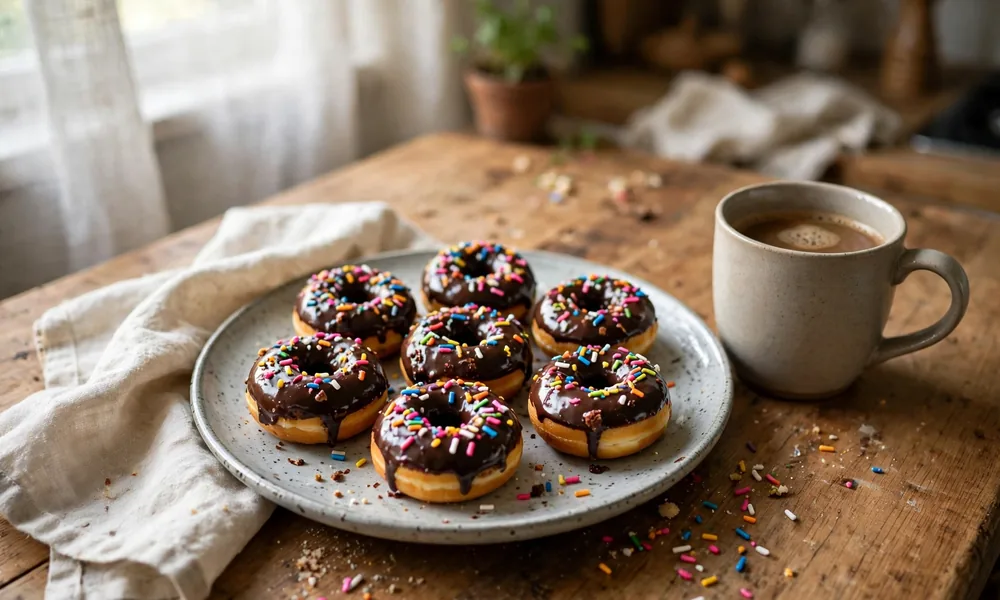
Donut Maker vs Donut Pan vs Waffle Maker
These three tools get confused because they all make small, round, breakfast-sized food, but they are different tools for different jobs. An electric donut maker is a plugged-in appliance: you pour batter into heated ring cavities, close the lid, and the machine bakes from both sides in minutes. A donut pan is oven bakeware: a metal tray with ring moulds that goes into your oven, which takes longer to heat. A waffle maker is a different appliance altogether: it presses batter between gridded plates, which makes a waffle with pockets, not a donut.
The practical test is simple. If you want the fastest mini donuts with the least fuss, buy the maker. If you already bake and want donuts as one more thing your oven can do, buy the pan and accept the slower heat-up and the single-sided bake. If you want waffles, buy the waffle maker: its gridded plates cannot make a ring-shaped donut, and a donut maker’s smooth cavities cannot make a waffle. None of the three is a bad tool. The mistake is buying one and expecting it to do another one’s job.
Checklist: Buying a Donut Maker Without Regret
- Match the cavity count to your household: six holes for one or two people, seven for most families, twelve for parties.
- Choose plates that heat evenly and a non-stick coating that releases with a gentle nudge.
- Check the lid closes flat and stays shut, with a hinge that holds it level.
- Make sure there is a ready light, so you pour onto plates that have recovered.
- Prefer removable plates if you can get them — fixed plates are fiddly to wipe around the rings.
- Measure your cupboard first, and check the machine locks shut if you plan to store it upright.
Frequently Asked Questions
Are baked donuts as good as fried donuts?
They are different, not worse: a baked donut is light, soft and cake-like, with no grease and no frying smell. A fried donut has a crisp, yeasted chew that baking cannot copy. Judge a baked donut on its own terms: warm, glazed and fresh from the machine.
Can I use regular cake batter in a donut maker?
Yes, most cake batters work, but the best results come from a slightly thinner batter. A very thick batter will not fill the ring properly, and a very thin one will run out and burn on the plates.
How long do donuts take in a donut maker?
Most batches take three to five minutes, with a minute or two of recovery between them. Wait for the ready light before pouring the next batch, or the second round comes out pale.
Why do my donuts stick to the plates?
Usually the plates were not fully preheated, the coating is worn, or the batter hit a cooling plate. Preheat until the ready light comes on, brush the cavities lightly with oil, and do not open the lid early.
Can children use a donut maker?
Yes, with supervision: the outside gets hot, so an adult should handle the lid and the pouring. Decorating the cooled donuts is the safest job for younger children.
How do I clean a donut maker?
Let it cool slightly, then wipe the plates with a damp cloth while warm, using a soft brush around the rings. Never use metal utensils or scouring pads on a non-stick plate, and never submerge the machine.
The Bottom Line
The best donut maker is the one that matches how many people you feed: a seven-hole standard maker for most households, a six-hole mini for one or two, a twelve-hole maker for families and parties, and a multi-function machine for small kitchens. Buy for even heat, a lid that closes flat, a surface that releases, and a ready light you can trust. Get those four things right and every batch will come out golden, warm and ready for glaze.


