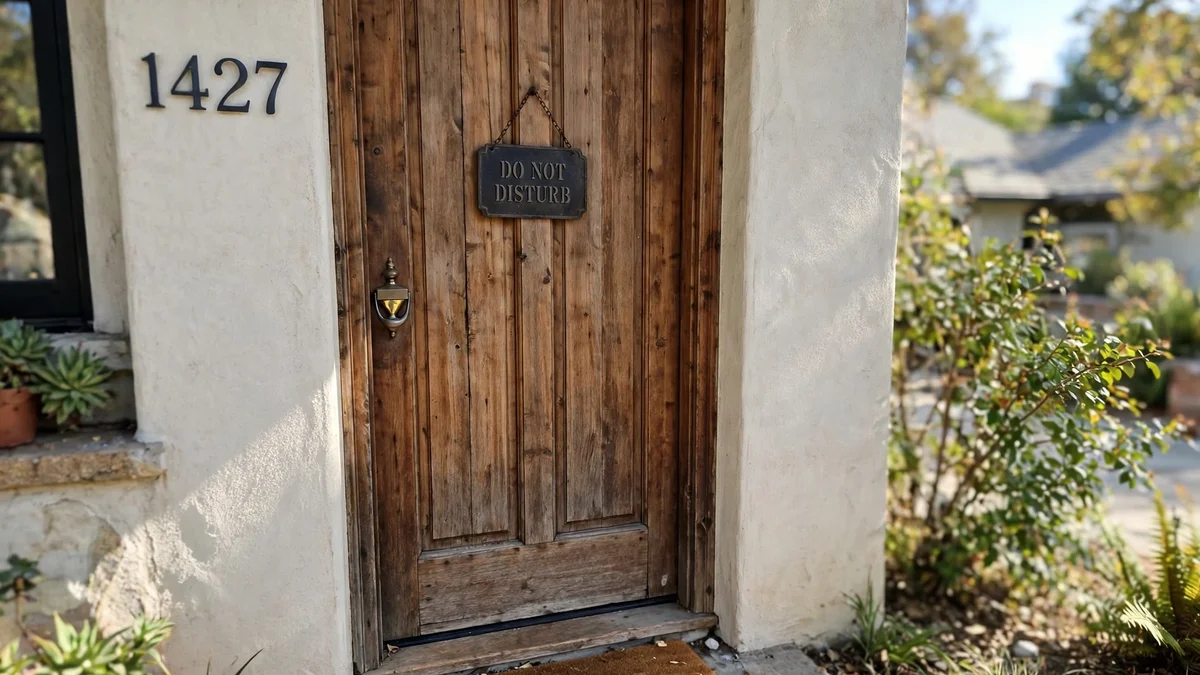
Door Signs That Say It Without a Word in 2026
A door sign is the smallest message in a home, and one of the most useful. It tells a visitor to knock, a delivery driver to leave a parcel, a child that a room is theirs, or a colleague that you are not to be disturbed, all without anyone saying a word. The best door signs in 2026 are easy to read at a glance, made from materials that suit where they hang, and honest about the room behind the door.
Key Takeaways
- Short wording wins: two or three words read better at a door than a sentence.
- Letters at least 3 centimetres tall are readable from a normal hallway distance.
- Metal and sealed acrylic suit outdoor doors; wood and chalkboard suit sheltered indoor doors.
- Hang signs at eye level, about 150 centimetres from the floor, where visitors naturally look.
- A sign works only if it matches the door: a privacy sign on a bedroom door, a working sign on an office door.
What a Door Sign Does
A door sign gives instructions before anyone knocks, and that is its whole job. A welcome sign greets people; a door sign tells them what to do. Our guide to the best welcome signs covers greeting signs that make guests feel expected, with warm wording and materials chosen for porches and hallways. A door sign is different: it says “Do Not Disturb”, “Please Knock”, “Private” or “No Soliciting”, and it works because the message is short, direct and placed exactly where the visitor is already looking.
The second job of a door sign is to mark a room. A child’s name on a bedroom door, a “Home Office” sign on a spare room, or a “Bathroom” sign in a house with guests all stop the same small confusion: which door is which. A good door sign is read once and remembered, which is why the wording, the size and the position matter far more than the decoration around them.
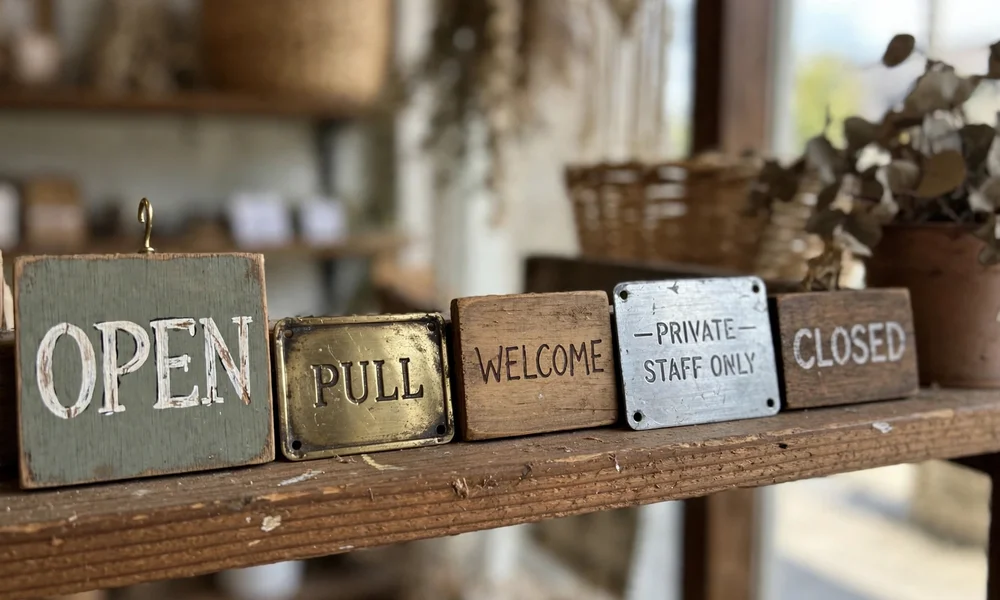
The Main Types of Door Sign
Privacy Signs
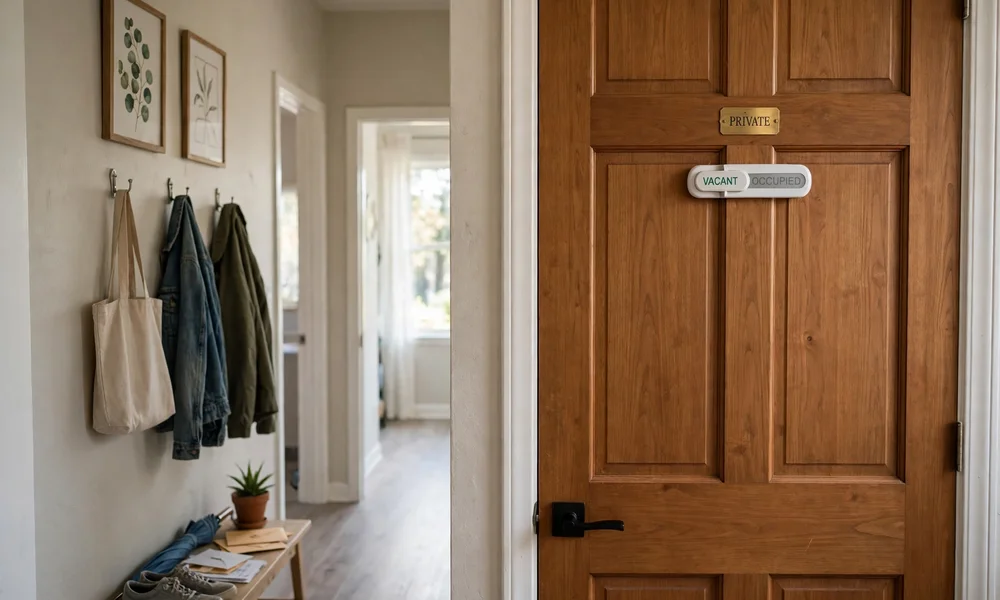
Privacy signs are the most common type in a home: “Do Not Disturb”, “Private”, “Please Knock” and “Sleeping Baby”. They suit bedrooms, home offices and nurseries, where an interruption costs more than a moment. A sliding sign, with “Vacant” on one side and “Occupied” on the other, suits bathrooms and shared offices, because it changes with the room instead of staying fixed.
Work and Office Signs
Work signs mark a boundary during working hours: “In a Meeting”, “Working, Please Do Not Disturb”, “Back at 2pm” or simply “Home Office”. They matter most in a house where work and family share the same hallway, because without a sign, every closed door is a question. A reversible sign, with “Available” on one side and “Busy” on the other, is the most practical choice, because it changes through the day.
Family and Room Signs
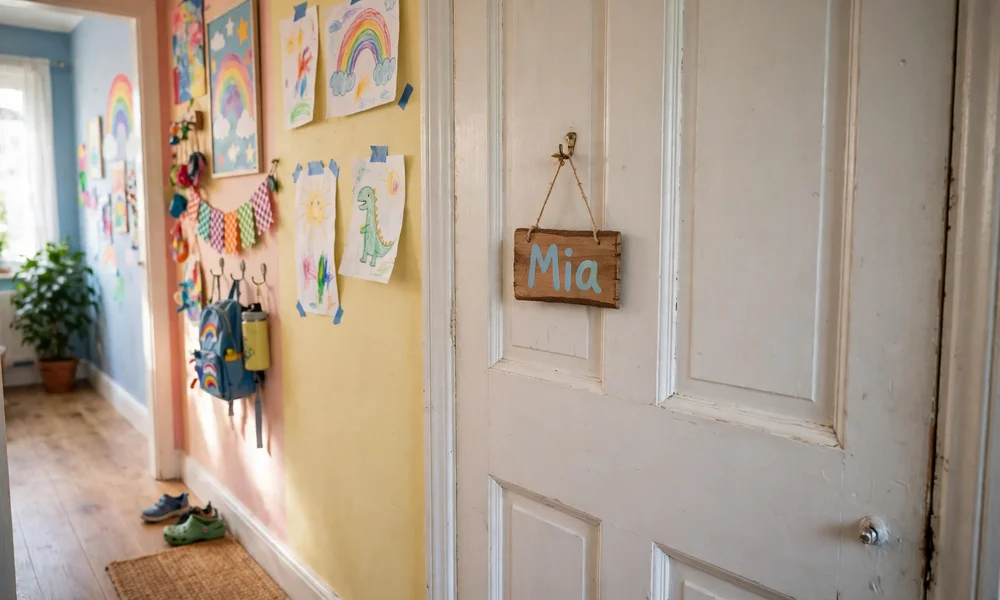
Family signs mark who a room belongs to: a child’s name, “Mia’s Room”, “The Playroom” or “Laundry”. They suit children’s bedrooms, playrooms and shared spaces, where a name on the door gives a child ownership of their room and stops younger siblings wandering in. Wooden name signs, hung from a hook or a ribbon, are the classic choice, because they are light, easy to move when a room changes use, and simple to personalise.
Safety and Instruction Signs
Safety signs give a warning or an instruction: “Beware of the Dog”, “No Soliciting”, “Please Remove Shoes”, “Mind the Step” or “Deliveries to the Side Door”. They suit front doors and gates, where the reader is a stranger who needs the message in seconds. Metal and sealed acrylic last longest outdoors, and dark letters on a pale background read best in daylight and at dusk.
Door Signs Compared
| Sign type | Best wording | Best place | Watch out for |
|---|---|---|---|
| Privacy sign | Do Not Disturb, Private | Bedroom, office, nursery | Jokes that make it easy to ignore |
| Work sign | In a Meeting, Back at 2pm | Home office door | Long lists of rules nobody reads |
| Family sign | Name, Playroom, Laundry | Children’s rooms, shared rooms | Small lettering that cannot be read |
| Safety sign | Beware of the Dog, No Soliciting | Front door, gate | Fading outdoors, unclear wording |
Materials: What Lasts Where
Material decides whether a sign lasts a year or a decade, and the right choice depends on where the door is. Wood suits sheltered indoor doors and porches: it looks warm, takes paint and engraving well, and is easy to hang from a hook or a ribbon. Metal, usually brass, stainless steel or powder-coated aluminium, suits front doors and gates: it does not fade, it wipes clean, and it looks serious, which suits a safety or privacy message.
Acrylic and plastic signs are the practical middle ground. Sealed acrylic copes well outdoors, holds bright colours, and is light enough to hang with strong adhesive strips on a smooth door. Chalkboard signs suit kitchens, playrooms and anywhere the message changes often, because the wording can be wiped and rewritten, but they are an indoor choice: chalk outdoors washes away in the first rain.
Wording and Readability
Wording is where most door signs fail, because people write what they would say instead of what a visitor can read in two seconds. Short wording wins: one word, or two or three at most, reads better than a sentence at a door. “Do Not Disturb” works; “Please do not disturb me because I am working and will be free later” does not, because nobody reads it.
Readability is about size and contrast as much as words. Letters at least 3 centimetres tall are readable from a normal hallway distance, and larger is better on a front door read from the path. Dark letters on a pale board, or pale letters on a dark board, beat any combination where the letters and the background sit close in tone. Test the sign the way a visitor will read it: stand two metres back in normal light and see whether you can read it in one glance. If you cannot, the sign is decoration, not a message.
Where to Hang a Door Sign
Position decides whether a sign is read or missed. Hang it at eye level, about 150 centimetres from the floor, in the centre of the door or just above the handle, where a visitor naturally looks before knocking. A sign hung too high is missed, and a sign hung too low is read only after the knock has already happened. Indoors, hang the sign on the door itself rather than on the wall beside it, because a visitor looks at the door, not at the wall, when they are about to knock.
Think about the rest of the entrance too. A door sign works with the other details on the door, not against them. House numbers tell a visitor they are at the right place, and our guide to the best house numbers explains how to choose numbers that are visible, durable and right for your home. A door knocker is the invitation to announce yourself, and our guide to the best door knockers covers weight, fixing and matching the finish to the rest of your hardware.
Choosing a Sign for Your Door
Start with the message, not the material. Write down the one thing you want a visitor to do, or not do, and cut it to three words or fewer. Then choose the room: a privacy sign for a bedroom, a work sign for an office, a name sign for a child’s room, a safety sign for a front door. Only then choose the material, matching it to the weather the door faces and the fixings the door allows.
Buy one sign and live with it for a week before buying more. A sign that does not work usually fails for a simple reason: it is too small, too high, too wordy, or on the wrong door. Fix the position and the wording before blaming the sign itself.
Mistakes to Avoid
The most common mistake is writing too much. A door sign is not a letter, and a paragraph on a door is never read. The third mistake is choosing a material for the wrong place: raw wood outdoors, chalk outdoors, or a heavy metal sign held by weak adhesive that fails within days. The fourth mistake is buying a sign that clashes with the door: a bright plastic sign on a period wooden door, or a jokey sign on a front door that should look serious.
Checklist: Before You Buy a Door Sign
- Write the message in three words or fewer, and check a stranger would understand it in two seconds.
- Choose letters at least 3 centimetres tall, with strong contrast against the sign behind them.
- Match the material to the door: metal or sealed acrylic outdoors, wood or chalkboard indoors.
- Hang it at eye level, about 150 centimetres high, on the door itself, not on the wall beside it.
- Check the fixings: screws for heavy metal signs, adhesive strips for rented homes, a strong hook for hanging signs.
- Test it from two metres back in normal light: if you cannot read it in one glance, it is too small or too faint.
Frequently Asked Questions
What should a door sign say?
It should say the one thing you want a visitor to do, in as few words as possible: “Do Not Disturb”, “Please Knock”, “Private”, “No Soliciting” or a name. Short, direct wording is read; long, polite paragraphs are walked past.
Where is the best place to hang a door sign?
At eye level, about 150 centimetres from the floor, in the centre of the door or just above the handle, where a visitor looks before knocking. Hang it on the door itself, not on the wall beside it, and keep it clear of wreaths, plants and porch posts that hide it from the path.
Are door signs suitable for rented homes?
Yes, if you choose the right fixings. Hanging signs on a hook, or light acrylic and wooden signs on strong adhesive strips, leave no holes and come down cleanly.
What material lasts longest outdoors?
Powder-coated metal and sealed acrylic last longest on a front door, because they do not fade, warp or rust in rain and sun. Raw wood, paper prints and chalk lettering fail outdoors within a season.
Can a door sign be rude?
Yes, and a rude sign makes a bad first impression on every visitor, including welcome ones. Firm wording is fine: “Private” and “No Soliciting” are clear without being rude.
Do sliding door signs work?
Yes, for rooms whose state changes through the day, such as bathrooms, shared offices and meeting rooms.
The Bottom Line
The best door sign is a short message, in large clear letters, on a material that suits the door, hung at eye level where a visitor cannot miss it. Start with the message, keep it to three words, and test it from two metres back before you commit. Measure the door before ordering, because a sign that is too wide for a narrow door looks wrong from the moment it goes up, and a sign that is too small disappears against the panels.
Verdict: 10/10. A clear, well-hung door sign is the simplest way to set a boundary without a word, and the right one works from the day it goes up. Our verdict is 10 out of 10 for a sign that is short, readable and matched to its door.


