How to Pick a Drop Cloth That Actually Protects Floors in 2026
A drop cloth that actually protects floors is the cheapest insurance a painting job ever gets. The right cloth catches every drip, splatter and spill before it reaches the wood, tile or carpet underneath, and it stays put while you work instead of sliding, bunching or leaking through. The wrong one looks much the same in the shop, yet it lets paint soak straight through to the floor, creeps across the room as you walk on it, and turns a weekend of painting into a week of scrubbing. Here is how to choose one.
Floor damage from painting is almost always avoidable, yet almost always permanent once it happens: a single drip of white emulsion can leave a pale mark on dark hardwood that no cleaning fully removes, and paint on carpet is usually there for good. A good drop cloth costs less than a tin of paint and removes the whole risk in two minutes.
Key Takeaways
- Canvas drop cloths are the best all-round choice: they absorb paint instead of letting it pool, they grip the floor, and they can be washed and reused for years.
- Plastic sheeting is best for covering furniture and for jobs where paint will sit on the surface, but it is slippery underfoot and tears easily.
- Match the cloth to the floor: heavy canvas for hardwood and stairs, plastic-backed canvas for carpet, and thin plastic for furniture and fixtures.
- A drop cloth that is too small is worse than none at all, because it gives false confidence while leaving the edges of the room exposed.
- Tape the edges down, overlap the seams, and keep the cloth flat: most damage happens where cloths meet or ride up.
Why a Drop Cloth Matters More Than the Paint
Painting is messy even for careful people: a roller flicks droplets as it leaves the wall, a loaded brush drips, and a tin tips over more often than anyone admits. Drips land at the edges and along the path your shoes take. That is why the whole floor needs protection, not just a small square under the tin.
Skipping the cloth costs far more than the cloth itself: refinishing a stained patch of hardwood can cost hundreds, replacing a paint-stained carpet costs more, and a stained floor outlasts the memory of the wall colour. For the colour itself, our guide to wallpaper versus paint for feature walls covers choosing the finish; this guide covers protecting everything underneath it.
The Main Types of Drop Cloth
Most drop cloths fall into four families.
Canvas drop cloths
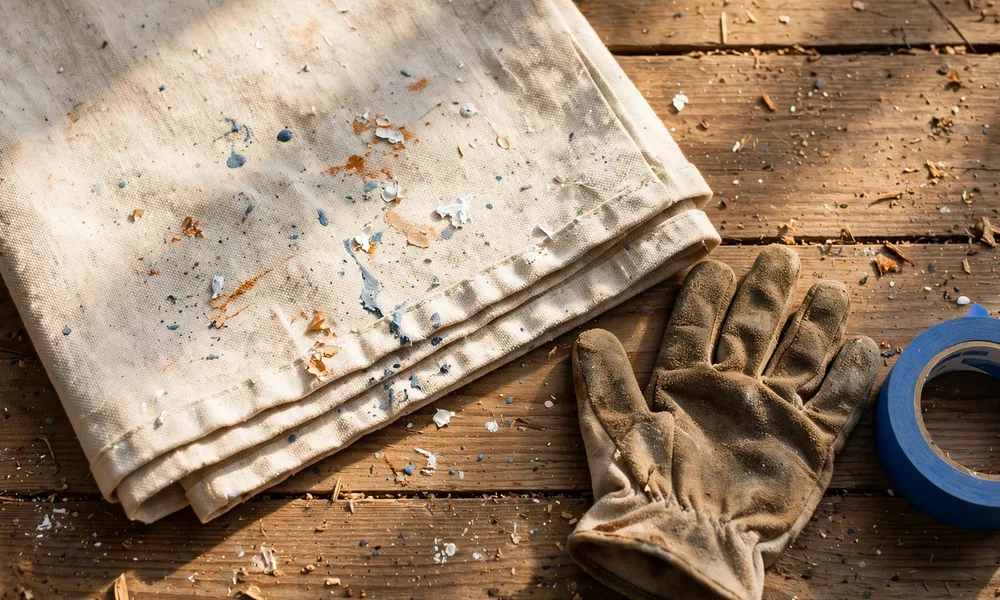
Canvas is the traditional choice and still the best for most jobs. A proper cloth is heavy cotton duck, around eight to twelve ounces per square yard, and it absorbs paint rather than letting it sit on the surface. Absorbed paint cannot be tracked around on shoes, and canvas grips the floor instead of sliding. It can be washed, folded and reused for years.
Plastic sheeting
Plastic sheeting, usually sold as polythene in rolls or pre-cut sheets, is cheap, waterproof and useful for covering furniture, light fittings and anything that must stay completely dry. Its weakness is the floor: paint sits on top of plastic in wet puddles, your shoes pick it up and spread it, and the sheet slides on hard floors and tears under a ladder leg. Use plastic for covering things, not for walking on.
Plastic-backed canvas
Plastic-backed canvas tries to give you both: a canvas top that absorbs drips and a plastic layer underneath that stops anything soaking through. It is the best choice for carpet, where a soaked-through cloth would stain the fibres below, and for heavy spills on any floor. It is heavier and more expensive than plain canvas, but for carpet it is the safest option there is.
Paper and rosin paper
Rosin paper, a heavy red or brown building paper, is laid on floors during construction and renovation to protect against scratches, dust and light spills. It lies flat and is cheap enough to cover a whole house. It is not a painting cloth, though: it tears when wet, paint soaks through it quickly, and it offers no grip. Use it for dust and foot traffic, and put a real drop cloth over it when the paint comes out.
Drop Cloths Compared
| Drop cloth type | Best for | Soak-through | Grip underfoot | Reuse |
|---|---|---|---|---|
| Canvas, heavyweight | Hardwood, stairs, most rooms | Low | Excellent | Years |
| Canvas, lightweight | Quick jobs, furniture cover | Medium | Good | Years |
| Plastic-backed canvas | Carpet, heavy spills | None | Good | Years |
| Plastic sheeting | Covering furniture, fixtures | None | Poor | Once or twice |
| Rosin paper | Dust, scratches, renovation | High | Fair | Single use |
One heavy canvas cloth, nine feet by twelve, covers most rooms and outlasts a dozen plastic sheets.
How to Pick the Right Drop Cloth
Start with the floor, not the paint. Hardwood needs a cloth that grips and absorbs, since a drip can soak into the finish or seep between boards: heavy canvas is ideal. Carpet needs a waterproof barrier underneath the absorbent top, because paint that soaks through a plain cloth stains fibres that cannot be sanded or wiped clean: plastic-backed canvas is the answer. Tile and vinyl are the most forgiving, since dried paint can usually be scraped off.
Size is the next decision, and it is where most people go wrong. Measure the room and buy a cloth that covers the whole floor with a little to spare, not one that covers only the strip along the wall you are painting. Paint travels: it flicks off the roller, it drips from the brush on the way back to the tin, and it follows your shoes. A small cloth leaves the middle of the room exposed exactly where you walk.
Check the weight and the seams before you buy. A good canvas cloth feels heavy in the hand, has double-stitched hems that will not fray, and lies flat without curling at the corners. A thin cloth will let paint through, bunch underfoot and wear out after one job. Hold it up to the light: if you can see through the weave easily, paint will get through it too.
How to Lay a Drop Cloth Properly
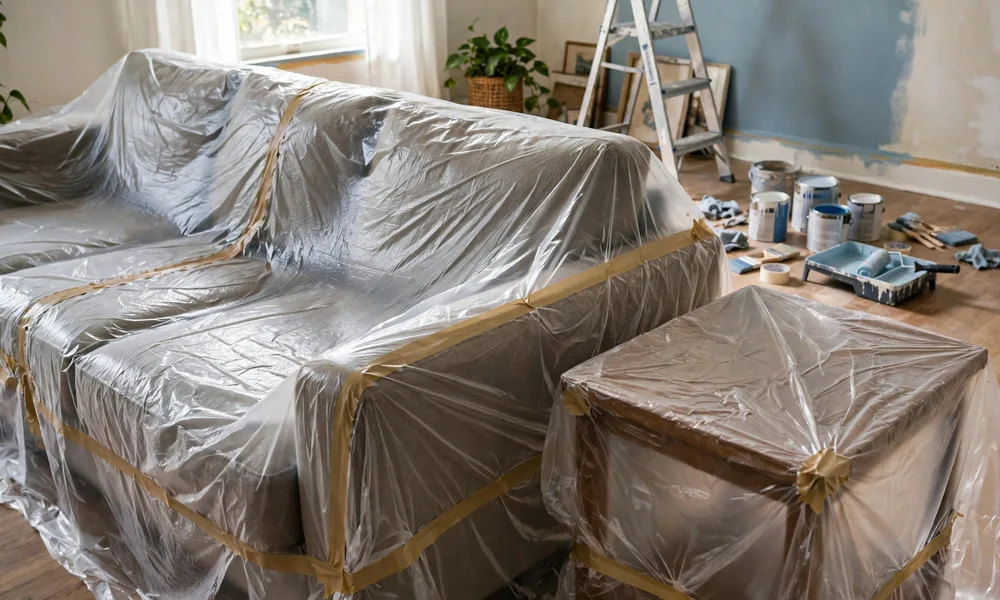
Laying the cloth takes two minutes, and doing it properly is what makes it work. Shake the cloth out, let it settle flat, then push it tight into the corners and along the skirting boards, so no drip can slip past the edge. If you are using two cloths, overlap them by at least a foot and tape the seam with painter’s tape, because a gap between two cloths is where most floor damage happens. Tape the outer edges to the skirting board too, so the cloth cannot ride up.
Cover the furniture before you cover the floor. A sofa, a television and a bookshelf all need plastic sheeting taped at the edges, and anything that cannot be moved out of the room should be grouped in the middle and covered as one island. Wear work gloves that protect your hands when shifting heavy furniture: a dragged table leg can tear a canvas cloth and gouge the floor beneath it. Lift furniture; never drag it.
Keep the cloth flat while you work. Every time you move the ladder, smooth the cloth back down and check the tape. A bunched-up cloth is a trip hazard, and it is where paint pools and soaks through. At the end of the day, fold the cloth in on itself, dirty side in, so wet paint does not touch the clean floor as you carry it out.
Looking After a Drop Cloth
A canvas drop cloth lasts for years if it is looked after, and the care is simple. Shake it out outdoors after each job, let wet paint dry on it, and fold it loosely for storage. A cloth stiff with old paint still protects well; dried paint fills the weave and blocks even more.
Wash a canvas cloth only when it is filthy or stiff enough to stop lying flat. Hose it down outside or run it through a gentle machine wash without detergent, then dry it flat in the sun. Do not use fabric softener, which coats the fibres and reduces absorbency. Plastic sheeting can be wiped and reused once or twice if untorn, but treat it as disposable.
Store drop cloths somewhere dry and out of the way of mice and damp, which rot cotton canvas over a winter in a shed. A shelf in the garage, folded loosely in a bag, is ideal. Floors are not the only thing worth protecting from paint and dust: our guide to chair mats that protect floors without cracking covers keeping hard floors safe from everyday chair wear as well.

Drop Cloth Buying Checklist
- Match the cloth to the floor: heavy canvas for hardwood, plastic-backed canvas for carpet, plastic sheeting for furniture.
- Buy big enough to cover the whole room with spare, and overlap two cloths by at least a foot where they meet.
- Check the weight: a good canvas cloth feels heavy, has double-stitched hems and does not show light through the weave.
- Tape the edges to the skirting board and tape every seam, so the cloth cannot ride up or gap while you work.
- Cover furniture with plastic sheeting first, and group what cannot be moved into one taped island in the middle.
- Fold the cloth dirty side in when you carry it out, and store it dry and loosely folded so it lasts for years.
Frequently Asked Questions
What is the best drop cloth for hardwood floors?
Heavyweight canvas, around eight to twelve ounces per square yard. It absorbs drips instead of letting them pool, it grips the wood so it does not slide underfoot,
Can I use plastic sheeting as a drop cloth on the floor?
You can, but it is a poor choice for walking on. Paint pools on plastic instead of soaking in, your shoes spread it around, and the sheet slides on hard floors and tears under ladder legs. Use plastic for covering furniture and canvas for the floor.
Do drop cloths stop paint soaking through to carpet?
Plain canvas does not, not reliably. Paint can soak through a single layer of canvas onto carpet fibres below. For carpet, use plastic-backed canvas, or lay plastic sheeting under a canvas cloth.
How big should a drop cloth be?
Big enough to cover the whole floor of the room you are painting, with a little spare. A nine-by-twelve-foot cloth suits most rooms. Two overlapping cloths are better than one small one, and the overlap should be at least a foot, taped down.
Can I reuse a drop cloth?
Canvas drop cloths can be reused for years. Shake them out after each job, let paint dry on them, and wash them only when they stop lying flat. Plastic sheeting can be reused once or twice if it has not torn, but treat it as mostly disposable.
How do I keep a drop cloth from sliding on a hard floor?
Use canvas, which grips far better than plastic, tape the edges to the skirting board, and tape the seams where cloths overlap. Keeping the cloth flat also stops it bunching and creeping.
The Bottom Line
The best drop cloth for most homes in 2026 is a heavyweight canvas cloth big enough to cover the whole room, with plastic-backed canvas for carpet and plastic sheeting for the furniture. Match the cloth to the floor, buy it big, tape the edges and seams, and keep it flat while you work. It is the cheapest part of any painting job, and the only part that stands between a drip and a ruined floor.