The best hiking shoes for women in 2026 are lighter, grippier, and more comfortable than ever, and the gap between a good pair and a great pair shows up within the first hour on the trail. A shoe that fits your foot shape, matches the terrain you actually walk, and keeps its grip when the path turns wet will carry you further with less fatigue than any other piece of gear.
Choosing well matters because hiking shoes are the one item you cannot swap out halfway through a walk. The wrong pair causes blisters and sore knees long before the scenery runs out, while the right pair quietly disappears from your attention. That is why fit, weight, waterproofing, and tread deserve more thought than brand names or colours.
This guide compares the best hiking shoes for women in 2026 across every type that matters: lightweight trail shoes for fast day hikes, waterproof shoes for wet and muddy routes, and sturdy all-rounders for rough, rocky ground. You will also find a comparison table, a fit checklist, and answers to the questions women ask most before buying.
Key takeaways
- Fit matters more than brand: a shoe shaped for a narrower heel and a wider forefoot prevents most blisters before they start.
- Lightweight trail shoes are the best choice for most day hikes, while waterproof shoes win on wet, muddy, or snowy routes.
- Deep, widely spaced lugs grip far better on loose gravel and wet rock than shallow, closely packed tread.
- Break new hiking shoes in over at least three short walks before taking them on a long hike.
- Buy hiking shoes in the afternoon, when your feet are slightly swollen, and leave a thumb’s width of space at the toe.

What Makes a Great Hiking Shoe for Women
A great hiking shoe for women is not simply a smaller version of a men’s shoe. Women’s feet tend to be narrower at the heel and wider across the forefoot, so the best women’s hiking shoes are built on a women’s-specific last. That shape keeps the heel locked in place while giving the toes room to spread on long descents, which is where most discomfort begins.
Beyond the last, the best shoes share four qualities: a grippy outsole, a cushioning midsole, a breathable upper, and a low weight that keeps your legs fresh after several hours. When a shoe gets all four right, the trail feels easier from the first step.
Fit Comes First
Fit is the single most important factor, and it is also the easiest to get wrong when buying online. Start by measuring both feet in the afternoon, standing up, and use the larger foot as your guide. There should be about a thumb’s width between your longest toe and the front of the shoe, and your heel should stay put when you walk uphill without lifting inside the shoe.
Pay attention to the width across the ball of the foot. Many women need a wider forefoot than standard women’s shoes provide, and a shoe that pinches there will cause hot spots within a few miles. If it feels snug across the toes in the shop, it will feel worse on the trail.
Weight Matters More Than You Think
Every extra gram on your feet costs more energy than the same weight in your pack, because your legs lift and swing your shoes thousands of times over a day. A 300-gram shoe saves a noticeable amount of effort by the afternoon, and that shows up as steadier footing.
Lightweight shoes do trade away some protection. A featherlight trail shoe will not shield your feet from sharp rocks the way a heavier shoe does, and its cushioning may compress faster over months of hard use. The best choice is the lightest shoe that still gives you the support and protection your usual terrain demands.
The Best Hiking Shoes for Women in 2026
The best hiking shoes for women in 2026 fall into three clear groups. Trail shoes are light and breathable for fast walking on dry paths. Waterproof shoes add a membrane that keeps rain and puddles out at the cost of some breathability. All-round hiking shoes sit between the two, with tougher uppers and deeper tread for mixed terrain.
Most women will be happiest with a lightweight trail shoe for the majority of their walks, or a waterproof all-rounder if they hike through wet winters and muddy springs. If you must choose one pair, pick the one that matches the conditions you walk in most often.
Best All-Round Trail Shoes
All-round trail shoes are the workhorses of the hiking world. They combine a breathable mesh or synthetic upper with a protective toe cap, a cushioned midsole, and a rugged outsole with lugs deep enough for loose ground. They handle dry trails, forest paths, and rocky scrambles, and they are comfortable enough to wear all day.
Best Waterproof Hiking Shoes
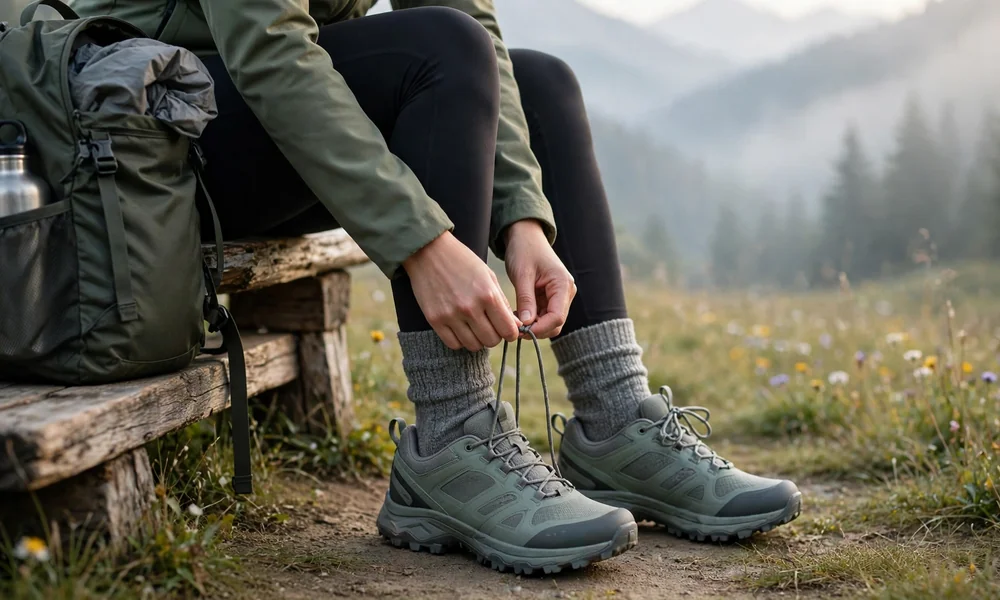
Waterproof hiking shoes use a membrane inside the upper that blocks liquid water while letting sweat vapour escape. On wet trails, through boggy ground, and in rain, they keep your feet dry for far longer than any non-waterproof shoe, and dry feet are warm, blister-free feet.
The trade-off is breathability. In hot weather, a waterproof shoe traps more heat and dries more slowly once water gets in over the collar. That is why waterproof shoes suit wet and cool conditions best, and why many hikers switch to breathable trail shoes in high summer.
When you compare waterproof models, check the collar height and the seal around the tongue. A low collar will still flood in a deep puddle, so pair waterproof shoes with gaiters if you regularly cross streams or walk through deep mud.
Hiking Shoes vs Hiking Boots: Which Should You Choose?
The most common question women ask is whether to buy hiking shoes or hiking boots, and the answer depends on your ankles, your pack, and your terrain. Hiking shoes are lighter, cooler, and more comfortable for most day hikes, while boots add ankle support and protection for heavy loads and rough ground.
If you have strong, stable ankles and you walk with a light day pack, shoes are almost always the better choice. They let your feet move naturally, they dry faster, and they are far more comfortable on long, flat sections.
Boots make sense when you carry a heavy multi-day pack, when you walk on steep, uneven ground where a twisted ankle is a real risk, or when you hike in snow and deep mud that would flood a low shoe. If that sounds like your hiking, our guide to the best hiking boots for women compares the strongest options.
Comparison Table: The Best Hiking Shoes for Women in 2026
Use this table to narrow your choice quickly.
| Type | Best For | Weight | Waterproof | Key Strength |
|---|---|---|---|---|
| Lightweight trail shoes | Fast day hikes, dry trails | 280–350 g | No | Comfort and speed |
| Waterproof hiking shoes | Wet, muddy, winter routes | 350–450 g | Yes | Dry feet in bad weather |
| All-round hiking shoes | Mixed terrain, rocky paths | 350–450 g | Optional | Balance of grip and protection |
How to Choose the Right Pair
Start with your terrain. Dry, well-maintained paths call for a lightweight trail shoe. Mud, streams, and rain call for a waterproof shoe. If you walk a bit of everything, an all-round shoe is the safest single purchase.
Next, think about your pack. A light day pack puts little extra load on your feet, so a flexible shoe is fine. A heavy pack changes the equation, because every step lands harder, and a stiffer midsole will protect your knees and feet over a long day. Our guide to the best hiking backpacks for women shows how pack weight and fit affect what your feet need.
Weather is the third factor, and it is the one people underestimate. A shoe that is perfect in July can be miserable in January. Cold, wet weather calls for waterproofing, while hot weather calls for breathability and a shoe that dries fast. For wet-weather hiking, pair your shoes with one of the best waterproof jackets for hiking so the rest of you stays as dry as your feet.
Breaking In Your New Hiking Shoes
New hiking shoes need a break-in period, even the most comfortable ones. The materials need time to flex around your feet and your feet need time to adjust to a new shape. Skipping this step is the most common cause of blisters on a first long hike.
Wear your new shoes around the house for a few hours first, then take them on two or three short walks, gradually increasing the distance. Pay attention to any rubbing or pressure points, and adjust the lacing or try different socks before you commit to a full day on the trail.
Hiking Shoe Care Checklist
A little care after each walk keeps hiking shoes performing well for years.
- Brush off dried mud and grit, then rinse the uppers with clean water and let them air dry away from direct heat.
- Remove the insoles and loosen the laces so air circulates inside the shoe and moisture escapes overnight.
- Stuff shoes with newspaper or shoe trees to hold their shape while they dry, and replace the paper once it is damp.
- Re-proof waterproof shoes with a spray treatment when water stops beading on the surface and starts soaking in.
- Check the tread regularly for worn lugs and the midsole for compression, and replace shoes when grip or cushioning fades.
- Store hiking shoes in a cool, dry place out of sunlight, never in a sealed bag where dampness breeds odour and mould.
Frequently Asked Questions
Should hiking shoes be a size bigger than normal shoes?
Many women go up half a size, because feet swell during long walks and toes need room on descents. With the shoe laced, you should be able to fit a thumb’s width between your longest toe and the front, and your heel should stay locked in when you walk uphill.
Are waterproof hiking shoes worth it?
Waterproof hiking shoes are worth it if you hike in wet, muddy, or snowy conditions, because dry feet stay warm and blister-free far longer. In hot, dry weather they are less comfortable, since the membrane traps heat, so many hikers keep a breathable pair for summer.
How long do women’s hiking shoes last?
A good pair typically lasts between 500 and 800 miles of trail walking, depending on the terrain and the build. Replace them when the tread is worn smooth, the midsole feels flat, or the upper starts to tear.
Can I use hiking shoes for everyday walking?
Yes, hiking shoes work well for everyday walking, and many women wear them for dog walks, school runs, and travel. They are comfortable and grippy on pavements, though their aggressive tread wears faster on hard surfaces than on trails.
What socks should I wear with hiking shoes?
Wear merino wool or synthetic hiking socks, never cotton, because cotton holds sweat against the skin and causes blisters. A cushioned crew-length sock protects the ankle from the collar and wicks moisture away.
Do I need ankle support from hiking shoes?
Most women do not need ankle support if their ankles are healthy and their pack is light. Low-cut shoes allow natural ankle movement. If you have weak ankles, a history of sprains, or a heavy pack, a mid-cut shoe or a boot offers the extra support you need.
The Bottom Line
The best hiking shoes for women in 2026 are the ones that fit your feet, suit your terrain, and keep you comfortable for the whole walk. Lightweight trail shoes win for fast, dry day hikes, waterproof shoes win when the weather turns, and all-round shoes are the safest choice for mixed conditions.
Buy for fit first, break your shoes in properly, and look after them between walks. Do that, and the right pair will carry you happily through hundreds of miles.