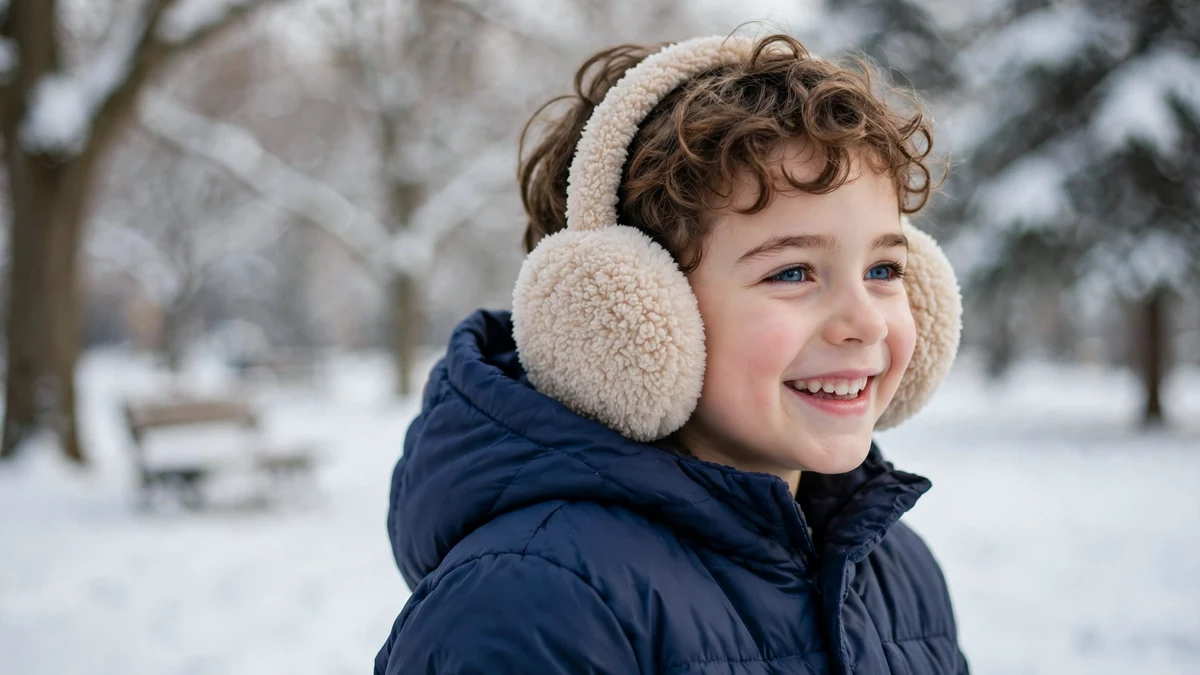
A child who is cold or overwhelmed by noise stops enjoying the day, and no amount of coaxing fixes it. Ears are small, exposed and surprisingly sensitive, so a cold wind on the walk to school or a sudden siren at a parade can turn a good outing into a miserable one in minutes. The best kids earmuffs of 2026 solve that problem quietly and simply: they keep little ears warm, soften harsh sound, stay put through running and jumping, and feel comfortable enough that a child forgets they are wearing them. The worst ones slip off, pinch, itch, or look warm while letting the cold straight through.

What Makes Kids Earmuffs Different
Adult earmuffs are not a safe shortcut for a child. An adult band is too wide, the cups are too large and too heavy, and the clamping force that holds them on an adult head can press painfully on a smaller one. Kids earmuffs are built around a smaller head from the start: a shorter, lighter band, smaller cups that cover a child-sized ear without swallowing the whole side of the head, and gentler pressure that still holds the cups in place. That smaller scale matters more than it looks, because a pair that is even slightly too big will slide down over the eyes or slip off the back of the head the first time a child runs.
Two Very Different Jobs: Warmth and Quiet
The first thing to decide is what job you actually need the earmuffs to do, because warmth earmuffs and noise-reduction earmuffs are built in different ways. Warmth earmuffs are soft, light and flexible, with fluffy cups and a fabric band that bends easily. They are made to block wind and hold in body heat on cold days, and they are the right choice for the school run, the playground, sledging and any ordinary winter outing. They soften everyday sound a little, but they are not designed to protect hearing, and they should never be treated as if they were.
Noise-reduction earmuffs are a different tool. They have firm, sealed cups, a stronger band and thick padding that creates a seal around the ear, and they are rated for how much sound they reduce. They are the right choice for fireworks, air shows, concerts, motor racing, power tools in the house and any other loud event where a child needs real protection. If you are unsure how much protection a loud event needs, our guide to the best ear protection of 2026 explains the ratings and the situations where protection matters most, and it is worth reading before a noisy day out.
How to Choose: The Five Things That Matter Most
Start with fit, because nothing else works if the fit is wrong. The cups should cover the whole ear with a little room to spare, and the band should sit comfortably on top of the head without sliding forward or back. The band should be adjustable, so it can grow with the child, and it should hold its position when the child bends down to pick something up. A good test is to let the child wear the pair around the house for ten minutes: if they keep pushing the cups back into place, the fit is wrong, and a different size or a different band shape will work better.
For noise-reduction pairs, check the rating and the seal. The rating tells you how much sound the pair is designed to reduce, and a higher number means more reduction, but the seal is just as important: if there is a gap between the padding and the head, sound leaks straight through it. Press the cups gently against the ears and look for gaps around the edges, especially at the top and bottom, and make sure the padding is soft enough to mould to the shape of the head. Glasses can break the seal, so if your child wears glasses, try the pair on with the glasses in place before you decide.
Comfort decides whether the pair gets worn at all. The best kids earmuffs are light enough that a child forgets them after a few minutes, with soft padding that does not press hard on one spot. Heavy cups pull the band down and make the neck ache, while a band that is too tight leaves a red mark and a headache. Weight is easy to check in the shop: hold the pair in one hand and compare it with another, and choose the lighter one if everything else is equal, because a child will be wearing it for hours, not minutes.

An Age-by-Age Guide
For toddlers, softness and simplicity come first. A toddler needs a very light pair with a soft, flexible band, no small parts, and cups that are small enough to sit neatly over little ears. Behind-the-neck styles can work well for toddlers who hate anything pressing on top of their head, but the most important test is whether the child will keep the pair on: a pair that is taken off every thirty seconds is no use at all, however warm it claims to be. Choose a bright colour the child likes, let them choose between two options, and keep the first outings short so wearing earmuffs becomes a normal, happy habit.
For children aged three to five, warmth and ease of use matter most. This is the age of the school run, the playground and the first sledging trips, so the pair needs to be warm, easy to put on without help, and tough enough to survive being dropped in a puddle. An adjustable band is essential at this age, because children grow quickly and a fixed-size pair can become too tight within a single winter. A pair that folds flat is a real advantage too, because it can live in a coat pocket or a school bag without being crushed.
For children aged six to nine, the choice widens. They can tell you what feels comfortable and what does not, they can manage a slightly firmer band, and they start to care about how things look, so letting them choose the colour makes a real difference to whether the pair gets worn. This is also the age when noise-reduction earmuffs become useful for organised events, from school concerts to sports matches, so it is worth having a firm pair ready for loud days alongside the soft warm pair for cold ones. A child this age can also learn to look after the pair, folding it away and keeping it clean.
The Best Types in 2026
Classic fleece earmuffs are still the best choice for ordinary winter warmth. They are soft, light, warm and easy to wear, and the best ones use dense, plush fleece that blocks wind without feeling bulky. Look for a pair with a fully covered band, smooth lining and cups that are deep enough to cover the whole ear, and avoid very thin pairs that look fluffy in the shop but flatten to almost nothing when pressed. A good fleece pair should feel warm in the hand before it is even put on, and it should stay warm after an hour outside, not just for the first five minutes.
Noise-reduction earmuffs are the best choice for loud events, and they deserve a place in any family that goes to fireworks, air shows or concerts. The best ones combine a clear sound-reduction rating with soft, wide padding and an adjustable band, so they protect without hurting. They are heavier and firmer than fleece pairs, so they are not the right choice for a long winter walk, but for a loud afternoon they are essential. For everyday listening at safer volumes, our guide to the best noise-cancelling headphones of 2026 covers the wider options, but for real hearing protection at a loud event, proper earmuffs are the safer pick.
Foldable earmuffs are the best choice for travel and for school bags. They fold inwards so the cups sit flat against each other, which means they take up very little space and are far less likely to be snapped or crushed. The best foldable pairs have a simple, sturdy hinge and a band that still holds its shape after being folded many times, while the worst ones develop a wobble at the hinge within a few weeks. If your child carries their own bag, a foldable pair is worth choosing even if it costs a little more, because a pair that survives the bag is a pair that is actually there when it is needed.

Care, Cleaning and Storage
Kids earmuffs get dirty quickly, so choose a pair you can actually clean. Most fleece pairs can be hand-washed in lukewarm water with a little mild soap, then left to dry naturally away from direct heat, while firm noise-reduction pairs can usually be wiped clean with a damp cloth. Never put earmuffs in a hot wash or a tumble dryer unless the maker says so, because heat can shrink the fabric, warp the cups and weaken the band. Check the care instructions before you buy, not after the first muddy outing, and keep them somewhere easy to find, such as a hook by the door.
Mistakes to Avoid
The most common mistake is buying a pair that is too big, on the grounds that the child will grow into it. A pair that is too big slips off, lets cold air in through the gaps, and breaks the seal on a noise-reduction pair, so it does neither job well. It is far better to buy the size that fits now, with a little adjustment left in the band, and replace it next winter if needed. The second mistake is choosing a pair for its looks alone: a pair with ears, horns or glitter may delight a child in the shop, but if it is stiff, heavy or scratchy, it will end up at the bottom of a drawer.
The third mistake is using warmth earmuffs as hearing protection, or assuming that any pair that covers the ears is enough at a loud event. Soft fleece softens sound a little, but it does not provide the rated protection a child needs at fireworks or a concert, and the difference matters for young ears. The fourth mistake is forgetting the rest of the winter outfit: earmuffs work best as part of a warm whole, and a child with warm ears but a cold neck and cold hands will still be miserable. Pairing earmuffs with the right coat makes a real difference, and our guide to the best kids winter coats of 2026 is a good place to start if the coat needs replacing too.
The best kids earmuffs of 2026 are not the most expensive ones, and they are not the ones with the most features. They are the ones that fit a particular child, suit the job they are needed for, feel comfortable enough to be worn without a fuss, and survive a winter of real use. Choose a soft, warm pair for cold days and a firm, rated pair for loud ones, let the child help choose the colour, and check the fit before you buy. Get those simple things right, and a small pair of earmuffs can make the difference between a child who wants to go outside and a child who wants to stay in.


