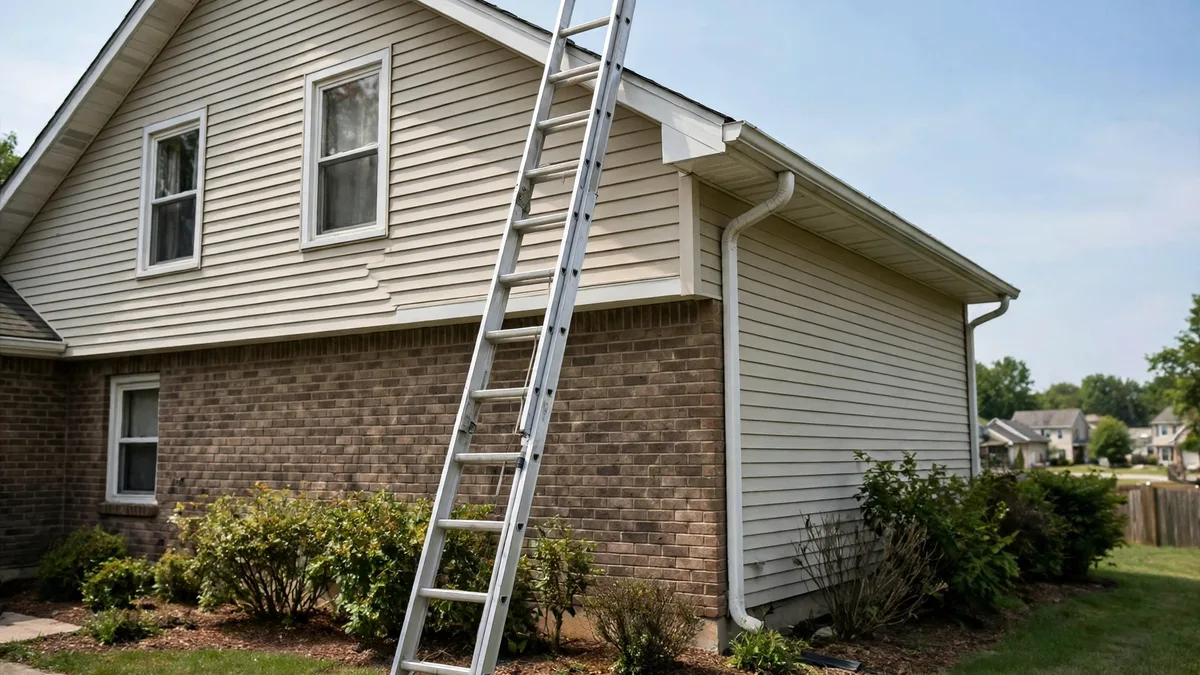
A ladder is only as safe as the ground it stands on. A well-made ladder can still slide, rock or sink on the wrong surface, and most ladder falls start at the bottom, not the top. The ladders that stay steady on any surface in 2026 are built for real ground: wide rubber feet for hard floors, spikes for soft soil, and levelling legs for slopes.
This guide is about steadiness, surface by surface. It looks at what keeps a ladder still on concrete, tile, wood, grass, gravel and wet ground, and which features matter most for the ground you actually have.
Key Takeaways
- The ground decides safety: a ladder that cannot stand firm on your surface is the wrong ladder, whatever its price.
- Wide rubber feet grip hard floors; spikes and stabilisers grip soft ground; levelling legs fix slopes and stairs.
- A splayed base and a rigid frame beat extra height: a tall ladder that rocks is more dangerous than a short one that stands still.
- Set up at about 75 degrees, with the base one quarter of the working length from the wall, and check every lock twice.
- For short indoor reaches, a step stool is safer and quicker than any ladder, so do not climb higher than the job needs.
Why the Ground Decides Whether a Ladder Is Safe
Two ladders can look identical in a shop, yet behave very differently on your ground. One sits flat and nothing moves when you shift your weight. The other rocks on a tile, sinks into a lawn, or slides across a wet patio. The difference is rarely height or price. It is the feet, the base width, and whether the legs adjust to uneven ground.
Most homes have more than one surface to climb from: a tiled floor one day, a concrete drive the next, a grass verge the day after. Buying for only one surface is the most common mistake.
Ladders on Every Surface
Each surface asks something different from a ladder. Here is what to look for, surface by surface, before you buy.
Concrete and Paving
Concrete is the easiest surface for a ladder, and the one most ladders are designed for. Wide rubber feet grip it well, and a splayed base keeps the ladder planted. Watch for smooth, sealed concrete and dusty paving, where hard plastic feet can skate.

Wood and Tile Floors Indoors
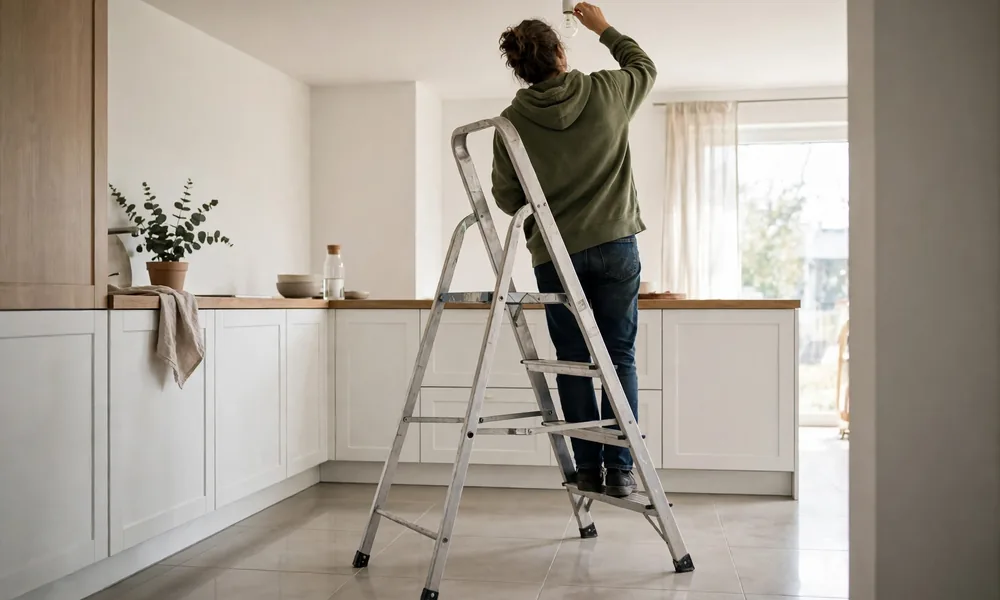
Indoors, the risk is sliding, not sinking. A step ladder on a smooth tile or wooden floor needs soft, wide rubber feet and a base wide enough to resist sideways movement. Put a rubber mat under the feet if the floor is polished, and never set a ladder on a rug.
Grass and Soft Soil
Grass looks soft and safe, but it is one of the hardest surfaces for a ladder. Feet sink unevenly and the ladder leans. For lawns and soil, look for feet with fold-out spikes that dig in, or a stabiliser bar that spreads the load. Press the feet firmly in before you climb.
Gravel and Loose Ground
Gravel shifts under load, so a ladder foot can sink or slide sideways without warning. A stabiliser bar helps here: it spreads the load across a wider area and stops one foot digging in deeper than the other. Clear loose stones from under each foot and avoid deep or freshly laid gravel.
Slopes and Uneven Ground
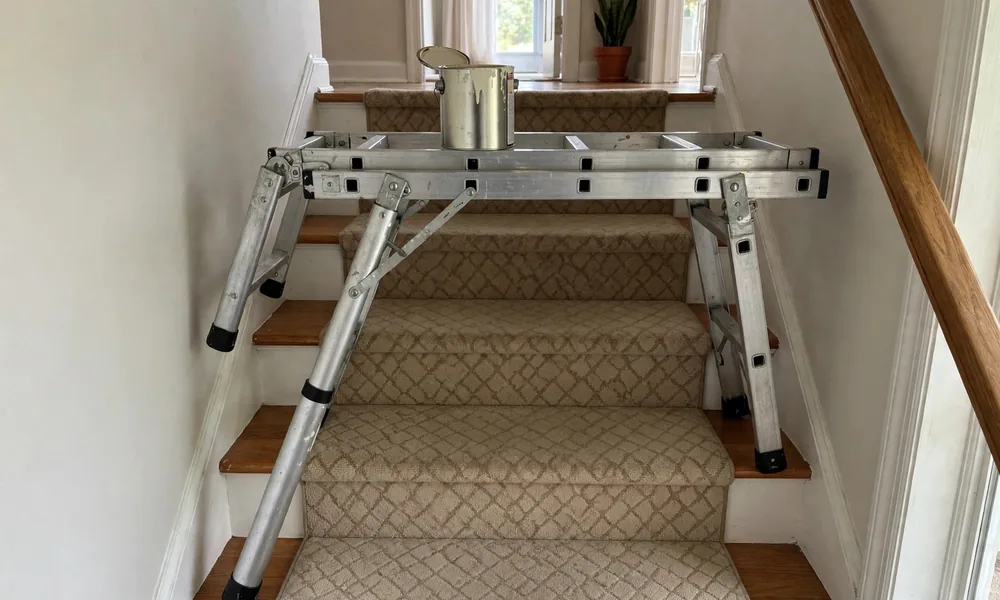
A slope is the hardest test of a ladder, and the one where the wrong ladder fails fastest. The downhill leg carries more weight and the whole ladder wants to slide downhill. This is the job for levelling legs: one leg extends further than the other so the ladder stands upright on ground that is not level.
Wet and Slippery Ground
Wet paving, damp decking and morning dew all cut grip sharply. Rubber feet work far better wet than hard plastic ones, but no foot grips ice or a wet, mossy surface well. If the ground is wet, dry the spot under each foot and climb slowly. If it is icy or covered in wet leaves, do not climb at all.
The Features That Keep a Ladder Steady
Five features decide whether a ladder stays put. Check them in this order, before you look at height or price.
Wide, Swivelling Feet
The foot is the part of the ladder that meets the ground, and the best feet are wide, angled and made of soft, grippy rubber. Some good ladders have swivelling feet that sit flat on uneven ground instead of touching on one edge. Check the feet for wear: smooth, hardened rubber grips little better than plastic.
Levelling Legs
Levelling legs let each side of the ladder extend independently, so the ladder stands upright on a slope, a step or a garden that falls away. They are the single most useful feature for anyone whose ground is never flat. They should lock firmly at every setting and never slip under your weight.
Stabiliser Bars
A stabiliser bar is a wide bar fitted across the base of an extension ladder. It spreads the load, stops the ladder twisting sideways, and makes the base far harder to slide. It adds a little weight and width, but for outdoor work at height it is worth having on every ladder you buy.
Spikes for Soft Ground
Some ladder feet have spikes that fold out for grass and soil, digging into soft ground where rubber alone would slide. Use them only on soft ground: spikes on concrete or tile will skate and can damage the floor. Fold them away indoors.
A Rigid Frame
None of the feet matter if the frame flexes. A good ladder has a rigid frame that does not twist when you push it from the side, with tight joints and rungs that do not bow. Aluminium is light and does not rust; fibreglass is heavier but does not conduct electricity.
Ladders That Stay Steady at a Glance
| Pick | Best surface | Key steady feature | Watch out for |
|---|---|---|---|
| Best overall | Concrete and paving | Wide rubber feet, stabiliser bar | Heavy to move between jobs |
| Best for slopes | Slopes and stairs | Independently levelling legs | Costs more than a fixed ladder |
| Best for grass | Lawns and soft soil | Fold-out spikes, wide feet | Spikes must stay folded indoors |
| Best indoors | Tile and wood floors | Soft rubber feet, splayed base | Short reach, for indoors only |
| Best multi-position | Stairs and awkward spaces | Adjustable legs, locking hinges | Heavier, needs practice to set up |
| Best budget | Flat concrete | Wide feet, rigid frame | No levelling legs for slopes |
Six Ladders for Tricky Ground in 2026
These six picks are chosen for steadiness on real ground, not height alone. For the wider comparison, our guide to the best versus worst ladders of 2026 puts the two ends of the market side by side.
1. Best Overall Ladder for Steady Ground
The best overall ladder pairs a rigid aluminium frame with wide rubber feet and a stabiliser bar. It stands firm on concrete and paving, grips well on damp ground, and is the ladder to buy if you only buy one.
2. Best Ladder for Slopes
The best ladder for slopes has independently levelling legs that lock firmly at every setting. It stands upright where a fixed ladder would lean, and it is the only sensible choice for a garden that falls away.
3. Best Ladder for Grass and Soft Soil
The best ladder for grass has fold-out spikes and a wide base that spreads the load. The spikes dig into soft ground where rubber alone would slide, and fold away cleanly for hard surfaces.
4. Best Ladder for Indoors
The best indoor ladder is a freestanding step ladder with soft rubber feet and a wide, splayed base. It stands firm on tile and wood floors without sliding, and it needs no wall to lean on.
5. Best Multi-Position Ladder
The best multi-position ladder folds into step, extension and stair setups, with adjustable legs that handle uneven ground. It suits a home with little storage and a wide range of jobs.
6. Best Budget Ladder
The best budget ladder is a simple rigid step or extension ladder with wide rubber feet and no wobble. It has no levelling legs, so it suits flat concrete, but on flat ground it stands as firm as ladders costing twice as much.
When a Step Stool Is Enough
Not every high reach needs a ladder. For a kitchen shelf, a wardrobe top or a pantry, a short step stool is quicker, steadier and safer than a tall ladder indoors, because it stands on its own and keeps you low to the ground. Our guide to the top step stools for reaching high shelves in 2026 covers the two- and three-step models that suit those jobs. If a stool reaches the shelf, use the stool.
Setting Up on Uneven Ground
Setting up well matters as much as buying well. Clear the ground under each foot, move loose stones and leaves out of the way, and dry wet patches with a cloth. Set the ladder at about 75 degrees, press each foot firmly into the ground, and on a slope extend the downhill leg first. Climb slowly for the first three rungs: a good setup barely moves. If it rocks or slides, climb down and reset it.
In the workshop, a steady bench matters as much as a steady ladder, and our guide to the best workbenches of 2026 compares the benches that stay solid under real use.
Ladder Checklist for Any Surface
- Clear the ground under each foot and dry any wet patches before you set up.
- Check the feet for wear: smooth, hardened rubber grips little better than plastic.
- On a slope or stairs, level the legs first and check the ladder stands upright.
- Test every lock twice, and make sure the feet sit flat with no rocking.
- Climb slowly for the first three rungs and shift your weight to test the setup.
- If it rocks, slides or sinks, climb down and reset it rather than carrying on.
Frequently Asked Questions
What is the best ladder for uneven ground?
A multi-position ladder with independently levelling legs is best, because each leg adjusts to the ground it stands on. Fixed ladders cannot cope with slopes or steps.
Do ladder stabiliser bars really help?
Yes. A stabiliser bar spreads the load across a wider base, stops the ladder twisting sideways, and makes it far harder to slide. For outdoor work at height, it is worth having.
Can I use a ladder on grass?
Yes, if it has fold-out spikes or a stabiliser bar, and you press the feet firmly in before climbing. Avoid wet grass and freshly dug soil.
How do I stop a ladder sliding on tiles?
Use a ladder with soft, wide rubber feet, keep the feet clean, and put a rubber mat under them on polished floors. Never set a ladder on a rug.
What angle should a ladder lean at?
About 75 degrees, with the base one quarter of the working length away from the wall. The ladder should extend at least a metre above the roof edge or gutter you are stepping onto.
When should I use a step stool instead of a ladder?
For any indoor reach a stool can make, such as a kitchen shelf or a wardrobe top. A stool is quicker and steadier, and it keeps you low to the ground. Save the ladder for outdoor height.
The Bottom Line
The ladders that stay steady on any surface in 2026 are the ones built for the ground you actually have: wide rubber feet for hard floors, spikes for soft soil, and levelling legs for slopes and stairs. Buy for your worst surface, set up slowly, and test the ladder before you trust it.