
Best Outdoor Thermometers 2026
A glance at the wall before stepping outside tells you more than any weather forecast on a phone. It tells you whether the morning is cold enough for a coat, whether the soil is warm enough for seeds, and whether the evening will be pleasant on the patio or better spent indoors. A good outdoor thermometer gives that answer in a second, honestly and without fuss. A bad one lies quietly, reading the heat of a sunny wall or the chill of a shaded corner, and you only find out when the plants suffer or the washing comes in damp. The best outdoor thermometers of 2026 are not the cleverest gadgets or the most expensive. They are the ones that read true, survive the rain and frost, and are easy to glance at from a few steps away.

What Makes an Outdoor Thermometer Good
The first thing to judge is accuracy, and accuracy is mostly about placement and design rather than the price tag. A thermometer that sits in direct sun will read several degrees too warm, and one tucked behind a drainpipe will read too cold. The best models are built to cope with that: a shaded sensor, a ventilated case, and a display that is easy to read from a distance. A reading that is within a degree or two of the real air temperature, day after day, is worth far more than a fancy screen that is three degrees out.
The second thing is toughness. An outdoor thermometer lives outside in rain, frost, wind and summer heat, and it has to keep working through all of it. The case should be sealed against driving rain, the fixings should not rust in the first winter, and the screen, if it has one, should stay clear and readable after a season in the sun. A thermometer that fogs up inside, cracks in a frost or fades until it cannot be read is no bargain, however cheap it was. Look for solid materials, a sensible seal, and a design with no fiddly parts to trap water.
The Four Main Types of Outdoor Thermometer
Analogue dial thermometers are the classic choice, and they still suit many homes. A round brass or painted metal dial with a needle, screwed to a wall by the door, needs no batteries and no signal. It is readable at a glance, it looks at home on a cottage wall or a garden shed, and it keeps working when everything else has run flat. The trade-off is precision: a dial gives a good general reading rather than a decimal-point figure, and a cheap one can drift over time. For a quick check before a walk, though, a good dial is hard to beat.
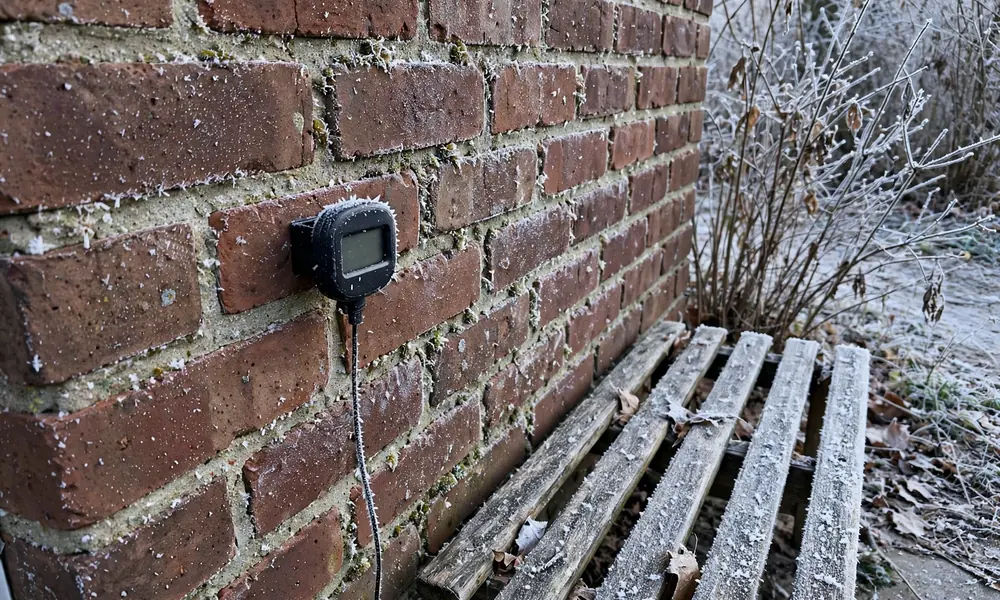
Digital wall thermometers are the straightforward modern option. A small screen, usually with large clear numbers, shows the temperature at a glance, and many also show humidity or the highest and lowest readings of the day. They run on a small battery that lasts a year or more, and they are easy to fix to a wall or stand on a shelf. They suit a sheltered porch or a covered patio best, where the screen stays out of driving rain. The best ones have a screen that stays readable in bright light and does not wash out in the sun.
Wireless thermometers split the job in two: a small sensor sits outside, and a display unit sits indoors on a table or windowsill. The sensor sends the reading through the wall, so you can check the garden temperature from the kitchen without opening the door. Many displays show two or three sensors at once, so one can watch the front garden, the back garden and the greenhouse. The range matters here: a sensor that works through one thin wall may fail through thick stone, so check the stated range and expect less than the headline figure in a solid house.
Soil and garden thermometers are a different tool for a different job. Instead of measuring the air, they measure the temperature of the soil, which is what decides whether seeds will germinate and whether tender plants will survive the night. A metal probe pushed into the ground gives a reading in a minute or two, and it takes the guesswork out of sowing. For anyone who grows vegetables or keeps a greenhouse, a soil thermometer is a small tool that pays for itself in the first spring, because it stops seeds being sown into cold ground where they simply rot.

Where to Put an Outdoor Thermometer
Where a thermometer sits matters as much as which one you buy. The best spot is on a north-facing wall, or at least a wall that does not catch the afternoon sun, about head height and out of the rain if possible. A thermometer in full sun is measuring the wall, not the air, and one at ground level is measuring the cold air that pools near the soil. Give the sensor some air around it, keep it away from vents, boilers and tumble-dryer outlets, and leave it a few minutes to settle before trusting the reading. A wireless sensor needs the same care, plus a clear line back to the display indoors.
The Best Outdoor Thermometers of 2026
The best analogue thermometer of 2026 is a solid brass dial with a clear face, large numbers and a needle that moves smoothly rather than jumping. It fixes to the wall with two screws, needs no batteries, and is readable from across the garden. The brass weathers gently rather than rusting, the glass stays clear, and the reading stays steady through the seasons. It is the pick for a front door, a garden wall or a shed, and for anyone who wants a thermometer that simply works every time they look at it.
The best wireless thermometer of 2026 is a simple two-part set: one small weatherproof sensor and one clear indoor display that shows the outside temperature in large numbers, plus the indoor temperature and the daily high and low. The sensor runs for a year or more on a single battery, the signal reaches through a normal house wall without dropping out, and the display is easy to read from the breakfast table. It is the pick for anyone who wants to know the garden temperature without opening the back door on a cold morning.
The best digital wall thermometer of 2026 is a neat, weather-sealed unit with a big high-contrast screen and a simple mount. It shows the temperature in large figures, adds humidity and a simple trend arrow, and its battery lasts well over a year. The screen stays readable in bright daylight, the case keeps out the rain, and the whole thing is small enough to sit on a sheltered porch without drawing attention to itself. It is the pick for a covered patio, a porch or a conservatory door.
The best garden thermometer of 2026 is a sturdy metal-probe soil thermometer with a clear dial and a long stem that reaches down to where the roots actually are. It gives a reading in a minute or two, it wipes clean, and it is tough enough to be pushed into firm soil without bending. It is the pick for vegetable growers, for anyone starting seeds in spring, and for gardeners who want to know whether the ground is truly warm enough before they plant out tender seedlings.
The best budget thermometer of 2026 is a simple plastic-cased digital unit that does one job well: it shows the outside temperature clearly and keeps doing so through the winter. It has no extra features to go wrong, it costs very little, and a fresh battery once a year is all the care it needs. It is the pick for a shed, a garage door or a second spot in the garden, and for anyone who wants a spare reading without spending much at all.
What Else You Need
A thermometer on its own is nearly all you need, but a few small extras make it more useful. A spare battery, kept indoors, means a dead display is fixed in a minute rather than a week. A small shelter, such as a simple white louvred screen or even a shaded spot under the eaves, keeps sun and rain off the sensor and makes the reading far more honest. And a notebook by the back door, or a habit of glancing at the daily high and low, turns a single reading into a picture of the season: when the frosts stop, when the soil warms, and when the evenings finally stay mild.
Common Mistakes to Avoid
The biggest mistake is putting the thermometer where it looks nice instead of where it reads true. A sunny south-facing wall by the front door is the worst spot in the house: it will read warm all afternoon and tell you nothing about the real air. The second mistake is trusting the first reading after fitting a new thermometer. The sensor needs time to settle to the air temperature, and a thermometer brought straight out of a warm house will read high for a while. Give it half an hour before you believe it.
Another common mistake is forgetting the battery until the screen goes blank in the middle of winter, which is exactly when the reading matters most. Change the battery in autumn, before the cold arrives, and keep a spare indoors. Wireless sensors have the same problem, only hidden: a sensor that stops sending looks like a frozen reading, not a dead one, so check that the display is updating before trusting it on a frosty morning. A little care keeps a cheap thermometer honest for years.
How an Outdoor Thermometer Fits a Well-Run Home
Knowing the temperature outside shapes the small decisions of the day: whether to bring the washing in, whether to cover the seedlings, whether to light the stove or open the windows. Gardeners feel it most, because a single cold night can undo weeks of work, and a thermometer by the door is the cheapest insurance a garden has. Readers who heat a greenhouse will find the same habit useful there, and the best greenhouse heaters guide covers keeping that space warm once the thermometer says it is cold.
The same habit of measuring before acting carries into the kitchen and the rest of the house. A cook who checks the heat before trusting a guess gets better results, and the best meat thermometers guide covers that idea at the stove, while the best aquarium heaters guide covers keeping water at a steady temperature for fish. In each case the lesson is the same: measure first, then act, and the result is better than guessing.
The Verdict
The best outdoor thermometer of 2026 is the one that reads true where you actually put it. For most homes that means a simple wireless set, with the sensor outside in the shade and the display indoors where it is always in view. For a front door or a garden wall, a solid brass dial is the timeless pick, and for a vegetable grower a soil thermometer is the tool that matters most. Whatever the choice, put it in the shade, give it time to settle, and change the battery before winter. A thermometer chosen this way will not just tell the temperature on the first day; it will still be telling it honestly years from now, every time you glance at the wall before stepping outside.


