Why Pet Water Fountains Get Cats Drinking More in 2026
Pet water fountains get cats drinking more for a simple reason: moving water catches a cat’s eye in a way a still bowl never does. In the wild, running water is fresh water, and cats still trust that instinct. This guide explains why fountains work, which types suit which homes, how a fountain differs from a bowl, and how to keep one clean and quiet enough that your cat actually uses it every day. It also covers the mistakes that put cats off fountains, so you can avoid the trial and error most owners go through.
Key Takeaways
- Moving water attracts cats because their instincts read running water as fresh, while still water in a bowl can look stale.
- Place the fountain away from food bowls and litter trays, in a spot your cat already walks past every day.
- Ceramic and stainless steel fountains stay cleaner and taste better than plastic, which can scratch and hold smells.
- Change the filter on schedule and wash the fountain weekly, or the water quality drops below that of a fresh bowl.
- A quiet pump matters more than extra features: a noisy fountain will scare a nervous cat away for good.
Why Cats Ignore a Still Bowl of Water
Many cats drink far less than they should, and the bowl is often part of the problem. Cats have poor close-up vision and find still water hard to see, so they dip a paw in to test the level, or walk past entirely. Water that has sat for hours collects dust and hair, and cats can smell it. A deep, narrow bowl also forces whiskers against the sides, which many cats hate. Owners often discover this when a cat starts drinking from a dripping tap or a glass left on the table: the cat is following an old instinct that says moving water is safe.
How a Fountain Changes the Deal
A pet water fountain is a small pump that circulates water through a filter and back into a bowl, usually as a gentle stream. The movement makes the water visible, keeps it oxygenated and cooler, and lets the filter remove hair and dust, so it stays cleaner between refills. The result is a cat that visits more often and drinks a little more each time. That matters because even mild dehydration concentrates a cat’s urine, which is linked to urinary problems vets see every week. A fountain is not medicine, but for a healthy cat that drinks too little, it is one of the simplest improvements you can make. Owners often notice the difference within a week: the cat visits the water station more often, drinks for longer, and stops begging at taps and glasses.
The 4 Fountain Types Worth Buying
Most fountains fall into four types.
1. Ceramic Fountains
Ceramic is the best all-round choice. It is heavy enough that a cat cannot tip it, does not scratch like plastic, and keeps water cool. Glazed ceramic wipes clean and does not hold smells. The downsides are weight and breakage: it is heavy to carry to the sink and can chip if dropped, and a cracked glaze can harbour bacteria.
2. Stainless Steel Fountains
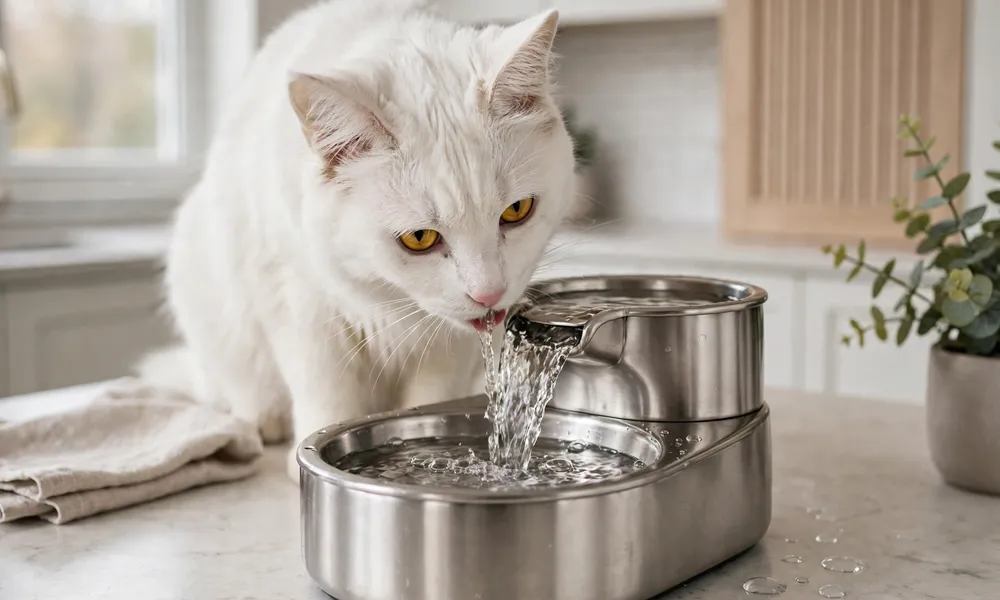
Stainless steel is the most hygienic option and the easiest to clean: it resists scratches, holds no odours, and survives the dishwasher. It is lighter than ceramic and nearly impossible to break. The trade-off is noise, since steel can amplify the pump hum. A steel fountain with a quiet pump is the best choice for a home with several cats.
3. Plastic Fountains
Plastic fountains are the cheapest and lightest, making them a good first fountain for testing whether your cat will use one. The problem is durability: plastic scratches, and scratches harbour bacteria and hold smells that put cats off. Some cats also develop chin acne from plastic. If you buy plastic, choose BPA-free and replace it sooner than ceramic or steel.
4. Gravity and Battery Fountains
Gravity fountains have no pump: water flows down from a reservoir as the bowl empties. They are silent and need no power, but the water does not circulate or filter, so they offer little over a good bowl. Battery fountains with motion sensors only run when the cat approaches, which saves power, but the sensor can startle a nervous cat.
Fountain vs Bowl: The Real Difference
A fountain and a bowl do the same job in different ways, and the difference is movement. A bowl holds still water that slowly warms up, collects dust, and goes stale. A fountain circulates water through a filter, keeping it moving, oxygenated, and cooler, which is what draws a cat to drink. That does not make bowls useless: a clean, wide bowl refilled twice a day is far better than a dirty fountain. The honest comparison is a clean fountain against a clean bowl: the fountain wins on freshness and visits, while the bowl wins on simplicity, silence, and cost. Many owners keep both. If you already own good bowls, our guide to the best pet food bowls of 2026 explains how to choose them, but for a cat that ignores every bowl, a fountain is the next step worth trying.
Noise, Filters, and Cleaning
A fountain is only as good as its maintenance. The pump fails first, usually because hair and limescale clog it, so rinse it weekly and descale monthly in hard-water areas. Change filters every two to four weeks; a filter left too long stops cleaning the water and adds a stale taste. Wash the whole fountain weekly with warm water and mild soap, never bleach, since residue puts the cat off. A pump running dry buzzes loudly, so top the water up daily and never let it drop below the minimum line. If your cat startles at the sound, run the lowest flow setting for the first week, or place the fountain on a folded towel to dampen vibration.

Pet Water Fountains Compared
| Fountain type | Best for | Cleaning | Noise | Price range |
|---|---|---|---|---|
| Ceramic | Most cats, cool water | Easy, heavy to carry | Quiet | Medium to high |
| Stainless steel | Multi-cat homes, hygiene | Easiest, dishwasher safe | Can amplify pump hum | Medium |
| Plastic | First fountain, tight budget | Fair, scratches hold smells | Quiet | Low |
| Gravity / battery | Silent homes, one cat | Easy, no pump to clean | Silent | Low to medium |
Ceramic wins for most single-cat homes, steel wins where hygiene matters most, and plastic wins as a low-cost trial. But the best fountain is the one you will actually clean every week: a cheap fountain cleaned weekly beats an expensive one cleaned monthly.
Where to Put the Fountain
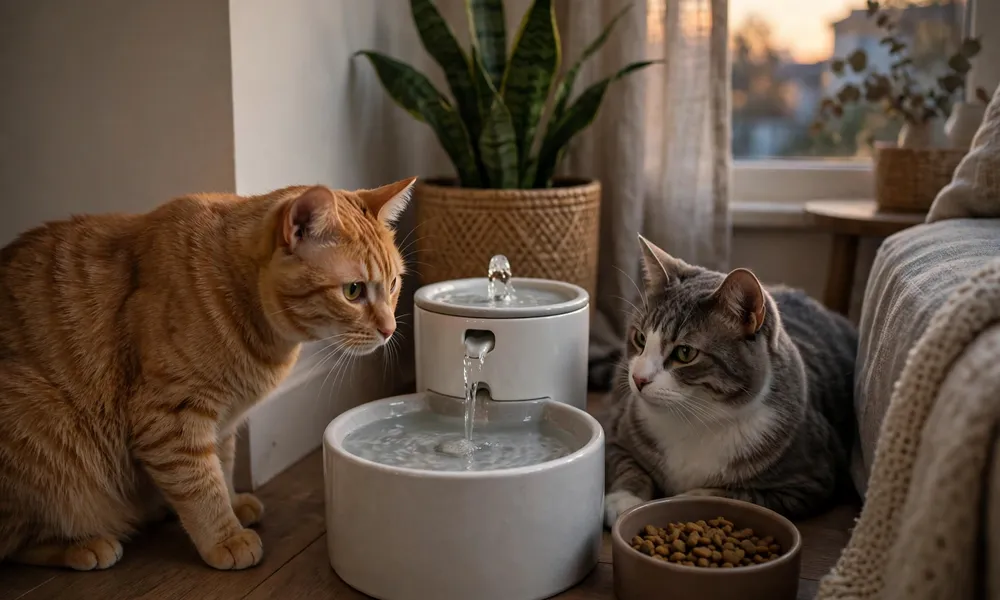
Placement decides whether a fountain gets used. Cats prefer to drink away from their food, another old instinct: in the wild, water near a kill can be contaminated. Put the fountain in a different spot from the food bowls, in a room the cat walks through often, such as the kitchen or hallway. Avoid the litter tray, noisy corners, and spots where the cat feels cornered. It should sit on a flat, waterproof surface, since splashing is normal. Keep it out of direct sun, which warms the water and grows algae. If the cat ignores it for a few days, try moving it a metre or two: the right spot is often just around the corner. A second station in another room helps in multi-cat homes.
Mistakes That Put Cats Off Fountains
The first mistake is buying the biggest fountain with the strongest waterfall. Most cats prefer a gentle trickle, and a loud cascade can scare a nervous cat away permanently, so start on the lowest flow. The second is forgetting to clean it: a slimy pump and stale filter taste worse than a fresh bowl. The third is letting the water run low, which makes the pump buzz and can burn it out. The fourth is placing the fountain beside the food bowls. The fifth is expecting instant results: some cats take a week to trust a humming object. Leave the fountain running, keep a bowl available too, and let the cat choose. Never remove all other water to force the issue, since a cat that cannot find water will simply go thirsty, and that is far worse than a cat drinking from a bowl. Good hydration also starts with food, and our guide to the best cat food of 2026 covers wet food that adds moisture to every meal.
Checklist: Choosing a Fountain Your Cat Will Use
- Pick ceramic or stainless steel over plastic, unless you are buying a cheap first fountain to test the idea.
- Choose a quiet pump with adjustable flow, and start on the lowest setting for the first week.
- Make sure the fountain is wide and shallow enough that whiskers do not brush the sides while drinking.
- Place it away from food bowls and litter trays, in a room your cat walks through every day.
- Top the water up daily and wash the whole fountain, pump included, every single week.
- Change the filter on the schedule in the manual, usually every two to four weeks, without skipping.
Frequently Asked Questions
Do cats really drink more from a fountain?
Most do, because moving water attracts them and stays fresher than still water. The increase is modest but real: more visits, and a little more drunk each time. A cat that ignores the fountain after two weeks may simply prefer a bowl.
How often should I clean a pet water fountain?
Wash the whole fountain weekly, rinse the pump at the same time, and change the filter every two to four weeks. In hard-water areas, descale monthly. A fountain cleaned less often can taste worse than a fresh bowl.
Are pet water fountains safe to leave running?
Yes, when they are used as directed: keep the water above the minimum line, keep the cord out of reach, and check the pump regularly. Never let the fountain run dry, since that can burn out the pump and makes a loud buzzing noise.
Will a fountain help a cat with urinary problems?
Drinking more can help keep urine dilute, which vets welcome, but a fountain is not a treatment. If your cat strains to urinate or has blood in the urine, see a vet urgently rather than relying on a fountain.
Can I use tap water in a pet fountain?
Yes, in most homes tap water is fine, and the fountain filter removes much of the taste and particles. In very hard-water areas, filtered water reduces limescale on the pump. Never add anything to the water, such as flavourings or supplements, unless your vet advises it.
What size fountain does one cat need?
A fountain holding 1.5 to 2 litres suits one cat, while two or more cats need 2.5 litres or more. A bigger reservoir is not an excuse to clean less often. For the rest of your cat’s home setup, see our guide to cat trees your cat will actually climb.
The Bottom Line
Pet water fountains get cats drinking more because they work with a cat’s instincts instead of against them: moving water looks fresh, tastes clean, and is easy to find. Choose ceramic or steel, keep the flow gentle, place it away from the food bowls, and clean it every week. Do that, and the fountain becomes the place your cat drinks from without being asked, which is the whole point: better hydration with no daily battle over the water bowl.