The best pocket knives in 2026 are the small folding tools you carry every day without noticing them, until the moment you need one: opening parcels, cutting twine, trimming a loose thread, slicing an apple on a walk. A good pocket knife disappears into your pocket, opens smoothly with one hand, locks solidly while you work, and closes safely when you are done. A bad one is stiff to open, wobbles at the pivot, or rusts after one wet weekend. Choosing the right one is not about buying the biggest blade or the most expensive steel; it is about matching the knife to the carrying you actually do.
It helps to be clear about what a pocket knife is, because the name gets mixed up with other blades. A pocket knife is a folding carry knife: the blade folds into the handle, it locks open while you cut, and it rides in your pocket on a clip. That is a different tool from fixed kitchen knives, which never fold and never leave the kitchen, and different again from the retractable work blades in our guide to the best utility knives, which use replaceable blades for cutting boxes and carpet. A pocket knife is the one you carry, not the one you cook with or keep in a toolbox.
Key Takeaways
- A locking blade is the most important safety feature, because a knife that cannot close on your fingers is one you can trust under pressure.
- A blade between 7 and 9 centimetres suits most everyday jobs, long enough to be useful and short enough to carry comfortably.
- One-hand opening matters more than blade steel for daily use, because a knife you cannot open while holding something will not get used.
- Stainless steels such as 8Cr13MoV and 14C28N are the sensible choice for most buyers, holding a good edge while resisting rust.
- A deep-carry pocket clip keeps the knife discreet and secure, and stops it sliding to the bottom of your pocket.
What Makes a Pocket Knife Different
A pocket knife is built around one idea: a useful blade that folds away safely and rides in your pocket. The blade pivots into the handle, so the sharp edge is covered when closed, and a lock holds it open while you cut. The handle fills your hand, usually 10 to 11 centimetres long, and the whole knife weighs between 70 and 120 grams. Compare that with a kitchen knife, which has a fixed blade, no lock, and no clip, and is designed to stay on a worktop.
The folding design creates the two things you must judge carefully: the pivot and the lock. The pivot is the screw the blade turns on, and a good one lets the blade swing open smoothly without side-to-side wobble. The lock holds the blade open, and a good one engages with a clear click and releases only when you deliberately move it. Cheap folding knives fail at one or both of these points. The blade feels gritty, the lock barely catches, and the knife feels unsafe the first time you put pressure on it.
How We Chose the Best Pocket Knives
We judged every knife the way it is actually used: carried daily, opened one-handed, and put through ordinary cutting jobs over weeks. We cut cardboard, rope, twine, fruit, and packaging, checked the lock under pressure, and carried each knife in a jeans pocket for a full week to see whether it was comfortable or annoying.
The Best Pocket Knives Compared
The five knives below are the strongest all-round choices for everyday carry in 2026. They differ in size, steel, and price, but they share the things that matter: a reliable lock, smooth one-hand opening, a comfortable handle, and a clip that keeps them secure.
| Knife | Blade length | Steel | Lock | Weight | Best for |
|---|---|---|---|---|---|
| Everyday Classic Drop Point | 8.0 cm | 14C28N stainless | Liner lock | 95 g | First-time buyers |
| Lightweight Trail Folder | 7.5 cm | 8Cr13MoV stainless | Back lock | 72 g | Walking and travel |
| Workhorse Clip Point | 9.0 cm | D2 tool steel | Liner lock | 118 g | Hard daily use |
| Slim Office Carry | 7.0 cm | VG-10 stainless | Slip joint | 68 g | Discreet pocket carry |
| Premium Everyday Folder | 8.5 cm | S35VN stainless | Frame lock | 105 g | Buy once, keep for years |

Blade Shapes and What They Are For
The drop point is the best all-round blade shape for a pocket knife, and it is the shape we recommend for most buyers. The spine curves gently down to the tip, which gives you a strong point that is hard to snap and a long, curved cutting edge that suits slicing. It opens parcels, cuts rope, prepares food, and does a little of everything without a weakness. If you buy one pocket knife and want it to handle whatever comes up, buy a drop point.
Blade Steel: What Actually Matters
Blade steel decides three things: how long the edge stays sharp, how easily it rusts, and how hard it is to sharpen again. No steel wins on all three, so the right choice is a balance. Stainless steels such as 8Cr13MoV, 14C28N, and VG-10 resist rust well, take a sharp edge, and are easy to sharpen at home with a simple stone or a pocket sharpener. They are the sensible choice for most buyers, and a knife in one of these steels will serve you well for years.
Locks and One-Hand Opening
The lock is the safety feature that matters most, and you should test it before you buy if you can. A liner lock uses a springy piece of metal inside the handle that snaps behind the blade when it opens; it is easy to close one-handed and is the most common lock on everyday carry knives. A frame lock works the same way but uses part of the handle itself, which makes it stronger. A back lock puts the release on the spine and is very secure, though it usually needs two hands to close. A slip joint has no lock at all and relies on spring pressure; it is legal in more places and fine for light use, but not the choice for hard cutting.
One-hand opening is what turns a pocket knife from a tool you carry into a tool you use. A thumb stud lets you push the blade open with your thumb, a thumb hole does the same job and works well with gloves, and a flipper tab lets you flick the blade open with your index finger. Whichever you choose, try it: the blade should swing open smoothly and lock with a clear click, without you having to force it or shake your wrist. If opening the knife feels like a struggle in the shop, it will feel worse when your hands are cold or wet.
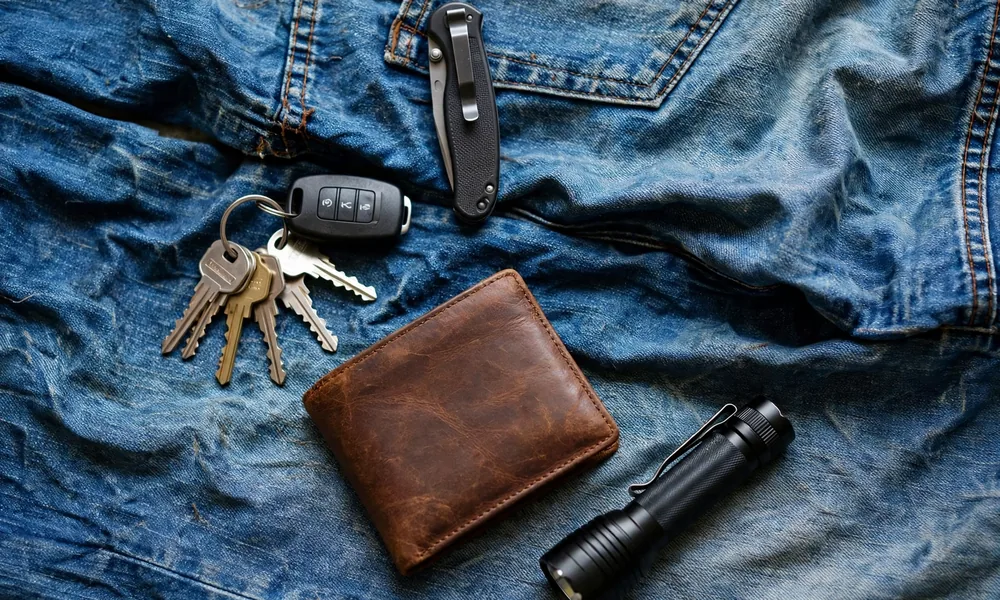
Size, Weight and Carrying Comfort
Size is a trade-off between usefulness and comfort. A blade of 7 to 9 centimetres handles almost every everyday job, from opening boxes to cutting an apple, while keeping the closed knife short enough to sit comfortably in a pocket. A longer blade cuts more in one stroke but makes the knife heavier and more noticeable, while a shorter blade is discreet but struggles with thicker material. For most people, an 8-centimetre blade is the sweet spot.
Care, Sharpening and Storage
A pocket knife that is looked after will last for decades. Wipe the blade dry after use, especially after cutting food or working in the rain, because even stainless steel can stain if it stays wet. Wash the blade with warm soapy water when it gets dirty, dry it thoroughly, and put a single drop of light oil on the pivot every month or so. Keep the knife closed when you are not using it, and store it somewhere dry.
Sharpening is easier than it looks: a simple whetstone or guided sharpener, a few minutes every couple of weeks, is enough for most users. A blunt knife is more dangerous than a sharp one, because it needs more force and slips more easily, so do not put off sharpening.
Common Mistakes When Buying a Pocket Knife
The most common mistake is buying a knife for the wrong job: a large tactical-looking knife is a poor choice for opening parcels, and a tiny keyring knife is a poor choice for cutting rope. Think about the biggest job you will actually do with it first. The second mistake is choosing by looks alone, because a beautiful handle does not make up for a weak lock or a poor steel. The third is buying the cheapest knife you can find, which usually has a weak lock and a soft blade. Finally, do not pry with a pocket knife: it is a cutting tool, not a screwdriver.
Checklist: Before You Buy a Pocket Knife
- Check the lock: open the blade and press the spine gently to make sure it holds firm with no movement.
- Open it one-handed: the blade should swing open smoothly and lock with a clear click, wet or dry.
- Hold it in your hand: the handle should fill your palm with no sharp edges and no fingers near the blade.
- Check the steel: look for a named steel such as 14C28N, VG-10, or S35VN rather than unnamed stainless.
- Test the clip: it should grip your pocket firmly and sit the knife deep enough to stay discreet.
- Know the law: check the blade and lock rules where you live before you carry it in public.
Frequently Asked Questions
What is the best pocket knife for everyday carry?
For most people, a drop-point folding knife with a blade of about 8 centimetres, a liner lock, and a stainless steel such as 14C28N is the best all-round choice. It handles everyday cutting, opens with one hand, and locks safely.
Are pocket knives legal to carry?
It depends on where you live. Many places allow small folding knives, while others limit blade length or ban locking blades in public. Always check the rules in your country and region before carrying a knife.
What is the difference between a pocket knife and a utility knife?
A pocket knife is a folding knife with a fixed, sharpenable blade that you carry in your pocket. A utility knife uses replaceable trapezoidal blades and is built for cutting boxes, carpet, and sheet material at work.
How do I keep a pocket knife sharp?
Use a whetstone or a guided sharpener every couple of weeks, holding a steady angle and working both sides evenly. A sharp knife is safer than a blunt one, because it needs less force.
What blade steel should I choose?
For most buyers, a stainless steel such as 8Cr13MoV, 14C28N, or VG-10 is the best choice: it resists rust, takes a sharp edge, and sharpens easily. Premium steels such as S35VN hold an edge longer but cost more.
Should I choose a locking blade or a slip joint?
A locking blade is safer for any serious cutting, because it cannot close on your fingers under pressure. A slip joint is lighter and legal in more places, and it suits light everyday use. Check the law where you live first.
The Bottom Line
The best pocket knives in 2026 are not the biggest or the most expensive; they are the ones that open smoothly, lock solidly, and disappear into your pocket until you need them. A drop-point folder with an 8-centimetre stainless blade, a reliable liner lock, and a deep-carry clip will handle almost everything an everyday carry knife is asked to do, and it will last for years if you keep it clean and sharp. Buy the knife that fits your hand and your day. If you store your blades properly, a good knife roll keeps them organised and protected, and if you want to compare full sets for the kitchen, our guide to the best knife sets shows what a complete set offers that a single carry knife cannot.