
The best spiralizer turns veg into noodles that actually behave like noodles: long, even strands that hold their shape in the pan, twirl neatly around a fork, and stay firm instead of collapsing into a wet tangle. A good one takes a courgette and gives you dinner in under a minute. A bad one gives you broken ribbons, a sore wrist, and a gadget that ends up at the back of a cupboard by February. The difference is not the price on the box. It is the blade, the grip, and the way the tool holds the vegetable steady while you work.
Spiralizers come in three broad shapes. Handheld models are small tubes you twist by hand. Countertop crank models clamp to the worktop and wind the vegetable past a fixed blade. Electric models do the turning for you and suit anyone who spiralizes several vegetables at once. Each shape has a place, and each one fails in its own way when it is badly made. This guide looks at what separates the ones worth keeping from the ones that waste good vegetables, so you can pick the right shape for your kitchen and your hands.
Key Takeaways
- Blade sharpness decides everything: a sharp stainless blade cuts clean strands, while a dull one tears, crushes, and clogs.
- Countertop crank models give the most even noodles for regular use, because the vegetable stays centred and the pressure stays constant.
- Handheld spiralizers are best for one courgette at a time; they struggle with wide vegetables and tired hands.
- Look for at least three blade sizes, a firm grip or suction base, and parts that come apart for cleaning.
- Zucchini, carrots, and sweet potatoes spiralize beautifully; soft tomatoes, ripe avocado, and very small vegetables do not.
What a Good Spiralizer Actually Does
A spiralizer has one job, and it is harder than it looks. It must hold a vegetable firmly, turn it at a steady speed, and slice it into a continuous ribbon of even thickness. When all three things work together, the result is a pile of noodles that cook in two or three minutes and carry sauce the way pasta does. When any one of them fails, the noodles come out in short, ragged pieces that steam into mush before they reach the plate.
The blade is where the work happens. Good blades are made from stainless steel, ground to a fine edge, and set at an angle that peels the vegetable rather than shaving it. The best models offer two or three blade plates: a fine one for thin angel-hair strands, a medium one for everyday noodles, and a wide ribbon blade for flat pappardelle-style strips. Cheap blades are often pressed from thin metal with a rough edge. They start out acceptable and go blunt within weeks, and a blunt spiralizer blade does not cut at all. It crushes the vegetable against the plate, which is why so many budget models produce wet, pulpy strands.

Handheld or Crank: Which Shape Suits You
Handheld spiralizers look like oversized pencil sharpeners. You push the vegetable in and twist, and noodles come out of the other end. They cost little, they clean in seconds, and they are the best way to find out whether you actually like vegetable noodles before spending more. Their limits show up quickly, though. Wide vegetables do not fit, long vegetables need cutting in half, and your wrist does the work, which gets tiring after the second courgette. They also leave a larger core behind, so you waste more of each vegetable.
Crank models are the workhorses. The vegetable is mounted between a spiked plate and a turning handle, and you wind it through the blade with steady pressure. Because the vegetable cannot wander, the noodles come out long and even, and you can spiralize a sweet potato, a butternut squash, or a whole pile of courgettes without stopping. They handle wider vegetables, they waste less, and the effort is spread across your arm rather than your wrist. The trade-offs are size, price, and cleaning: there are more parts, and the blade plates need a brush to get clean.
Which Vegetables Spiralize Well, and Which Do Not
Courgettes are the classic spiralizer vegetable for a reason. They are straight, firm, and mild, and their noodles cook in two minutes and take on any flavour you give them. Carrots make sweet, crunchy strands that are wonderful raw in salads and hold their shape in a stir-fry. Sweet potatoes make hearty noodles that stand up to rich sauces, though they need a strong crank model because they are dense. Butternut squash, celeriac, and beetroot all work well once peeled, and they bring colour to a plate that plain pasta never could.
Some vegetables simply do not suit the tool. Tomatoes are too soft and collapse into pulp. Ripe avocado smears rather than slices. Small vegetables like radishes are too short to mount properly. Very hard vegetables, such as raw turnip, can be done, but they demand a strong grip and a sharp blade, and they will dull a cheap blade fast. The best vegetable peelers of 2026 are worth having alongside your spiralizer, because peeling a butternut squash or a beetroot with a bad peeler is the hardest part of the whole meal.

Spiralizer Comparison: The Main Types Side by Side
| Type | Best for | Noodle quality | Effort | Cleaning |
|---|---|---|---|---|
| Handheld | One courgette, small kitchens | Good, shorter strands | High, wrist work | Very easy |
| Countertop crank | Regular use, families | Excellent, long and even | Low, arm work | Moderate, brush needed |
| Electric | Daily use, large batches | Very good, consistent | Minimal | Hardest, many parts |
| Attachment | Stand mixer owners | Excellent | Low | Moderate |
Price tells you less than you might think. The most expensive spiralizer is not automatically the best, and the cheapest is rarely a bargain. What you are paying for is blade steel, a solid base, and a design that has been tested on real vegetables. A mid-priced crank model from a kitchen brand with spare blades available will outlast two cheap ones and cost less in the end. Check whether replacement blades are sold separately before you buy. A tool you cannot repair is a tool you will throw away.
Best vs Worst: What Separates a Great Spiralizer From a Bad One
The best spiralizers share a few quiet qualities. The base does not move on the worktop, whether it uses suction cups, a clamp, or simple weight. The handle turns smoothly without grinding or flexing. The blades stay sharp through a season of regular use, and the noodles come out long, with a dry cut surface that does not weep water. Cleaning takes a couple of minutes with a brush under the tap, and every part dries properly without trapping food in a hidden groove.
The worst spiralizers fail in predictable ways. The suction base pops loose halfway through a sweet potato, which is both annoying and dangerous when a blade is involved. The handle wobbles, so the vegetable turns off-centre and the noodles come out in broken lengths. The blades go blunt after a few uses, and the tool starts crushing instead of cutting. The parts do not come apart fully, so food dries inside the mechanism and the tool starts to smell. Any one of these flaws is enough to send a spiralizer to the back of the cupboard.
How to Get the Best Noodles Every Time
Start with cold, firm vegetables. A courgette that has sat in a warm kitchen will be soft, and soft vegetables tear. Keep them in the fridge until you need them, and choose the straightest ones in the shop. Trim both ends flat, peel only if the recipe calls for it, and cut long vegetables into lengths that fit your model. A little preparation at the start is worth far more than any clever technique later.
Cook the noodles briefly, or not at all. Zucchini noodles need ninety seconds in a hot pan, or a minute in boiling water, and then they should come straight out. Any longer and they release water and go soft, which is the most common complaint about vegetable noodles and almost always a cooking problem rather than a tool problem. For salads, serve them raw. For hot dishes, warm the sauce first, toss the noodles in at the last moment, and serve immediately. A best food processor of 2026 can help with the rest of the meal, from grating parmesan to making pesto, but it cannot rescue overcooked noodles, so keep the heat short and the timing tight.
Checklist: Choosing Your Spiralizer
- Pick the shape first: handheld for occasional use, crank for regular cooking, electric for daily batches.
- Check the blades: at least two sizes, stainless steel, and safe to swap without touching the edge.
- Test the grip: the base must not move on a wet worktop, and the handle must turn without wobble.
- Measure your vegetables: make sure the model fits the courgettes and sweet potatoes you actually buy.
- Check cleaning: parts should come apart, rinse under a tap, and dry fully with no hidden grooves.
- Check spares: replacement blades and parts should be available, so a dull blade is not the end of the tool.
Frequently Asked Questions
Do I need a spiralizer, or can I use a peeler?
A peeler makes ribbons, not noodles, and ribbons cook and eat differently. If you only want flat strips, a good peeler is enough. If you want long, round strands that twirl like spaghetti, you need a spiralizer. The best cutting boards of 2026 will also help, since a stable board makes trimming and preparing vegetables far safer.
Which vegetables work best in a spiralizer?
Courgettes, carrots, sweet potatoes, butternut squash, celeriac, and beetroot are the most reliable. They are firm, straight, and hold their shape. Soft vegetables like tomatoes and ripe avocado do not work, and very small vegetables are hard to mount.
Why do my zucchini noodles go soggy?
Almost always because they are overcooked or salted too early. Cook them for ninety seconds at most, or serve them raw in salads. Warm the sauce first and toss the noodles in at the last moment, then serve straight away.
Are electric spiralizers worth the money?
They are worth it if you spiralize every day, cook for a large household, or have hands that tire easily. For most people, a good crank model gives the same noodle quality for less money and is easier to store and clean.
How do I clean a spiralizer properly?
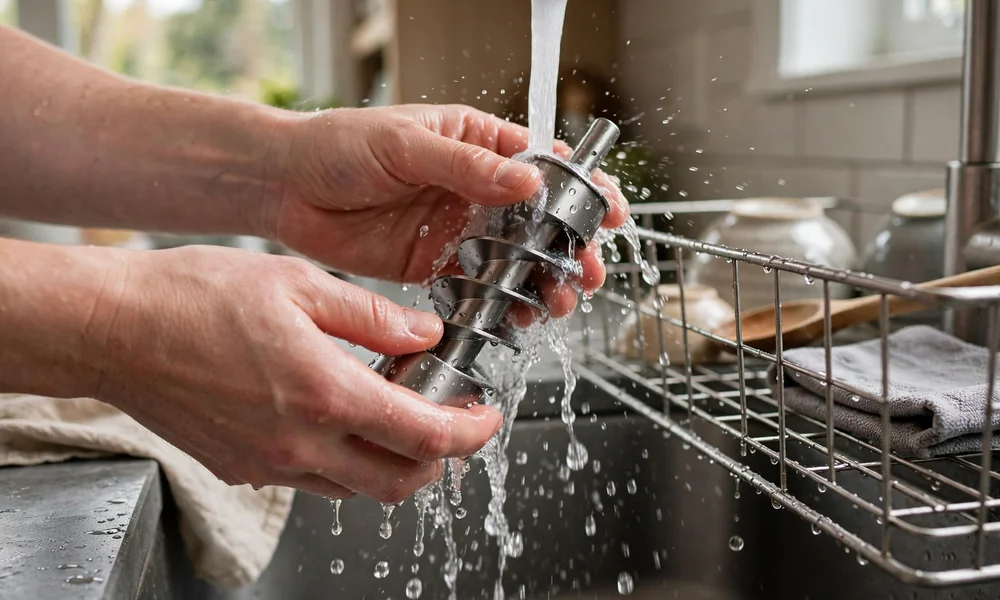
Rinse it immediately after use, brush the blade teeth under warm running water, and let every part dry fully before storing. Do not leave it in the sink, because dried vegetable fibre is hard to remove and can leave a smell.
Can children use a spiralizer?
Children can enjoy turning the handle of a crank model with supervision, but the blades are sharp and should only be handled by an adult. Handheld models are not suitable for children, because the fingers are close to the blade.
The Bottom Line
The spiralizer that turns veg into noodles in 2026 is the one that fits your kitchen, your hands, and how often you actually cook. For most people that is a well-made countertop crank model with two or three sharp stainless blades, a base that does not move, and parts that come apart for cleaning. Handheld models are a fine, cheap way to start, and electric models are a genuine help for daily use, but neither beats a good crank model for the everyday cook. Choose straight, firm vegetables, cook the noodles briefly, clean the tool straight away, and a spiralizer will earn its place in your kitchen for years.


