The best steak sauce in 2026 is the one that makes a good steak taste like a better version of itself, not like a different dish. A great sauce adds richness, acidity and a little sweetness, and then gets out of the way. A bad sauce drowns the meat, covers the flavour of the grill, and leaves you tasting sugar and salt long after the steak is gone. The difference is rarely the price of the bottle. It is the style of sauce, how it matches the cut on the plate, and the small amount you actually use.
Key Takeaways
- Classic steak sauce is the safest choice: dark, tangy and a little sweet, it suits almost any cut and never overpowers the meat.
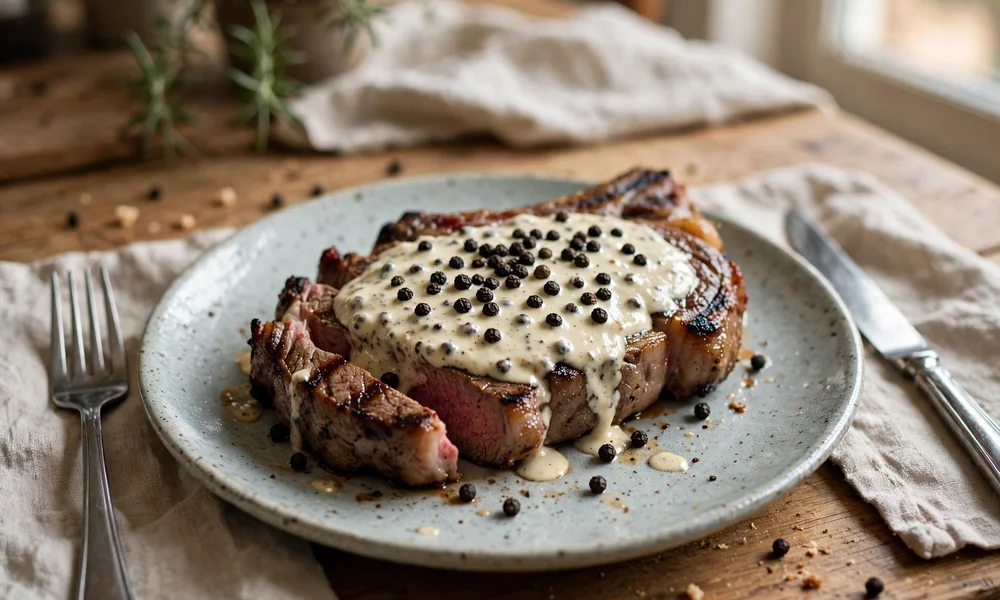
- Peppercorn sauce is the richest option, built on cream and cracked pepper, and it suits lean cuts that need the fat.
- Mushroom sauce is the most savoury choice, earthy and deep, and it suits a thick steak cooked simply.
- Match the sauce to the cut, not the occasion. Fatty cuts need sharp, acidic sauces; lean cuts need rich, creamy ones.
- Serve the sauce on the side, not on top. A spoonful at the table lets each person decide how much sauce their steak needs.
What a Steak Sauce Actually Does
A steak sauce has three jobs, and a good one does all three at once. It adds moisture to meat that has been grilled, because even a perfectly cooked steak loses juice as it rests. It adds acidity, which cuts through the fat and keeps a rich cut from feeling heavy. And it adds a layer of flavour the grill cannot give on its own: sweetness, spice, or the deep savoury note of mushrooms and stock. A sauce that only does one of these jobs is not a steak sauce; it is a topping.
The second thing a sauce does is frame the steak. A ribeye has fat running through it, and it needs a sauce with sharpness to balance it. A fillet has almost no fat, and it needs a sauce with richness to give it body. A sirloin sits in the middle, and it suits the widest range of sauces. This is why there is no single best steak sauce, only the best sauce for the cut in front of you.
The third job is the one people forget: restraint. A steak sauce should be used by the spoonful, not poured. Two or three spoonfuls on the side of the plate is enough for a whole steak, and a sauce that needs to be poured over the meat to be tasted is too weak to do its job.
Classic, Peppercorn or Mushroom: Which Sauce Wins
Every steak sauce falls into one of three families, and each has its own character. Classic steak sauce is the dark, tangy bottled sauce most people picture. Peppercorn sauce is the creamy, peppery sauce of the steakhouse. Mushroom sauce is the earthy, savoury sauce of the home kitchen. Knowing which family you are reaching for tells you what to expect and which cut it suits.
Classic steak sauce: the reliable all-rounder
Classic steak sauce is a dark, glossy sauce built on tomato, vinegar, sugar and spice, with a little raisin or tamarind for depth. It is tangy first, sweet second, and savoury underneath, and it suits almost any cut because it does not fight the flavour of the meat. It is the sauce to buy when you do not know what cut you will be cooking, or when different people at the table are eating different cuts. A good one tastes of its ingredients, with the vinegar bright and the sweetness restrained, while a bad one tastes of sugar and salt. Check the label: a short list with tomato, vinegar and spices near the top is a good sign.
Peppercorn sauce: the rich steakhouse choice
Peppercorn sauce is the richest of the three, and it is the one that feels most like a restaurant dish. It is built on cream, butter and cracked black or green peppercorns, often with a splash of brandy or stock, and it is made in the pan after the steak comes out, using the browned bits left behind. The cream gives it body, the pepper gives it heat, and the pan juices give it the flavour of the steak itself. It suits lean cuts best, because a fillet or a sirloin needs the fat the sauce provides, and it can overwhelm a fatty ribeye. Make it fresh if you can: a bottled peppercorn sauce is never as good as one made in the pan in five minutes.

Mushroom sauce: the savoury home favourite
Mushroom sauce is the most savoury of the three, and the most forgiving to make at home. It is built on mushrooms cooked down in butter until they are dark and concentrated, then finished with cream, stock and a little thyme or garlic. The mushrooms give it an earthy depth that no bottled sauce can match, and it suits a thick steak cooked simply, because the sauce adds the complexity the cooking did not. Choose firm, fresh mushrooms, cook them until they give up their water and start to brown, and do not rush them: a mushroom sauce made in a hurry tastes of raw mushroom and cream.
Matching the Sauce to the Cut
The cut decides the sauce, and the rule is simple: fatty cuts need sharp sauces, lean cuts need rich ones. A ribeye, with its marbling and its cap of fat, suits a classic steak sauce or a sharp, vinegar-based sauce, because the acidity cuts through the fat and keeps the steak from feeling heavy. A fillet, with almost no fat of its own, suits a peppercorn or mushroom sauce, because the cream and butter give it the richness it lacks. A sirloin sits between the two and suits any of the three, which is why it is the most forgiving cut to serve with sauce.
Cooking method matters, too. A steak cooked over charcoal has a smoky flavour that suits a classic sauce, which has enough sweetness and acidity to stand up to the smoke. A steak cooked in a pan has browned, buttery flavours that suit a peppercorn or mushroom sauce made in the same pan. And a steak cooked rare needs less sauce than one cooked medium, because a rare steak is juicier and its own flavour is more present.
Bottled or Homemade: What to Buy
A good bottled steak sauce is a pantry staple, and there is nothing wrong with buying one. The best bottles have short ingredient lists, real tomato or real stock near the top, and a flavour that tastes of its ingredients rather than of sugar and salt. They keep for months in the fridge once opened, and they are the right choice for a weeknight. The worst bottles taste of corn syrup and flavourings, and they are worth avoiding even at a low price, because a bad sauce can ruin a good steak.
Homemade sauces are better, and they are not hard. A peppercorn sauce takes five minutes in the pan the steak cooked in: cream, peppercorns, a splash of brandy, and the browned bits from the pan. A mushroom sauce takes fifteen minutes: mushrooms, butter, garlic, stock and cream, cooked down until it coats a spoon. Make the sauce you will use this week, and buy the bottle for the weeks you will not.
Serving: How Much Sauce, and How
Serve steak sauce on the side, in a small jug or a ramekin, and let each person help themselves. A sauce poured over the steak before it reaches the table is a sauce nobody can undo, and it hides the crust and the colour that make a steak look good. Two or three spoonfuls is enough for a whole steak, and most people will use less than they think once they taste the steak itself. Warm the sauce gently before serving, because a cold sauce cools the meat, and a cream sauce heated too hard will split.

Steak Sauce Compared
| Sauce | Best for | Flavour | Best cut |
|---|---|---|---|
| Classic | Everyday steaks, mixed cuts | Tangy, sweet, savoury | Ribeye, sirloin |
| Peppercorn | Steakhouse dinners | Rich, creamy, peppery | Fillet, sirloin |
| Mushroom | Pan-cooked steaks | Earthy, savoury, deep | Rump, sirloin |
| Blue cheese | Bold, rich meals | Salty, creamy, sharp | Ribeye, fillet |
| Chimichurri | Grilled steaks, summer | Herby, sharp, fresh | Ribeye, rump |
The table above is a starting point, not a ranking. Classic sauce wins for a mixed table, peppercorn wins for a lean fillet, and mushroom wins for a pan-cooked rump.
Your Steak Sauce Checklist
- Match the sauce to the cut: sharp sauces for fatty cuts, rich sauces for lean ones.
- Read the bottle: short ingredients, tomato or stock near the top, no corn syrup first.
- Use two or three spoonfuls, not a pour, and let the steak do most of the talking.
- Serve the sauce on the side in a small jug, warmed gently, never straight from the fridge.
- Make pan sauces fresh: peppercorn in five minutes, mushroom in fifteen, in the steak pan.
- Taste the steak before you reach for the sauce, and add more only if the steak needs it.
Frequently Asked Questions
What is the best steak sauce for a ribeye?
A classic steak sauce, or a sharp, vinegar-based sauce. A ribeye has enough fat and richness of its own, so it needs acidity to cut through it, not more cream. A peppercorn sauce can overwhelm a ribeye, while a classic sauce balances it.
What is the best steak sauce for a fillet?
A peppercorn or mushroom sauce. A fillet is the leanest cut, and it needs the richness a cream-based sauce provides. A classic sauce works, but it will not give the fillet the body it lacks.
Can you put steak sauce on a steak before cooking?
No, not as a marinade. Most steak sauces contain sugar, and sugar burns over high heat, leaving a bitter, blackened crust. Use a dry rub or a little oil and salt before cooking, and save the sauce for the table.
How long does bottled steak sauce last?
Unopened, a year or more in a cool cupboard. Once opened, keep it in the fridge and use it within three to six months, and throw it away if it smells off, has changed colour, or has mould around the lid.
Is steak sauce the same as BBQ sauce?
No, although they share ingredients. BBQ sauce is thicker, sweeter and smokier, and it is made for grilled and smoked meat, brushed on near the end of cooking. Steak sauce is thinner, tangier and more savoury, and it is served at the table as a condiment. They can be swapped in a pinch, but a BBQ sauce on a steak will taste sweeter and heavier than a steak sauce.
What is the easiest homemade steak sauce?
Peppercorn sauce, made in the pan the steak cooked in. Take the steak out to rest, add a splash of brandy or stock to the hot pan, scrape up the browned bits, add cream and cracked peppercorns, and simmer for three to five minutes until it coats a spoon.
The Bottom Line
The best steak sauce in 2026 is the one that matches the cut on the plate: classic sauce for a ribeye, peppercorn for a fillet, mushroom for a rump, and the sauce served on the side, warm, in small amounts. Buy a good bottle with short ingredients for weeknights, learn one pan sauce for the weekends, and taste the steak before you reach for the jug. If you want to compare sauces more broadly, our guide to BBQ sauce styles explains the sweetest member of the family, while Worcestershire sauce is the ingredient that gives many steak sauces their depth. And if you are choosing the drink as well as the sauce, our guide to red vs white wine with steak settles the pairing question.