Pretzels are the snack that looks simple and then turns out to be anything but. This article is about the pretzels you buy in bags and boxes and at bakery counters: the twisted baked pretzel, the thin stick, the soft warm pretzel, and the bite-sized nugget. The supermarket shelf is crowded with bags that all promise the same salty crunch, and the bakery counter adds warm soft pretzels that smell wonderful and disappear fast. Some of them are genuinely good: crisp, properly salted, made from a short list of ingredients, and satisfying in a small handful. Others are little more than salty dough baked hard, coated in flavour powder, or drowned in sweet glaze, and they leave you thirsty, still hungry, and reaching for another bag.
The gap between the best pretzels of 2026 and the worst is wide, and it usually shows up in three places: the dough, the salt, and the coating. A great pretzel tastes of baked bread first, with salt as a bright accent rather than the whole flavour. A bad one tastes only of salt, or of the honey mustard, cheese, or chocolate coating that was poured over it to hide a dull base. This comparison puts them head to head the way you would actually eat them: straight from the bag on a car journey, broken into pieces for a dip, shared at a table with friends, and warmed up as an afternoon snack. We look at crunch, chew, salt, flavour, ingredients, and whether a pretzel earns its place in the bowl or only its place on the shelf.
Key Takeaways
- A good pretzel has a short ingredient list: flour, water, yeast, salt, and a little malt or oil, with flavourings you can actually name.
- Hard twisted pretzels and thin sticks usually crunch better and feel less greasy than thick, pale, mass-produced pretzels.
- Soft pretzels should be warm, chewy, and lightly salted, not doughy, cold, or coated in a sticky sweet glaze.
- The worst pretzels hide behind bold coatings and bright bags, with more salt per handful than a whole meal should carry.
- The same honest approach sits behind our comparison of the best and worst chips of 2026, because chips and pretzels share the same supermarket shelf and the same labelling tricks.
How We Judged the Pretzels
We judged every pretzel on five things that matter at the table rather than on the packet. First, crunch and chew: whether a hard pretzel snaps cleanly, whether a soft pretzel pulls apart with a proper chew, or whether it shatters into crumbs or sits heavy and doughy. Second, flavour: whether it tastes of baked bread first, with salt as a background note, or whether salt and coating do all the talking. Third, salt: how much is in a normal handful, and whether the pretzel tastes seasoned or simply salty. Fourth, the coating: whether a honey mustard, cheese, or chocolate coating adds real flavour or only hides a dull base. Fifth, the ingredient list: short and honest, or long and full of flavour enhancers, colourings, and oils you would never cook with at home.
The Best Pretzels of 2026
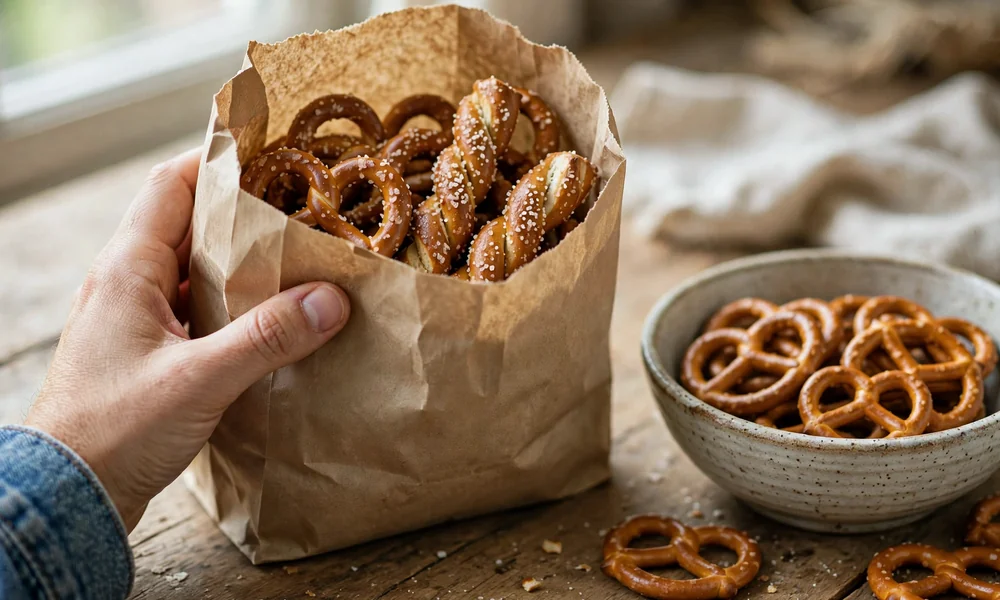
The best hard pretzels start with a proper dough, rolled and twisted by hand or by a careful machine, then baked until deep golden. A good twisted pretzel is uneven in the best way: some parts a little darker at the folds, some a little thinner, all tasting of baked bread rather than of the oven. Coarse salt sits on top in visible crystals instead of a fine dust that coats your fingers. The crunch is clean and dry, and the pretzel breaks with a snap rather than crumbling into powder. Sea salt is usually the only seasoning they need, and the best bags keep the salt restrained enough that you can taste the bread underneath it.
Soft pretzels are a different pleasure altogether, and the best ones are worth the short wait at a bakery counter. A good soft pretzel is warm, with a dark, shiny, chewy crust and a soft, springy inside that pulls apart in strands. It should smell of fresh bread and a little malt, and the coarse salt on top should crackle as you bite. The best soft pretzels are eaten within minutes of baking, plain or with a little mustard, and they need nothing else. A soft pretzel that has gone cold loses its chew and turns heavy, so buy one you will eat straight away.
The Best Pretzel Styles at a Glance
| Pretzel style | Texture | Salt level | Best for |
|---|---|---|---|
| Classic twisted hard pretzel | Crisp, snappy | Moderate | Snacking and sharing |
| Thin pretzel sticks | Light, crunchy | Light | Dipping and lunchboxes |
| Soft bakery pretzel | Chewy, warm | Moderate | Eating fresh, with mustard |
| Pretzel bites and nuggets | Soft inside, chewy crust | Moderate | Sharing and dipping |
| Pretzel rods | Thick, crunchy | Light to moderate | Dipping and party bowls |
Coated and Flavoured Pretzels
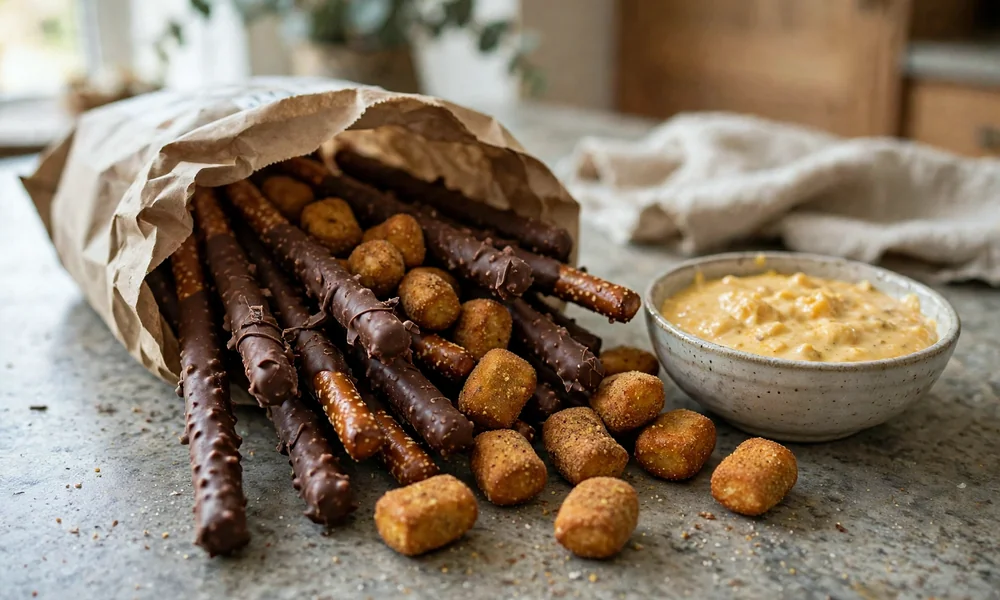
Coated pretzels can be wonderful when the coating is honest and the base is good. Honey mustard pretzels are the classic example: a thin, tangy coating over a crisp pretzel, with sweetness, mustard, and a little heat in balance. The best ones taste of mustard first, not of sugar, and the coating is even rather than clumped in sticky patches. Cheese-coated pretzels should taste of real cheese, with a gentle tang, rather than of bright orange powder. Chocolate-coated pretzels work when the chocolate is real and the pretzel underneath stays crisp, so each bite gives you sweet, salty, and crunchy together.

The trouble starts when the coating is there to hide a bad pretzel. A thick sweet glaze, a heavy dusting of flavour powder, or a waxy chocolate shell can all cover a stale, pale, or flavourless base, and the first bite tastes exciting while the second tastes tired. Check the ingredient list before you buy a coated pretzel: if sugar, flavourings, and oils come before flour and salt, the coating is doing the work and the pretzel is not. The best coated pretzels list flour and salt early, keep the sugar modest, and use a coating you could recognise in your own kitchen.
The Worst Pretzels of 2026
The worst hard pretzels are the ones that look right and taste of almost nothing. They are pale, soft in the middle, and coated in a fine salty dust that leaves your fingers white and your mouth dry. They break into crumbs rather than snapping, and they taste of salt and stale oil rather than of baked bread. Many of them come in large bags that feel generous and are mostly air, and the pretzels inside are uneven, with some burnt dark and some barely baked. If a pretzel tastes only of salt, it is not a good pretzel, however crisp it is.
The worst coated pretzels are the ones where the coating is the whole snack. Thick cheese powder that stains your fingers orange, honey mustard glaze that sticks to your teeth, chocolate that tastes of wax rather than cocoa: all of them hide a base that would not sell on its own. They are also usually the saltiest pretzels on the shelf, because salt is cheap and it makes a dull snack taste like something. If you finish a handful and still feel hungry and thirsty at the same time, the pretzel was not feeding you, it was only seasoning you.
How to Choose Pretzels by Occasion
The best pretzel for a car journey is not always the best for a party table. Ask three questions: how will you eat it, who is sharing it, and how long will it sit out? For a car journey, thin sticks and small bites are best, because they are easy to eat with one hand and they do not crumble everywhere. For a party, a mix of twisted pretzels and rods with a bowl of mustard works well, because people can take what they like. For a quiet evening at home, a warm soft pretzel with mustard is hard to beat.
For lunchboxes, choose pretzels that stay crisp and do not leave a mess. Thin sticks and small twisted pretzels travel well, and they pair happily with cheese, fruit, and a drink. Avoid heavily coated pretzels in a lunchbox, because the coating melts, sticks to everything, and leaves a mess by lunchtime. For a film night, a big bowl of mixed pretzels works, but keep the salt moderate and put out water, because salty snacks make you thirsty faster than you expect. The same care with salt and portions matters with other salty snacks too, which is why our comparison of the best and worst nuts of 2026 looks at salt and roasting in the same honest way.
Reading the Packet
The packet tells you more than the picture does, if you know where to look. Start with the ingredient list: flour, water, yeast, salt, and malt should come first, and the list should be short enough to read in one breath. If you see a long list of flavourings, colourings, and oils you would never cook with, put the bag back. Next, check the salt per serving and the serving size: some bags call a tiny handful a serving, which makes the salt look lower than it really is. A normal handful is about thirty grams, and a good pretzel keeps its salt in a range you can enjoy without feeling thirsty straight away.
Storing Pretzels at Home
Hard pretzels keep best in a sealed container or a tightly closed bag, away from damp and heat. Once the bag is open, they start to soften within a day or two, especially in a humid kitchen, so eat them promptly or seal them well. Soft pretzels are best eaten the day you buy them; if you must keep one, warm it in a hot oven for a few minutes rather than in a microwave, which makes it rubbery. Coated pretzels should be kept cool and dry, because heat melts the coating and damp makes it sticky.
A bowl of pretzels at a party should be refreshed rather than topped up, because the crumbs at the bottom go stale and soft first. Put out a small bowl, refill it when it is empty, and keep the rest sealed. And if you have pretzels left over, they make a good crunchy topping for salads and soups when crushed, or a salty base for a sweet snack mix with popcorn. A light, airy popcorn makes a good partner here, and our guide to the best popcorn of 2026 covers the kernels and bags that stay crisp alongside pretzels in a mix.
The Verdict
The best pretzels of 2026 are the ones that taste of bread first: a crisp twisted pretzel with coarse salt, a light stick that holds up in a dip, or a warm soft pretzel eaten fresh from the bakery. The worst are pale, over-salted, or buried under a coating that hides a dull base. Buy the pretzel with the shortest ingredient list, the freshest bake, and the salt you can see rather than the dust you can feel, and you will rarely go wrong. A good pretzel does not need a bright bag or a bold flavour to earn its place in the bowl; it only needs good dough, a proper bake, and just enough salt.