
A wrench is the tool that turns a stuck bolt from a problem into a five-minute job, and it is also the tool most people buy as an afterthought. A good wrench grips the nut firmly, turns it without slipping and lets you work in tight corners without scraping your knuckles raw. A bad one slips off the nut, rounds the corners and leaves you with a fastener no wrench can grip at all. The difference is rarely the price on the packet. It is the quality of the steel, the accuracy of the jaw and whether the wrench suits the bolt and the space you are working in. This guide sorts the best wrenches from the worst in 2026, so you can stop guessing in the tool aisle and buy a wrench that holds.
Wrenches have changed less than most tools, yet the gap between good and bad is as wide as ever. Chrome vanadium steel, precise machining and proper heat treatment separate a wrench that lasts a lifetime from one that spreads open the first time you lean on it. Knowing what makes a wrench good is the only way to tell them apart before you round off a bolt.
What makes a wrench good
A good wrench fits the nut exactly. The jaw should sit snugly on the flats with no rocking and no play, so the force goes into turning the bolt rather than slipping off it. If you can wiggle the wrench on the nut, or it clicks and jumps when you pull, the fit is wrong and the nut will suffer. The best wrenches are machined to tight tolerances, and they grip from the first pull. A loose fit is not a minor flaw: it is how a simple job becomes a rounded bolt and a drill-out.
Steel quality matters more than shine. A good wrench is forged from chrome vanadium or a similar alloy steel, heat treated so it is hard enough to hold its shape but tough enough not to snap. Cheap wrenches are often cast from soft metal and plated to look the part, and they spread open under load or bend at the neck. A good wrench should also feel right in the hand, with a handle long enough for leverage but slim enough to reach into tight spots, and a finish that does not flake off after a month in the toolbox. Our comparison of the best and worst toolboxes of 2026 makes the same point about tools in general: the best ones are built to be used hard for years, while the worst ones look the part and fail at the first real job.
Upkeep decides whether a good wrench stays good. Wipe the jaws clean after use, keep them dry so they do not rust, and store them where they cannot knock against each other and chip the chrome. A drop of oil on an adjustable wrench keeps the worm gear turning smoothly, and a ratchet head benefits from the occasional clean and light oiling.

The best wrenches of 2026
The best combination wrenches of 2026 are the backbone of any toolbox. One end is open for quick work on easy nuts, the other is a ring that wraps right around the nut for full grip on stubborn ones. A well-made combination wrench has a slim ring head that fits into tight spaces, an open jaw angled just enough to flip the wrench over for the next bite, and a handle that gives you leverage without flexing. The best ones are forged, polished and marked clearly, so you can read the size at a glance even with greasy hands.
Ratchet wrenches earn their place where space is tight. A good ratchet lets you turn a bolt in small swings without lifting the wrench off the nut, which is a blessing under a car bonnet or behind a sink. The best ratchets have a fine-tooth mechanism that needs only a few degrees of swing, a switch you can flip with one thumb, and a head that stays slim enough to fit where a socket will not.
The surprise entry on the best list is the humble adjustable wrench. A good adjustable wrench, with a smooth worm gear and a jaw that stays square, is the tool you reach for when you meet a nut in a size you do not own. It will never grip as well as a fixed wrench of the right size, but a well-made one comes close, and it saves you carrying a dozen spanners on a job. The trick is to tighten the jaw firmly, pull so the force goes into the fixed jaw, and never use it on a bolt that is already rounded. Used properly, it is one of the most useful tools in the box.
Socket wrenches and torque wrenches round out the best list for serious work. A socket set with a good ratchet handle turns bolts faster than any spanner and reaches nuts buried deep in an engine bay. A torque wrench, meanwhile, is the only way to tighten a bolt to exactly the right tightness, which matters on car wheels, bicycles and anything with a gasket. Both need care: keep sockets clean, store the torque wrench unwound, and have it checked if you drop it. Used well, they turn guesswork into proper workmanship.
The worst wrenches of 2026
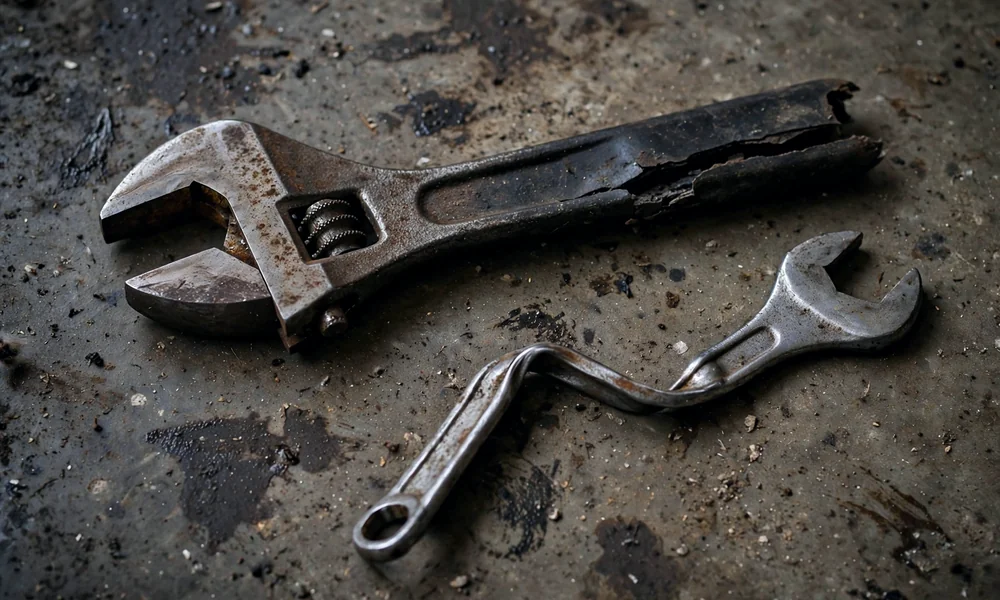
The worst wrenches of 2026 share one flaw: soft steel and sloppy jaws. A bargain wrench set made from cheap cast metal will spread open the first time you lean on a tight bolt, and once a jaw has spread it will never grip properly again. These sets often feel light and tinny, the chrome flakes off in your hands, the sizes are stamped so faintly you cannot read them, and the ratchet heads slip after a few uses. They are usually the cheapest option on the shelf, and they are cheap for a reason.
Adjustable wrenches are the other regular on the worst list, at least the bad ones. A cheap adjustable has a worm gear that wobbles, a jaw that twists out of square and a handle that flexes when you pull. It slips off the nut, rounds the corners and leaves you worse off than when you started. If a wrench cannot hold its shape under load, it is not a tool but a decoration.
Then there are the gimmick wrenches: models sold on a single feature, like a built-in light, a swivelling head, or a grip that claims to fit any size, while the basic jaw is poor. A light does not help if the jaw slips, and a head that swivels in every direction cannot hold a nut still. Be wary too of sets with sizes missing from the middle of the range, or wrenches so short you cannot get any leverage. If a wrench promises everything and costs very little, the steel and the machining are almost always where the money was saved.
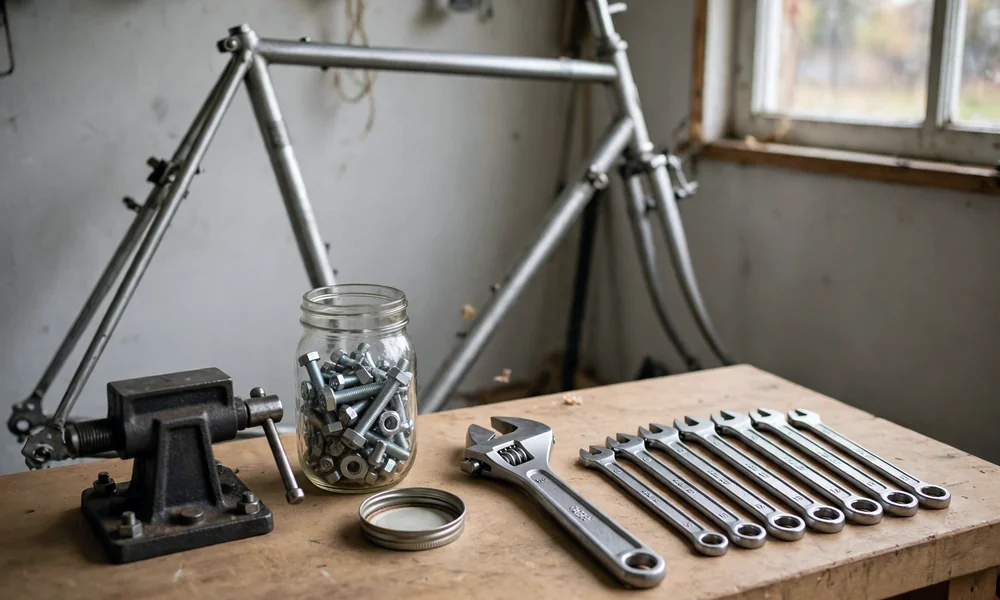
Combination vs ratchet vs adjustable: which suits you
Choosing between combination, ratchet and adjustable comes down to the job and the space. If you have room to swing and you know the size, start with a combination wrench: it grips best and cannot slip internally. If you are working in a tight corner where you can barely move your hand, reach for a ratchet, whose small swings turn the bolt without lifting the tool. If you meet a size you do not own, or you are travelling light, pick up the adjustable and tighten the jaw well.
The bolt itself should steer the choice more than marketing. A rusty or tight bolt needs the full grip of a ring end or a socket, never an open jaw or a loose adjustable. Soak a seized bolt in penetrating oil, give it time, and tap it gently before you pull. For delicate work, like a bicycle or a tap fitting, use the smallest wrench that fits and pull gently: over-tightening strips threads and cracks fittings.
Budget is worth thinking about honestly. A good set of combination wrenches costs more up front, but it will still be gripping properly in twenty years, and it is cheaper than replacing rounded bolts and stripped threads. A single good adjustable costs far less than a full set and covers most odd sizes. Do not buy the cheapest set you can find and expect it to behave like a good one: set a realistic budget, read what owners say after a year of use, and remember that a wrench is a tool you trust not to slip when your knuckles are on the line.
Choosing, using and looking after your wrench
Before you buy, check the practical details. Hold the wrench if you can: it should feel solid, and the size marking should be easy to read. On an adjustable, turn the worm gear and check the jaw moves smoothly and stays square. On a ratchet, listen for a clean click and check the switch flips firmly. Check that the sizes you need are in the set, and check the warranty: a lifetime guarantee from a maker that honours it is worth more than a short promise from a brand you cannot contact. Our guide to the best tool sets of 2026 is useful here too, because a good set puts the right wrench in your hand without a trip to the shop.
Good technique matters as much as good hardware. Always use the right size: a wrench that is even slightly too big will round a nut, and a wrench that is too small will not fit at all. Pull the wrench towards you where you can, so a slip sends your hand away from sharp edges rather than into them. Keep the jaw fully on the nut, not hanging off the edge, and use the ring end for the first turn on a tight bolt. The same care that makes a good drill last applies here, and our comparison of the best and worst drills of 2026 shows how much difference proper technique and a steady hand make to any job.
Your wider garage routine plays a part too. A wrench works best as part of a tidy toolbox, not a loose jumble at the bottom of a drawer. Keep the set in order, keep the jaws clean and dry, and give yourself the time a proper job deserves. Wipe each wrench after use, oil an adjustable now and then, and store the set where damp cannot reach it. A well-kept wrench, used gently and stored dry, can give you a firm, safe grip for decades.
The verdict
The best wrench of 2026 is the one that matches your work: a good set of combination wrenches for everyday nuts and bolts, a good ratchet for tight corners, and a well-made adjustable for the odd size you do not own. The worst wrench is any soft, sloppy tool that slips, spreads and rounds, whatever it cost or whatever feature it boasts. Spend a little more on proper steel and a true jaw, keep it clean and dry, store it properly, and pull smoothly. Your bolts, and your knuckles, will thank you for it.


