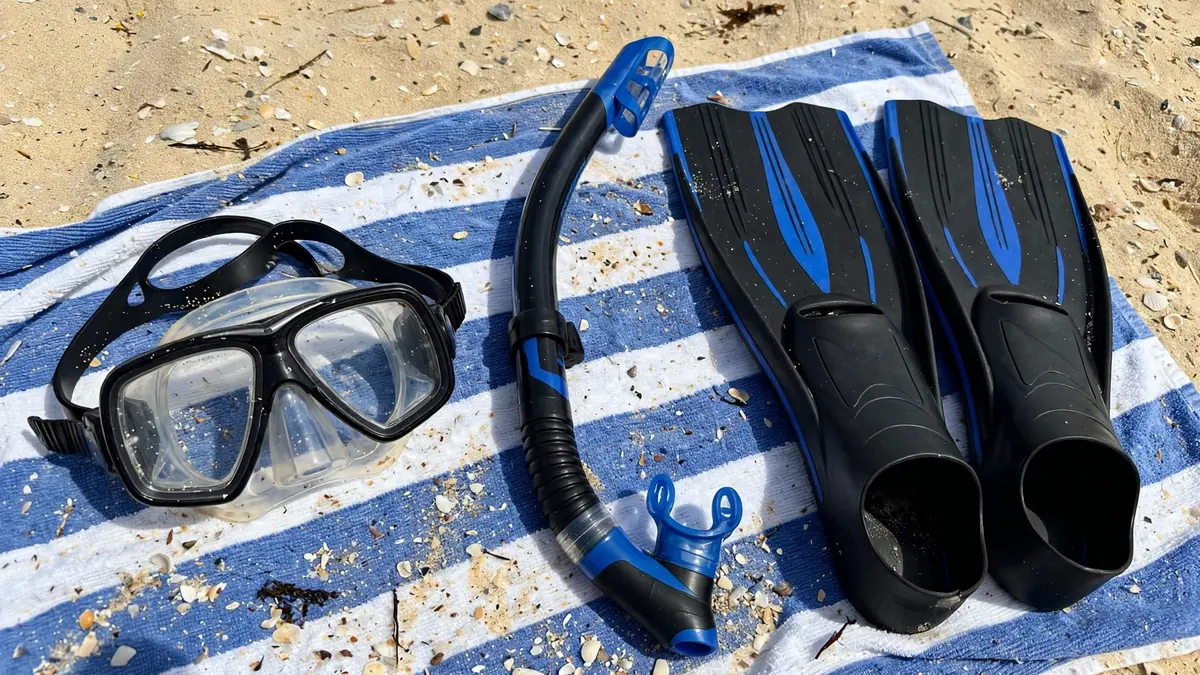
A snorkel set has one job: to let you float over a reef, see clearly, breathe easily, and swim without fighting your own kit. The worst snorkel sets of 2026 fail at it in ways that turn a holiday swim into a coughing, leaking struggle. The mask fogs and leaks, the tube floods at the first wave, or the fins snap, slip off, or blister your feet. Swimmers buy them hoping for a set that works straight out of the bag. What they get is a set that leaks, a set that floods, or a set that falls apart before the holiday is over.

Masks That Leak at the Corners
A snorkel set starts with the mask, and the worst masks leak from the first swim. A stiff silicone skirt that does not mould to the face lets salt water creep in at the corners, so the swimmer spends the whole swim clearing the mask instead of watching the reef. The problem is worst on masks sold as one size fits all, because faces are not one size, and a mask that fits everyone fits no one well. A set with a leaking mask is a set that has failed at its first job.
Test the mask before you buy by holding it against your face without the strap, looking up slightly, and breathing in gently through your nose: a good mask stays put on suction alone for a few seconds, while a bad one falls off at once. Look for a soft silicone skirt that folds easily and springs back, and a tempered glass lens, which stays clear and resists scratches. Try the mask with the snorkel attached, because the tube changes how the strap sits. A mask that seals on your face is a mask that lets you forget about it, and a mask that leaks is a mask that will ruin every swim.
Tubes That Flood
The snorkel tube is the part you breathe through, and the worst tubes flood at the first wave. A tube with no dry top lets water in every time the surface chops up or a boat goes past, so the swimmer gets a mouthful of sea water and has to blast the tube clear, coughing, while trying to stay afloat. The mouthpiece is often just as bad: too large, too hard, or the wrong shape, so it aches the jaw within minutes and slips out when the swimmer relaxes. A tube that floods is a tube that makes breathing hard work, and a swimmer who is fighting their snorkel is a swimmer who is not watching the reef, which defeats the whole purpose of the set.
Look for a set with a dry-top valve, which closes when a wave washes over the tube, and a purge valve at the bottom, which lets a sharp breath clear any water that does get in. The mouthpiece should be small, soft, and comfortable to hold between the teeth for an hour, so try breathing through it in the shop for a minute. Check that the tube clips firmly to the mask strap, because a tube that swings loose pulls at the mask and breaks the seal. A tube that breathes dry is a tube worth owning, and a tube that floods at the first wave is a tube that will make every swim a struggle.
Fins That Snap or Slip Off
The fins are the engine of a snorkel set, and the worst fins snap, slip off, or blister the feet. A fin made of cheap, brittle plastic cracks across the blade after a few swims, usually where the blade meets the foot pocket, and a fin that snaps in the water is a fin that leaves the swimmer kicking with one leg. Fins that are too loose slip off in the water and sink, and fins that are too tight squeeze the foot until it blisters, so the swimmer cannot kick properly at all. A fin that does not fit is a fin that works against the swimmer, because the kick is where the power comes from, and a swimmer without fins is a swimmer going nowhere.
Try the fins on with the socks or booties you will actually wear, and check the fit: snug at the heel, comfortable across the foot, and no pinching at the toes. Look for a fin with a blade that flexes smoothly and springs back, not one that bends and stays bent, and check the foot pocket for soft rubber that will not rub. Short fins suit a beginner and a crowded reef, while longer fins suit a stronger swimmer in open water. A fin that fits and flexes is a fin that carries you over the reef, and a fin that snaps or slips off is a fin that will leave you stranded. If the rest of the swim kit needs sorting, our guide to the best swim goggles of 2026 covers the goggles that suit a pool, where fins are not needed at all.
One Size That Fits Nobody
A snorkel set is often sold as one size fits all, and the worst sets prove the lie. The mask is too big for a narrow face and too small for a wide one, the fins are too long for small feet and too tight for large ones, and the tube is too long for a short swimmer and too short for a tall one. The problem is worst on the cheapest sets, where the maker saves money by making one size and hoping it will do, and it never does. A set that does not fit is a set that will leak, flood, and blister, all at once.
Buy a set in your size, or buy the pieces separately in the sizes that fit you, because a mask, a tube, and fins that each fit properly are worth more than a matched set that fits none of them. Check the size charts before you order, and measure your foot for the fins and your face for the mask. If you are buying for a family, buy each person their own size, because a set shared between an adult and a child fits neither of them. A set that fits is a set that lets you swim, and a set that does not is a set that will be left in the hotel room.
Bags That Burst and Tangle
A snorkel set comes in a bag, and the worst bags burst, tangle, or soak everything else in the case. A thin mesh bag with a weak zip splits the first time the fins are pushed in, and a bag with no drainage holds the salt water, so the kit sits in a puddle and the mask skirt stiffens and the metal parts corrode. The straps tangle too, wrapping around the fins and the tube, so the set that should take a minute to unpack takes ten, and a swimmer who is fighting their bag is a swimmer who is late for the boat. A bag that fails is a small fault with a large effect, because a set that cannot be carried and stored properly is a set that will not last the holiday.

Look for a bag with a strong zip, a mesh panel that lets the kit drain and dry, and enough room for the fins without forcing them in bent. Pack the mask in its own case or wrapped in a soft cloth, because a mask rattling loose in a bag with fins will scratch its lens. Rinse the whole set in fresh water after every swim, let it dry in the shade, and store it flat so the mask skirt keeps its shape. A bag that carries the set properly is a bag that protects it, and a bag that bursts is a bag that will scatter the kit across the beach. If the beach wardrobe needs sorting, our guide to the best swimwear of 2026 covers the swim tops and shorts that pair with a snorkel set.
Valves and Clips That Break
A snorkel set is held together by small parts, and the worst ones break first. The clip that holds the tube to the mask strap snaps, so the tube swings loose and pulls the mask off its seal, and the purge valve sticks or falls out, so the mask cannot be cleared. The buckles on the mask strap crack too, usually in the sun, so the strap will not adjust and the mask cannot be tightened. A set with broken small parts is a set that cannot be used, however good the mask and fins are, because the parts are what hold the set together. A clip that snaps on the first day is a clip that was always going to snap, and a set that depends on cheap plastic clips is a set that will not survive the holiday.
Check every clip, valve, and buckle before you buy: they should feel solid, move smoothly, and be made of proper plastic or metal, not thin, brittle moulding. Look for a tube clip that grips the strap firmly and can be adjusted with one hand, and a purge valve that opens and closes cleanly. Carry a spare clip in the bag, because a clip is small, cheap, and easy to lose, and a set without its clip is a set that cannot be worn. A set with solid small parts stays together for years, and a set with brittle ones will fall apart on the first swim. If the mask itself needs a closer look, our guide to the best snorkel masks of 2026 covers the masks that seal properly on their own.

What to Buy Instead
The snorkel sets worth buying share a short list of features, and none of them is expensive on its own. A mask with a soft silicone skirt that seals on suction alone, a tempered glass lens, and a dry-top tube with a purge valve. Fins that fit with the socks you will wear, a blade that flexes and springs back, and a bag with a strong zip and a mesh panel for draining. If a set fails any one of those checks, keep looking.
Fit matters as much as build, and the set should suit the swimmer in front of you rather than the swimmer in the photograph. Buy each piece in your size, test the mask with the suction test, and try the fins on with your socks. A set that fits the swimmer is a set that gets used every day of the holiday, and a set that fights the swimmer will be left in the hotel room. Buy the set for the swimmer you are, and rinse it in fresh water after every swim.
The Bottom Line
The worst snorkel sets of 2026 share a pattern: masks that leak at the corners, tubes that flood, fins that snap or slip off, one size that fits nobody, bags that burst and tangle, and valves and clips that break. Avoid those six failures and you avoid almost every snorkel-set regret. Test the mask, check the dry top, and try the fins on before you buy. Do that, and the set you buy will be the one that shows you the reef for years, not the one that floods on the first wave.