A good grooming kit does not turn an ordinary afternoon into a salon appointment. It turns it into ten calm minutes at the kitchen table, a dog that stops flinching when the clippers start, and a coat that looks cared for rather than merely cut. The difference between a kit that earns its place in the cupboard and one that ends up in a drawer is rarely the number of pieces in the box. It is whether the clippers cut cleanly without pulling, whether the brush reaches the undercoat without scratching the skin, and whether the set still works well after the twentieth groom, not just the first.
Most owners buy a grooming kit after a bad experience: a matted patch behind the ears, a trim that went uneven, or a noisy clipper that scared a nervous puppy. A well-chosen kit pays for itself quickly, but only if it suits the coat in front of you. A heavy-duty clipper made for a thick-coated spaniel is wasted on a smooth-coated beagle, and a gentle slicker that suits a short coat will skate uselessly over a long, dense one. This guide sorts the best pet grooming kits of 2026 by coat type, noise, and value, so you can pick the set that fits your dog, your home, and your patience.
Key Takeaways
- The best overall kit pairs a quiet, steady clipper with a slicker brush, a steel comb, and blunt-tipped scissors, so one box covers trimming, brushing, and tidying.
- Long coats need a clipper with real power and a pin brush that reaches the undercoat; short coats need a gentler brush and a lighter touch.
- Noise matters more than most buyers expect, especially for puppies, rescue dogs, and any dog that has flinched at clippers before.
- A cheap kit is only a bargain if its blades stay sharp and its motor keeps its speed; a dull blade pulls hair and turns grooming into a struggle.
- Regular short sessions beat occasional long ones, and the right brush used weekly prevents most of the matting that clippers are bought to fix.
How We Judged
We judged every kit on the same five things: how cleanly the clippers cut, how well the brushes and combs handled real coats, how loud the motor sounded at arm’s length, how comfortable the tools felt during a full groom, and how well the set held up with repeated use. A kit earned its place by doing the ordinary jobs well, not by packing in the most attachments. Spare guide combs are useful, but they do not rescue a clipper that snags, and a pretty storage case does not make up for a brush that scratches.
Cutting quality came first. We looked for blades that sliced through coat without tugging, that stayed cool enough to keep working, and that left an even finish without ridges. A good blade should glide, and the dog should stay still because the sensation is mild, not because it has given up protesting. We also checked whether the blade could be cleaned and oiled easily, because a kit that is hard to maintain is a kit that goes blunt early. Comfort and noise came next, for the dog and for the person holding the tools. A clipper that vibrates hard in the hand gets tiring after ten minutes, and a high-pitched whine can undo weeks of patient training in seconds. The best kits run at a low, steady hum and come with brushes whose pins flex rather than jab.
Best Overall Kit
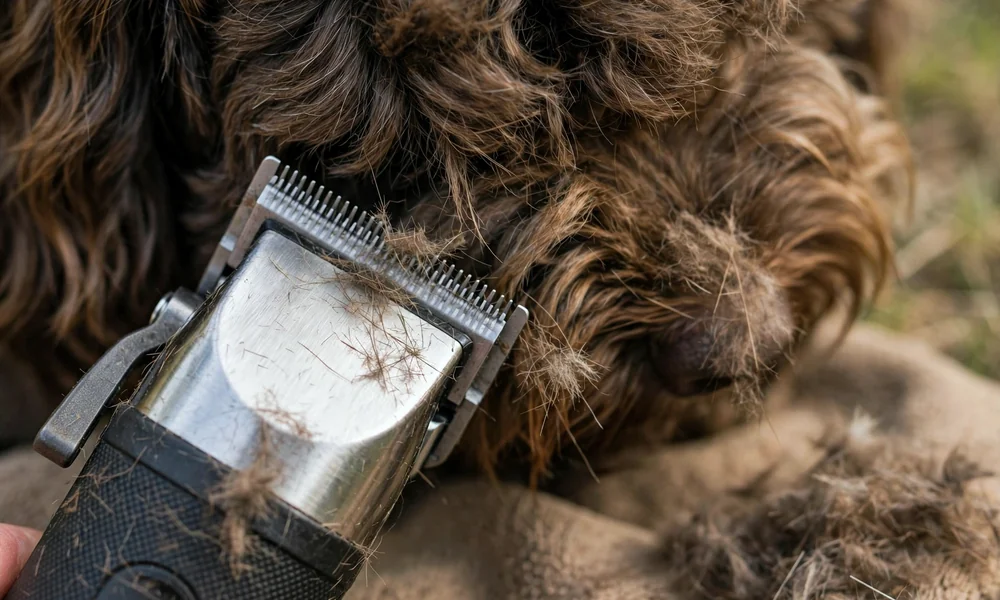
The best overall kit is the one most owners should buy first: a cordless clipper with two speeds, a slicker brush, a steel comb, thinning scissors, and a set of guide combs that actually fit. The two speeds matter more than they sound. The lower speed suits sensitive areas and nervous dogs, while the higher speed powers through a thick winter coat without stalling.
What sets the best overall kit apart is balance. Nothing in the box is there for show. The slicker brush lifts loose hair and smooths the topcoat, the steel comb finds the small tangles the brush misses, and the thinning scissors blend the edges so a home trim does not look like a home trim. The battery should last through a full groom of a medium-sized dog, and the clipper should be light enough to hold steady around ears and paws.
Best for Long Coats
Long coats are the hardest test of a grooming kit, because the coat hides tangles, traps loose hair, and dulls a weak blade quickly. The best kit for long coats starts with a stronger motor and a blade that stays sharp through dense fur, and it pairs that clipper with a pin brush and a wide-toothed comb. The pin brush reaches down through the topcoat to the undercoat, where most matting begins.
Owners of long-coated dogs should brush before they clip, every time. Clipping over a tangle drags the blade, pulls the skin, and leaves an uneven patch that is hard to fix. A few minutes with the pin brush first, working in small sections from the skin outward, makes the clipper’s job easy and the finish smooth. If your dog’s coat reaches past its belly or mats behind the ears, choose power and brush quality over extra attachments.
Best for Short Coats
Short-coated dogs need less clipping and more care with the skin underneath. A heavy clipper is overkill for a smooth coat, and a harsh slicker can leave red marks on a dog that barely needs brushing at all. The best kit for short coats is a lighter one: a small, quiet trimmer for paws, ears, and stray hairs, a soft bristle brush or a rubber grooming mitt, and a fine steel comb.
The bristle brush is the quiet hero here. Used weekly, it lifts dead hair, spreads the coat’s natural oils, and leaves a shine that no amount of clipping can produce. The rubber mitt does similar work and suits dogs that dislike brushes, because it feels more like stroking than grooming. If your dog is a beagle, a boxer, a French bulldog, or any other smooth-coated breed, buy light and gentle rather than powerful.
Best Quiet Clippers
Noise is the reason many dogs hate grooming, and it is the reason many owners give up on home trimming after one attempt. The best quiet kits use a low-vibration motor that hums rather than whines, and they keep that sound steady even when the blade meets thicker coat.
Quiet matters most for puppies, older dogs, and rescues that are still learning to trust hands near their ears and paws. Introduce the clippers slowly: let the dog sniff them, run them nearby without touching the coat, and reward calm behaviour before the first cut. A quiet kit makes that training far easier, and it is worth paying a little more for if your dog is at all nervous.
Best Budget Kit
A budget kit is worth buying only if its blade is genuinely sharp and its motor holds its speed. The best budget sets in 2026 manage this by keeping the box simple: one reliable clipper, four or five guide combs, a slicker brush, a comb, and a pair of scissors. There is no separate trimmer, no fancy case, and no attachment you will use once and forget.
Budget buyers should check two things before they buy: whether replacement blades are available and affordable, and whether the clipper can be oiled and cleaned. A kit with no spare blades and a sealed blade head is a disposable kit, and it will cost more over two years than a slightly dearer set with replaceable parts. Before spending on extra gadgets, it is worth reading our guide to the worst pet supplies that waste money, because the pet aisle is full of clever-looking tools that solve a problem no dog actually has.
What to Look for When Choosing
Choosing a grooming kit gets easier once you know which features matter and which are decoration. The five below decide most of the result.
Clipper Power
Clipper power decides whether the blade cuts or drags. A weak motor stalls in thick coat, and a stalling motor pulls hair. Look for two speeds or a motor made for thick coats if your dog has a dense or double coat. For a smooth coat, a lighter motor is fine and will run quieter.
Blade
The blade is the part that touches the dog, so it deserves the most attention. Stainless steel or ceramic blades stay sharp longer and run cooler than cheap plated blades. Check that the blade can be removed for cleaning and oiling, and that spares are sold separately.
Brush Type
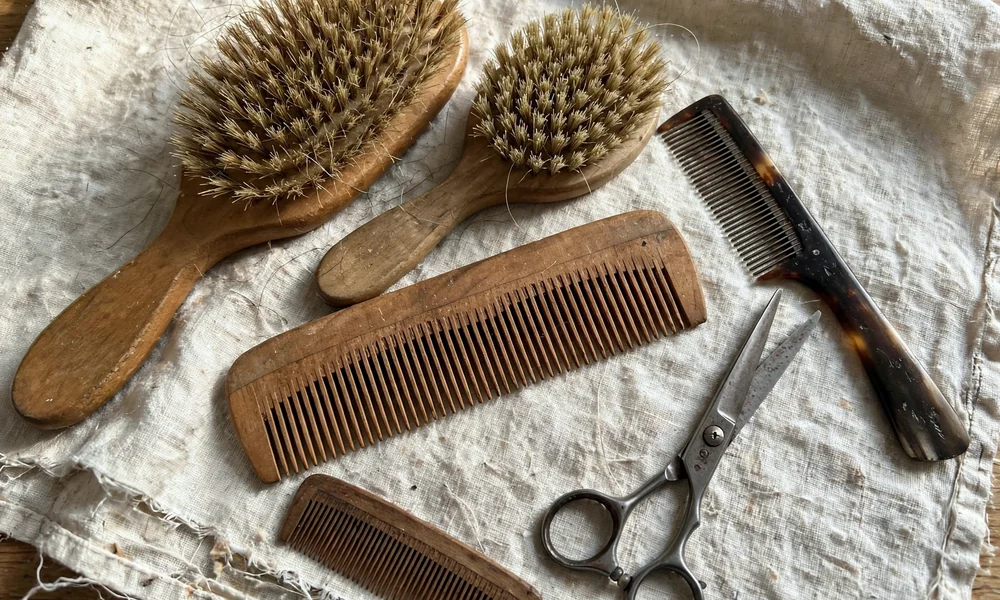
Brush type should match coat length. A slicker brush suits medium and long coats, a pin brush reaches the undercoat of a long coat, and a bristle brush or rubber mitt suits a short coat. A kit that includes the wrong brush for your dog’s coat is a kit you will partly replace within a month.
Noise
Noise is easy to overlook in a shop and impossible to ignore at home. Look for a low-noise or low-vibration motor, and read owner reviews for mentions of nervous dogs.
Coat Type
Coat type should drive the whole choice. A double-coated dog needs power and a pin brush, a curly-coated dog needs a slicker and a comb that finds mats early, and a smooth-coated dog needs gentleness more than power.

Grooming Tips and Mistakes to Avoid
Start with a clean, dry coat. Bathing first softens the coat and washes out the grit that dulls blades, but clipping a damp coat leaves an uneven finish and risks pulling. Dry the dog fully, brush through the coat, and only then pick up the clippers. Work in small sections, always clipping in the direction the coat grows, and check the blade’s temperature against the back of your hand every few minutes.
Go slowly around ears, paws, and the belly, where the skin is thin and moves under the blade. Use the smallest guide comb or the trimmer for these areas, and keep the skin taut with your free hand. Never rush a mat: work it apart with your fingers and a comb, and cut it out with blunt-tipped scissors only if it will not loosen. Short, calm sessions every week or two keep the coat manageable and the dog relaxed.
Clean up as you go, because loose hair gets everywhere and a tidy space keeps the dog calmer. A quick vacuum after each session stops hair settling into carpets and furniture, and our comparison of the best and worst vacuum cleaners of 2026 is a useful check if your current machine struggles with pet hair. Wash towels and bedding regularly too, and the best and worst washing machines of 2026 will help if your laundry is doing double duty for a muddy dog. Store the kit clean, dry, and oiled, with the blade guard on, so it is ready and sharp next time.
A Calmer Groom Starts With the Right Kit
The best pet grooming kit is not the biggest box or the most expensive one. It is the set whose clipper cuts cleanly, whose brush suits your dog’s coat, and whose noise your dog can tolerate without fear. Buy for the coat in front of you, keep the blade sharp, and groom little and often.