
Top Canned Pears for Desserts and Snacking in 2026
Canned pears are the quiet achievers of the pantry: soft, honeyed fruit, ready the moment you open the tin. The best canned pears for desserts and snacking in 2026 are tender without falling apart, sweet without tasting like syrup, and packed in juice or light syrup rather than heavy syrup.
A tin of pears is one of the cheapest ways to keep dessert on standby. Fresh pears are fussy: they ripen in a rush, bruise easily, and go mealy if you miss the window by a day. Canned pears are packed at ripeness, so every tin tastes like a good pear on a good day.
Key takeaways
- Halves are the most versatile cut: firm, easy to slice or fill, and the best choice for baking, poaching and serving whole.
- Slices and diced pears suit quick desserts and breakfast bowls, where the fruit is spooned, not presented.
- Juice-packed pears taste the most like fresh fruit; heavy syrup adds roughly twice the sugar and belongs in baking, not snacking.
- Look for pears, water or juice and a little ascorbic acid on the label, and nothing else.
- Drain pears well before baking, and save the juice for smoothies or a light dessert sauce.
Why canned pears deserve a second look
Pears have a reputation problem: rarely the fruit anyone craves or photographs. Yet in a tin they become genuinely useful: soft, fragrant fruit, sweet enough for dessert and mild enough for breakfast, lunchboxes and late-night snacking straight from the fridge.
Canning suits pears better than most fruit. Pears are naturally soft when ripe, so the heat of canning does not ruin their texture. A good tin holds its shape when you tip it out; a poor tin is mush, and no recipe can rescue it.
Price is the other reason to keep them around. A tin costs a fraction of fresh pears out of season and keeps for years in the cupboard. When fresh fruit is expensive or simply not in the shops, a tin of pears turns plain yoghurt or a scoop of ice cream into a proper dessert.
Halves, slices or diced: which cut to buy
The cut in the tin decides what you can do with the fruit. Halves are the classic cut and the most versatile: each half is firm enough to slice, fill or fan out on a plate, and sturdy enough to survive baking. If you only keep one tin in the cupboard, make it halves.
Slices are halves cut into wedges, ready to spoon over porridge, layer into a trifle or scatter over a tart. The trade-off is texture: slices are thinner, so they soften faster and are harder to present neatly. They are a working cut, not a showpiece.
Diced pears suit exactly one job: disappearing into other things. Stir them into muffin batter, fold them into a crumble filling, or spoon them over ice cream, and they add sweetness and moisture without visible pieces. Buy them only when the fruit will be mixed in: on their own they look like school-canteen fruit salad.
Syrup, juice or water: what the liquid means
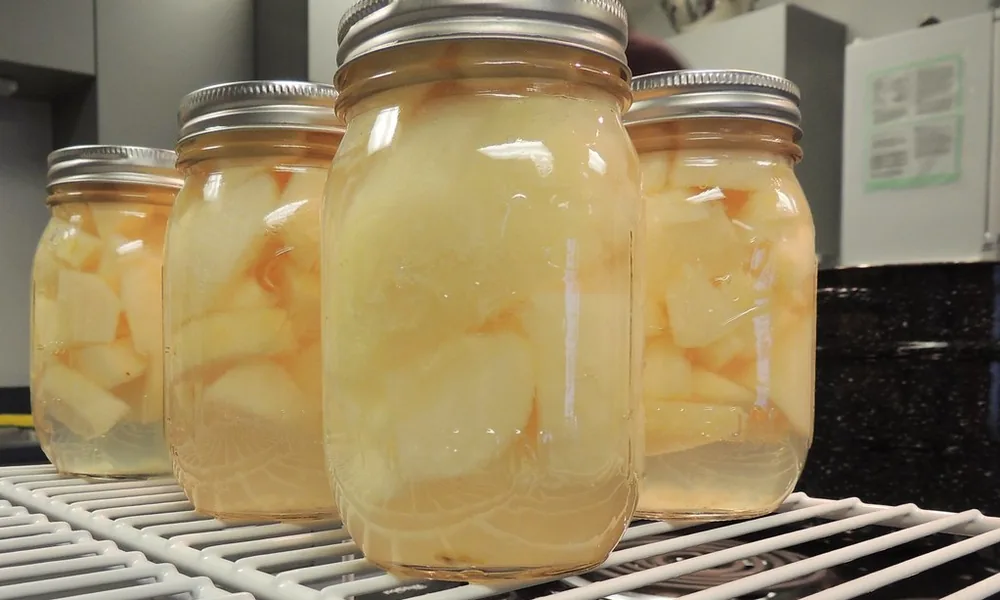
The liquid in the tin matters as much as the fruit. Heavy syrup is the sweetest option and the most common in cheaper tins: the pears come out tasting more like syrup than pear. It has its place in baking, where the extra sugar joins the recipe, but for snacking it is too much.
Light syrup is the middle ground: sweet, but the pear still tastes like a pear, and a good choice for desserts served cold with cream or custard. Juice-packed pears are the closest to fresh fruit: clean and delicate, they are the best choice for eating straight from the tin or spooning over breakfast.
Water-packed pears are the plainest of all: mild until you add honey, cinnamon, lemon or yoghurt. They are the best choice if you watch sugar closely, because you control every bit of sweetness.
How to read the label before you buy
A good tin has a short label. Pears should be the first ingredient, followed by water, pear juice or sugar, and ascorbic acid, vitamin C added to keep the fruit from browning. If the label lists flavourings, colours or preservatives you do not recognise, put the tin back.
Check the drained weight as well as the total weight: two identical-looking tins can hold very different amounts of fruit. Drained weight is the fairest way to compare prices between brands and sizes.
Look at the tin itself before it goes in the basket. Avoid tins dented along the seam, swollen, or rusty around the rim, and check the date: past its best-before, the fruit will be softer and the flavour flatter.
Comparing the cuts at a glance
| Cut | Best for | Texture | Sweetness control |
|---|---|---|---|
| Halves | Baking, poaching, serving whole | Firm, holds its shape | Good: rinse or drain as needed |
| Slices | Trifles, tarts, breakfast bowls | Soft, spoons easily | Good: easy to drain well |
| Diced | Muffins, crumbles, ice cream topping | Very soft, breaks apart | Fair: syrup clings to small pieces |
| Whole peeled | Poaching, dinner-party desserts | Tender, elegant | Good: serve with the liquid or without |
Desserts that start with a tin of pears
Canned pears shine in desserts because they are already soft, sweet and the right shape. The simplest is also one of the best: cold pear halves with custard, chocolate sauce or vanilla ice cream. It takes thirty seconds and tastes like far more effort than it took.
For something warmer, poach drained halves gently in their own juice with a cinnamon stick, lemon peel and a spoonful of honey. Ten minutes on a low heat is enough: the pears take on the spice and the juice turns into a light syrup. Serve warm with cream, or cold the next day over yoghurt.
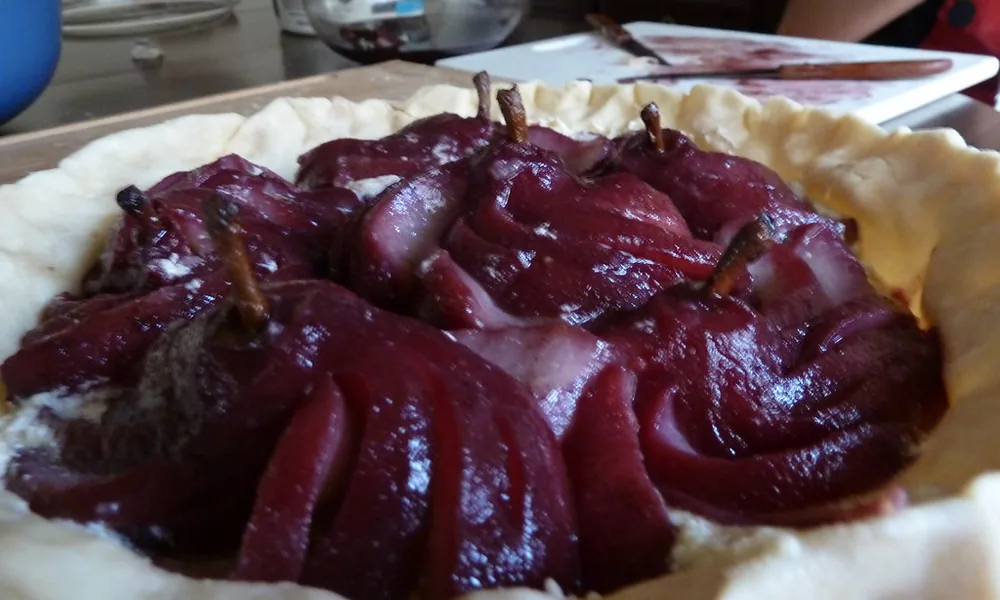
Pears also belong in tarts and crumbles. Halves fan out beautifully over almond frangipane, and their mild flavour lets the almond and butter do the talking. In a crumble, sliced pears hold their shape better than apples and need less sugar because they are already sweet. The same judgement that picks good tinned peaches applies here: choose the cut for the dish and drain the fruit well. Our guide to canned peaches worth serving covers the same label-reading habits in more detail.
Snacking, breakfast and lunchboxes
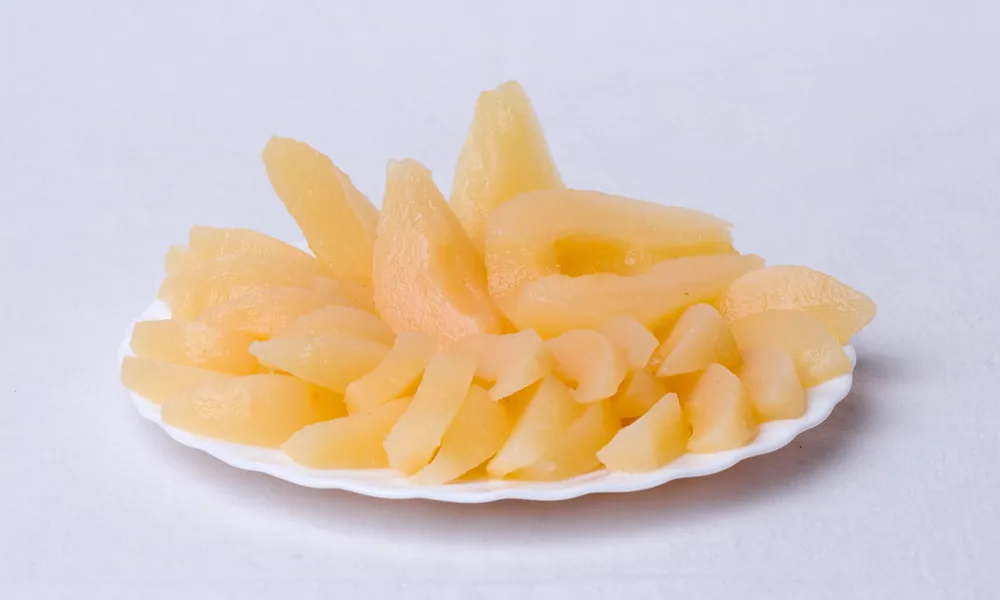
Straight from the fridge, juice-packed pear halves are one of the easiest healthy snacks in the house: sweet, soft and ready in seconds. A small bowl of pear slices with a handful of nuts actually fills you up, and travels well in a lunchbox packed in a sealed tub with a little of its juice.
At breakfast, pears are a gentler topping than berries or citrus. Spoon slices over porridge with honey, layer them into overnight oats, or serve them beside toast and cheese, where their sweetness balances something salty. Children like them too: the flavour is mild and the texture soft, with no skins or pips.
Pears also work in savoury company: beside a cheese board, in a salad with walnuts and blue cheese, or with cold ham. The sweetness is quiet, so it lifts the other flavours instead of competing with them.
What to do with the juice in the tin
The liquid in a tin of pears is too good to pour down the sink. Juice-packed liquid is essentially light pear juice: use it in smoothies, as poaching liquid, or stirred into porridge instead of water. Light syrup can be reduced in a small pan until it thickens into a pouring sauce for ice cream or pancakes.
Freeze leftover juice in an ice-cube tray. A cube in sparkling water makes a quick flavoured drink. Heavy syrup liquid is the exception: mostly sugar water, use it sparingly or not at all.
Storage, shelf life and keeping opened tins fresh
Unopened tins keep for two to three years in a cool, dark cupboard, making them one of the most reliable pantry staples you can own. Keep them away from heat and damp, and use the oldest tins first.
Once opened, never store leftovers in the tin: tip fruit and liquid into a glass or plastic container, cover it, and refrigerate. Opened pears keep for three to four days and taste best on the first two. If the fruit smells sharp or the liquid looks cloudy, throw it away.
With more open pears than you can eat, freeze them: drain, lay the pieces on a tray until firm, then bag them. Frozen canned pears are excellent in smoothies and cooked desserts, though they lose the firm texture for snacking. They keep about three months, and the same trick works for other tinned fruit: our guide to canned pineapple for the pantry uses the same freeze-first method.
Fresh, frozen or canned: how pears compare
Fresh pears win on texture and aroma when perfectly ripe, and nothing in a tin can match a pear eaten at its best. But perfectly ripe is a narrow window, and outside it fresh pears are often hard, gritty or mealy. Canned pears win on reliability: every tin tastes the same, with no waste.
Frozen fruit sits between the two: bright flavour, good in smoothies and baking, but it cannot be served as a dessert on its own the way a canned pear half can. If your freezer is full, tinned pears are the simpler standby. For a broader look at what keeps well frozen, see our guide to frozen fruit worth stocking.
Keep all three: fresh pears for eating out of hand, frozen fruit for smoothies and baking, and canned pears for desserts and snacking.
Your canned pear checklist
- Choose halves for baking and serving whole, slices for trifles and breakfast, diced only for mixing into batters.
- Pick juice-packed pears for snacking and light syrup for desserts; save heavy syrup for baking only.
- Read the label: pears, water or juice, sugar if any, and ascorbic acid, and nothing you cannot pronounce.
- Compare drained weight, not total weight, when judging value between brands and tin sizes.
- Drain pears well before baking, and save the juice for smoothies, poaching or a light sauce.
- Move leftovers out of the tin into a sealed container and eat them within three to four days.
Frequently asked questions
Are canned pears as healthy as fresh pears?
Juice-packed or water-packed canned pears are close to fresh pears in nutrition, with similar fibre and much of the vitamin content intact. Heavy syrup adds a lot of sugar, so for everyday snacking choose juice-packed tins.
Do I need to rinse canned pears?
Rinsing is worth doing for heavy-syrup pears if you want to cut the sweetness. For juice-packed pears, a quick drain is enough: rinsing washes flavour away.
Can I bake with canned pears straight from the tin?
Yes, but drain them well first: extra liquid makes pastry soggy and crumble toppings steam instead of crisping. Pat pieces dry before they go into the dish.
How long do canned pears last once opened?
Three to four days in the fridge in a sealed container, covered by a little of their liquid. Do not store them in the opened tin.
Are canned pears good for children?
Yes: soft texture and mild sweetness make them one of the easiest fruits for small children, and juice-packed halves cut into slices are a simple lunchbox fruit.
Can I use the syrup from the tin in recipes?
Light syrup and juice work in smoothies, poaching liquid and dessert sauces, and light syrup reduces into a pouring sauce. Heavy syrup is mostly sugar water: use it sparingly.
The bottom line
The best canned pears for desserts and snacking in 2026 are juice-packed or light-syrup halves: firm enough to bake, tender enough to eat cold, and sweet enough that dessert needs nothing more than a tin, a bowl and a spoon. Keep a tin or two in the cupboard, choose the cut for the dish, and drain the fruit well.


