Picking pendant lights that suit your room is one of the fastest ways to change how a home feels, and it is also one of the easiest places to get it wrong. A pendant light hangs in the middle of your sightline, so its size, height, brightness and style are on display every single day. Get them right and the room feels finished; get them wrong and even a beautiful fixture can make a space feel cramped or dim. This guide walks through the decisions that matter, room by room, so the pendant lights you choose in 2026 actually suit the room they live in.
A pendant is both a light source and a piece of furniture. It draws the eye downward, marks out a zone such as a dining table or a kitchen island, and sets the mood after dark. That is why the best pendant lights are chosen for the room first and the fixture second: a dramatic oversized pendant can be perfect over a long island and completely wrong in a small hallway.
Key takeaways
- Size the pendant to the room and the furniture beneath it, not to how dramatic it looks on its own.
- Hang pendants 75 to 90 centimetres above a table or island, and at least 210 centimetres above a walkway floor.
- Choose warm white light, around 2700K, for living spaces and bedrooms, and a dimmer for flexibility.
- Match the pendant style to the room, not to a trend you saw in a photograph.
- Count how many pendants the space needs before you buy, and space them evenly.
Why pendant lights change a room so much
A pendant light does three jobs at once. It provides light where you need it, it defines a zone within a larger room, and it adds a visual anchor that the eye returns to. Few other fixtures do all three. A pendant pulls a table, an island or a reading chair into focus and tells everyone in the room where to gather.
The other reason pendants matter is that they hang at eye level. When you sit at a dining table, a pendant is right in front of you, so a shade that glares or a bulb that is too cold becomes an irritation you notice every evening. Choosing well is less about taste and more about getting the practical details right first, then letting style follow.
The five decisions that matter most
Every good pendant choice comes down to five decisions.
1. Size: proportion beats drama
Start with the furniture underneath. Over a dining table, a pendant or a row of pendants should span roughly one half to two thirds of the table length. Over a kitchen island, the same rule applies to the island. A single pendant over a round table should be about one third of the table diameter.
Also consider the room itself: a pendant that looks generous in a shop can look small under high ceilings. Measure the width of the table or island before you fall in love with any single design.
2. Height: the number everyone gets wrong
Height is where most pendant mistakes happen. Above a dining table or kitchen island, hang the bottom of the shade 75 to 90 centimetres above the surface: low enough to feel intimate and light the table well, high enough that seated people can see each other across it. In a hallway or anywhere people walk underneath, the bottom of the pendant should clear at least 210 centimetres from the floor. If your pendant is adjustable, hang it a little high at first and live with it for a few evenings before settling the final height.
3. Brightness and colour: warm light wins at home
Pendant lights in living spaces should almost always use warm white light, around 2700K. Warm light flatters skin, food and wood, and it makes a room feel calm in the evening. Cool white light above 4000K can make a kitchen feel like a workspace and a dining room feel like a canteen. If you need brighter light for cooking or reading, choose a brighter bulb rather than a colder one, and put the pendant on a dimmer so the same fixture can be bright at breakfast and soft at dinner.
Check how the shade directs light, too. A solid metal shade throws light down in a pool, while a glass shade spreads it in all directions; an open-bottom shade with a frosted bulb is often the best compromise.
4. Style: match the room, not the trend
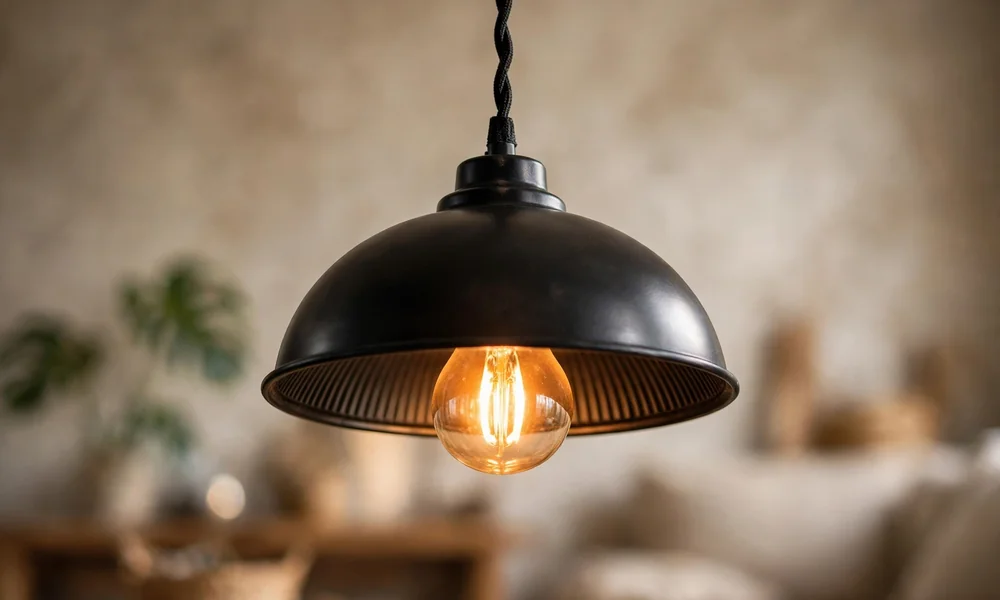
Glass globes suit modern rooms because they disappear visually and let the light do the work. Metal domes in black, brass or copper suit kitchens because they are bold and easy to clean. Fabric shades soften a bedroom or dining room, and woven rattan adds texture to relaxed, warm rooms. The safest approach is to echo something already in the room: the metal of your taps, the wood of your table, the colour of your chairs. A pendant that repeats one existing material looks intentional. For a closer look at how a larger statement fixture behaves in a dining space, see our guide to chandeliers worth hanging in your dining room in 2026.
5. Number: one, two or three
How many pendants a space needs depends on length. A small table or short island usually needs one well-sized pendant, a standard island of about two metres suits two, and a long island of three metres or more suits three. Space them evenly, with the same gap between each pendant as between the end pendant and the edge of the island.
Pendant lights by room
Kitchen
Kitchens need light you can work by, so choose pendants that throw a clear pool of light onto the island or worktop. Metal domes and glass shades both work well, and a dimmer lets you switch from cooking light to evening light. Hang two or three in a row over an island. Avoid fabric shades here, where steam and cooking grease will mark them quickly.
Dining room
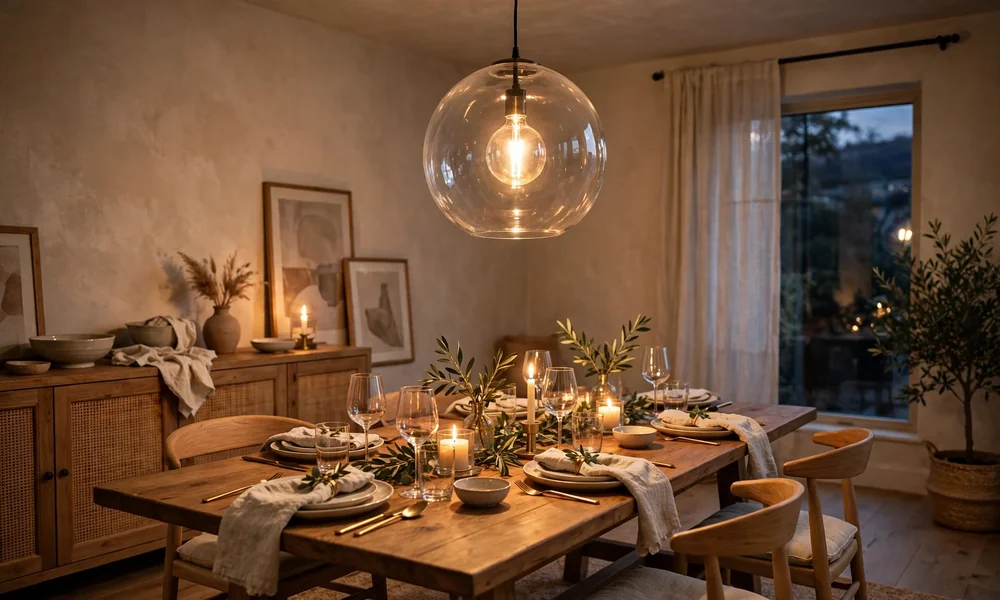
Dining rooms are where pendants earn their keep. A single large pendant or a row of smaller ones over the table creates the intimate pool of light that makes a meal feel special. Warm light is essential here, and a dimmer is almost non-negotiable. Glass globes are a classic choice because they light the faces around the table as well as the food.
Bedroom
In a bedroom, pendants work best as bedside lights, hung low on either side of the bed in place of table lamps. This frees up the bedside table and gives the room a considered, hotel-like feel. Choose small shades, warm bulbs and a dimmer, and hang them low enough to read by but high enough not to hit your head when you sit up.
Entryway and hallway
An entryway pendant is the first light a visitor sees, so it sets the tone for the whole home. A single statement pendant works well, hung high enough to clear the door swing and tall visitors. Because hallways are walkways, keep the bottom of the shade at least 210 centimetres above the floor.
Bathroom
Pendants can work in a bathroom, but only with care. Choose fixtures rated for damp rooms, hang them beside rather than directly above a mirror to avoid shadows on the face, and keep them away from water. If you are comparing lighting options more broadly, our roundup of the best vs worst floor lamps of 2026 shows how different fixtures shape a room.
Pendant light styles compared
Use this table to narrow down the style before you start shopping.
| Style | Best for | Light quality | Watch out for |
|---|---|---|---|
| Glass globe | Dining room, living room | Soft, all-round glow | Glare from exposed bulbs |
| Metal dome | Kitchen island, workspace | Focused pool downwards | Dark ceiling, harsh edges |
| Fabric shade | Bedroom, dining room | Warm, diffused light | Marks and dust over time |
| Rattan or woven | Relaxed living rooms | Patterned, textured glow | Hard to clean, dim output |
| Industrial cage | Loft and modern kitchens | Bright, direct light | Can feel cold and stark |

Mistakes to avoid when choosing pendant lights
Most pendant regrets come from a short list of avoidable mistakes. The first is buying before measuring: a pendant chosen by eye in a shop is very often the wrong size at home. Measure first and write the numbers down before you shop. The second is hanging too high: a pendant hung near the ceiling lights the ceiling, not the table.
The third mistake is choosing cold light: a 5000K bulb in a dining room pendant will make the room feel like an office no matter how beautiful the shade is. The fourth is forgetting the dimmer, and the fifth is buying a pendant that cannot be cleaned. Glass and metal wipe clean in seconds; fabric and rattan do not, and in a kitchen that matters within weeks. Finally, do not mix too many finishes: one metal repeated through the room looks deliberate, while three different metals looks accidental.
Your pendant light checklist
- Measure the table or island, and choose a pendant width of one half to two thirds of that length.
- Check the ceiling height and plan for 75 to 90 centimetres above a table, or 210 centimetres clear above a walkway.
- Pick warm white bulbs around 2700K, and check the bulb type before you buy the fixture.
- Put the pendant on a dimmer so the same light works for cooking, eating and relaxing.
- Match the pendant finish to one material already in the room.
- Count the pendants the space needs and space them evenly before ordering.
Frequently asked questions
How low should pendant lights hang over a dining table?
Hang the bottom of the shade 75 to 90 centimetres above the table surface. That height lights the table well and keeps the fixture out of sightlines between seated diners.
How many pendant lights do I need over a kitchen island?
A short island usually needs one pendant, a standard island of about two metres suits two, and a long island of three metres or more suits three.
What colour temperature is best for pendant lights?
Warm white, around 2700K, is best for living rooms, dining rooms and bedrooms. It flatters skin and food and makes a room feel calm in the evening. Choose brighter bulbs rather than colder ones when you need more light.
Can pendant lights work in a room with low ceilings?
Yes, but choose carefully. Pick a compact pendant or a flush-style design, and hang it so the bottom clears at least 210 centimetres above the floor in walkways. Over a table you have more freedom, since nobody walks under it.
Are pendant lights enough light on their own?
Usually not. A pendant lights one zone beautifully but leaves the corners dark. Most rooms also need a second layer, such as a floor lamp, wall lights or recessed ceiling lights, to fill in the rest of the space. If you are weighing the options, start with the easiest lighting upgrade in your home in 2026.
Should all my pendant lights match?
Pendants in the same room should match or clearly belong to the same family, especially over one island or table. In different rooms, they can differ, but keeping one shared element makes the whole home feel coherent.
The bottom line
The best pendant lights of 2026 are not the most dramatic or the most expensive. They are the ones that fit the room they hang in: the right size for the table beneath them, the right height for the people who use the space, warm light on a dimmer, and a style that echoes something already in the room. Measure first, choose the light for the job, and let the style follow. Do that, and the pendant becomes the part of the room that makes everything else feel finished.