
The best wardrobe boxes of 2026 solve the most annoying part of moving house: getting your hanging clothes from one wardrobe to another without folding them, creasing them, or stuffing them into bin bags. A wardrobe box is a tall, sturdy cardboard box with a metal hanging rail built in, so you lift clothes straight off the rail in your old wardrobe, hang them on the rail in the box, and lift them straight out again at the other end. No folding, no ironing, no mystery pile of crumpled shirts.
A suit that arrives creased needs pressing, a silk dress that arrives crushed may never look right again, and a coat folded into a box comes out looking slept in. Wardrobe boxes protect clothes in a move because they let fabric hang the way it was designed to hang. This guide compares the wardrobe boxes worth buying in 2026, explains how many you need, and shows how to pack them so everything arrives ready to wear.
Key Takeaways
- Buy double-wall wardrobe boxes for anything you care about: single-wall boxes bow and tear under a full rail of coats.
- Measure your longest garment before ordering: a standard box fits shirts and jackets, but dresses and long coats need a tall box.
- One wardrobe box holds roughly fifteen to twenty hanging items, so count your rail before moving day, not on it.
- Pack the rail evenly and tape the box shut at the top: an overloaded rail bends, and an open top lets dust and rain in.
- Keep one box back until the last hour: it holds the outfit for moving day and the first morning in the new home.
What a Wardrobe Box Actually Is
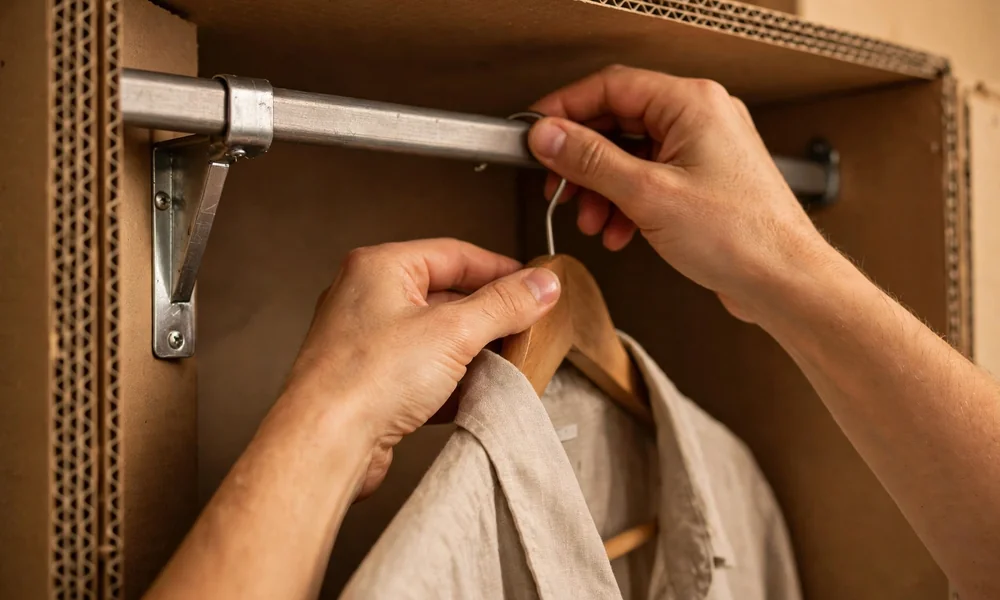
A wardrobe box is not a bigger cardboard box. It is a purpose-built moving container, usually around 120 centimetres tall, with a steel rail slotted across the top, hand holes cut into the sides, and a lid that folds over the hanging clothes. Assembly takes a minute: slide your hangers onto the rail and close it up. The clothes hang inside exactly as they hung in your wardrobe, protected from dust, scuffs and rain by the cardboard walls.
The difference between a wardrobe box and a bin bag full of clothes is the difference between transporting clothes and merely moving them. In a bag, clothes slide, fold and crush each other. In a wardrobe box, each garment keeps its own space on the rail, air can circulate, and the weight is carried by the box, not by the clothes underneath. That matters most for tailored jackets, pleated skirts, lined coats and anything in silk or linen. Unpacking takes about two minutes: lift the hangers out as a group and slide them onto the new rail.
The Wardrobe Box Types Worth Knowing
Every wardrobe box is a variation on a few basic ideas, and the right box depends on what you hang in it, not on the brand printed on the side.
Standard hanging boxes
The standard wardrobe box is the workhorse of a move. It stands about 120 centimetres tall, holds a full rail of shirts, blouses, jackets and trousers, and suits most adults. The rail is usually a steel bar that slots into reinforced holes on either side, and the box itself is double-wall cardboard that can take the weight without bowing.
Short wardrobe boxes
Short boxes stand around 90 centimetres tall and suit folded clothes, children’s clothes and shorter hanging items. They are easier to carry, easier to fit in a car boot, and cheaper than the tall version. Their weakness is obvious: a long coat will not fit, and a dress will pool at the bottom. Save the tall boxes for the adult wardrobe.
Tall and extra-tall boxes
Tall boxes stretch to 140 centimetres or more and are made for long dresses, evening wear and full-length coats. They cost more and are awkward in narrow doorways, but they are the only box that keeps a floor-length dress hanging straight, and one tall box is cheaper than pressing two or three long garments after the move.
Heavy-duty and double-wall boxes
Heavy-duty boxes use thicker double-wall or triple-wall cardboard, a stronger rail and reinforced corners. They suit a heavy load of winter coats, a long-distance move, or any box that will be stacked or stored for weeks before unpacking. A standard box is fine for a short local move; a heavy-duty box is what you want when the box will be lifted and carried more than once.
Wardrobe Boxes Compared
| Box type | Height | Best for | Watch out for |
|---|---|---|---|
| Standard hanging box | About 120 cm | Shirts, jackets, trousers | Too short for long dresses |
| Short box | About 90 cm | Children’s clothes, folded items | Long coats will not fit |
| Tall box | About 140 cm | Long dresses, full-length coats | Awkward in narrow hallways |
| Heavy-duty double-wall | About 120 cm | Winter coats, long-distance moves | Costs more per box |
| Box with handles | About 120 cm | Carrying up stairs | Handles tear if overloaded |
How Many Wardrobe Boxes Do You Need
Count your rail before you order: count the hangers and divide by fifteen. A box holds about fifteen to twenty items comfortably, and fewer if the clothes are bulky, so a wardrobe with sixty hanging items needs four boxes and a couple sharing a wardrobe needs six or seven. Most people underestimate by half.
Do not forget the clothes that are not on the main rail: the coats by the front door, the jackets in the cupboard, the dresses in the spare room. Add one extra box for those, plus one spare. Measure your longest garment, from hanger hook to hem, against the internal height of the box: a dress 130 centimetres long needs a tall box, and a coat that touches the bottom will come out creased at the hem.
Packing Clothes So They Arrive Crease-Free
Packing a wardrobe box well takes five minutes and saves an hour of ironing. Group similar clothes together, shirts in one box, jackets in another, trousers in a third, so each box goes straight to the right rail and a heavy coat never crushes a light blouse.
Hang the heaviest items in the middle of the rail and the lightest at the ends, because a rail loaded on one side bends and lets the clothes slide together into a crush. Keep the hangers facing the same way, leave a little space between garments, then fold the lid flaps over, tape the top shut, and label the outside with the room and contents. Keep the box under cover in rain, because wet cardboard loses its strength fast.

What to Look For Before You Buy
Cardboard strength comes first. Double-wall cardboard feels rigid and resists bending when you press the sides; single-wall cardboard flexes easily and will bow under a full rail. Check the corners, because that is where a weak box fails first, and look for reinforced edges around the rail holes, since the rail carries the whole weight of the clothes.
The rail is the second thing to check. A steel rail will not bend under winter coats; it should sit firmly in its slots and run the full width of the box so the weight is shared by both walls. A rail that is too short will drop the moment the box is lifted. Handles matter too: a box full of hanging clothes is heavy, and a hand hole that tears mid-staircase means a dropped box.
Finally, check the size against your doorways and your vehicle. A tall box does not fit in every car boot or turn every corner of a narrow staircase, so measure the tightest doorway on the route out and the tightest one in. If the box will not fit through, it does not matter how good it is.
Mistakes That Ruin Clothes in Transit
The most common mistake is overloading. A rail packed with thirty hangers will bend, the clothes will crush together, and the box will be too heavy to carry. Fifteen to twenty items is the limit for a standard box, fewer for heavy coats, and another box is cheaper than a dry-cleaning bill.
The second mistake is mixing heavy and delicate clothes: a wool coat will press a silk blouse flat, and a leather jacket will mark anything light-coloured it touches. Keep delicates in their own box, with garment bags for the items you care about most. The third mistake is leaving boxes open or unlabelled: an open box lets dust in and clothes slip off the rail, while an unlabelled box gets opened in the wrong room.

Moving Day: Wardrobe Box Checklist
- Count the hangers on every rail the night before and confirm you have enough boxes, plus one spare.
- Assemble the boxes early, tape the bases, and check that each rail sits firmly in its slots.
- Pack heavy clothes in the middle of the rail and light clothes at the ends, with hangers facing one way.
- Slip garment bags over suits, silk and anything you would hate to have pressed again.
- Tape every box shut, label it with the room and contents, and keep labels facing out in the van.
- Keep one box for moving-day clothes and the first morning, and unpack it first when you arrive.
Wardrobe Boxes: Frequently Asked Questions
How many clothes fit in one wardrobe box?
A standard wardrobe box holds about fifteen to twenty hanging items. Coats may hold only ten or twelve; light shirts can hold closer to twenty. Count your hangers and divide by fifteen.
Are wardrobe boxes reusable?
Yes, if they stay dry and are not overloaded. A good double-wall box can survive two or three moves and folds flat for storage between them. Check the rail slots and corners first, and replace any box that has softened, torn or lost its shape.
Do wardrobe boxes fit in a car?
A standard wardrobe box fits in most estate cars and vans, but not in a small hatchback boot, so measure your boot and the box before moving day. Short boxes fit more easily, and many people move the wardrobe boxes in the van.
Can I put folded clothes in a wardrobe box?
You can, but it wastes the box. Folded clothes belong in a standard moving box or a storage bin. If a wardrobe box is half empty, fill the bottom with folded jumpers to stop the hanging clothes sliding, but do not buy wardrobe boxes for folded clothes alone.
Will my clothes crease inside a wardrobe box?
Hardly at all, if the box is packed properly. Clothes hang straight, spaced apart, with the weight carried by the rail. Creases happen when a box is overloaded, when heavy clothes press on light ones, or when a garment is longer than the box. Pack evenly and use a tall box for long garments.
Should I buy or hire wardrobe boxes?
Buying is usually better for a house move, because you keep the boxes for storage afterwards and are not rushed to return them. Hiring suits a single-day move with a removal company that supplies and collects the boxes. Either way, order a few days early so you can pack gradually.
The Bottom Line
Wardrobe boxes are one of the few moving purchases that pay for themselves on the first use. They protect the clothes you own, cut unpacking from an afternoon to a few minutes, and cost less than pressing a single suit. Buy double-wall boxes, count your hangers before you order, and pack the rail evenly. Your clothes will arrive hanging straight and ready to wear. For the room they will hang in, our guide to wardrobes that hold more without eating the room will help you choose the furniture, garment bags that keep suits crease-free add an extra layer of protection, and storage bins worth buying for a tidier home cover the containers that work best once the move is over.


