The best flour sifters do a small job that changes how a cake turns out. A flour sifter aerates flour as it falls, breaking up lumps and mixing in air, so the flour folds into a batter without clumps and without being beaten flat. A sponge made with sifted flour rises more evenly and feels lighter, while the same recipe made with flour tipped straight from the bag can turn dense and heavy.
Key Takeaways
- A flour sifter aerates flour and removes lumps, which is what makes sponges and pastry lighter; it is a baking tool, not a general straining tool.
- Crank sifters suit frequent bakers, squeeze-handle sifters suit small hands and quick jobs, and rotary sifters suit large batches of flour.
- Fine mesh gives the lightest, most even flour, but it clogs faster with cocoa, icing sugar and wholemeal flour, so match the mesh to what you bake most.
- Stainless steel lasts longest and survives the dishwasher; a sifter with a welded mesh and a rigid cup keeps its shape and sifts evenly for years.
- Clean the mesh straight after use with a dry brush, and never put a damp sifter away, because trapped moisture is what makes mesh rust and flour go stale inside the cup.
What a Flour Sifter Actually Does
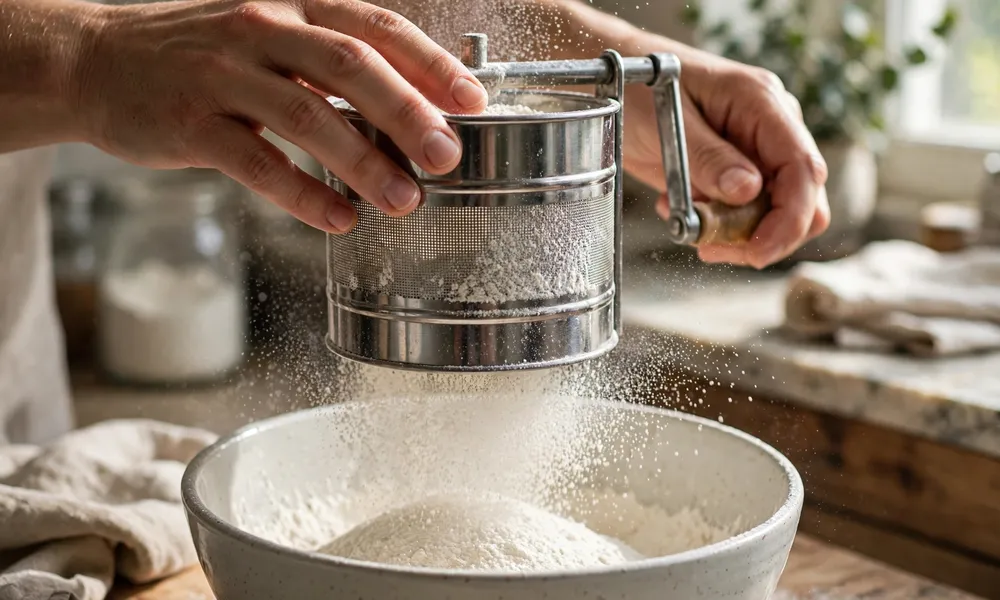
A flour sifter is an enclosed cup with a fine mesh base and a mechanism that pushes flour through the mesh. You spoon flour into the cup, work the handle, and the flour falls out below in a soft, even shower. The mesh catches lumps and stray bran, while the movement of the flour through the wires mixes air into it. Flour settles and compacts in the bag, and sifting loosens it again, so it blends into wet ingredients with far less stirring.
The enclosed cup is what separates a flour sifter from an open bowl strainer. A strainer is held over a bowl and flour is poured through it, which works, but the flour can drift and spill, and the strainer needs two hands. A sifter holds the flour inside, works with one hand, and gives a steadier flow. Our guide to mesh strainers for everyday cooking covers the open bowl strainers that rinse rice and strain stock; a flour sifter is the dedicated version for baking. Sifting also blends dry ingredients properly: baking powder, cocoa and spices distribute evenly through flour when sifted together, so a cake rises evenly.
Flour Sifters 2026 at a Glance
| Best for | Sifter type | Mechanism | Standout strength |
|---|---|---|---|
| Frequent cake baking | Crank sifter | Rotating crank and wire agitator | Steady, even flow with one hand |
| Quick jobs and small hands | Squeeze-handle sifter | Squeeze handle moves the agitator | Simple, light, easy to control |
| Large batches | Rotary sifter | Turning handle spins the mesh | Handles big cups of flour fast |
| Dusting cakes and worktops | Single-action sifter | One press shakes the mesh | Precise, light dusting with no waste |
| Small kitchens | Compact cup sifter | Crank or squeeze, small cup | Stores in a drawer, sifts a cup at a time |
| Wholemeal and coarse flour | Coarse-mesh sifter | Crank with wider mesh | Does not clog on bran and coarse grains |
The Main Types of Flour Sifter
Flour sifters look alike at a glance, but the mechanism decides how fast the flour comes out and how evenly it sifts. A sifter that is hard to work will sit in the cupboard while the flour goes straight from the bag.
Crank Sifters
A crank sifter is the classic design: a cup with a crank on the side that turns a wire agitator inside, sweeping the flour across the mesh. It gives the steadiest flow of any type, because the crank keeps the flour moving at a constant rate, and it is the easiest to use one-handed.
Squeeze-Handle Sifters
A squeeze-handle sifter works by squeezing a handle that moves a small agitator across the mesh. It is lighter and simpler than a crank sifter, with fewer moving parts, and it suits quick jobs and smaller hands, including children baking with a parent.
Rotary Sifters
A rotary sifter has a handle that spins the whole mesh or an internal paddle, and it is made for volume. It sifts a large cup of flour faster than any other type, which matters when a recipe calls for several cups. The downside is control: the flour comes out quickly, so it is easy to overshoot.
Single-Action and Dusting Sifters
A single-action sifter is a small cup with a mesh base and a lever that shakes a measured amount of flour, cocoa or icing sugar out at a time. It is not made for sifting a whole cake’s worth of flour, but it is the best tool for dusting a finished cake, a worktop, or a tin.

Mesh and Capacity: How Fine, How Much
Mesh fineness is the single most important choice after the mechanism, and it is a trade-off. A fine mesh gives the lightest flour and catches the smallest lumps, which is what a sponge cake needs. But the same fine mesh clogs quickly with cocoa powder, icing sugar and wholemeal flour. For most home bakers, a medium-fine mesh is the best compromise: fine enough to catch lumps in plain flour, open enough to handle cocoa without constant tapping.
Capacity matters more than it looks. A sifter that holds only one cup forces a baker to refill it three times for a large cake, and each refill breaks the rhythm and spills a little flour. A sifter that holds three cups is faster, but heavier when full and harder to hold steady. A two-cup sifter is the sweet spot: enough for a standard cake with one fill, light enough to use one-handed.
Materials and Build: What Lasts
Stainless steel is the best material for a flour sifter, and it is not close. The cup resists dents, the mesh resists rust, and the whole sifter survives the dishwasher. Look for mesh welded to the cup rather than crimped or glued: welded joints do not loosen or trap flour. The cup should feel rigid when you press the rim, because a cup that flexes will eventually let the mesh sag.
Plastic sifters are cheaper and lighter, but the mesh stretches and the cup warps in hot water. They suit an occasional baker, but they rarely last more than a year of regular use.
How to Use a Flour Sifter Well
Work the handle at a steady, unhurried pace. Rushing the crank sends the flour out in bursts, which leaves clumps in the bowl and a cloud over the worktop. If the flow slows, tap the side of the cup gently rather than forcing the handle. For the lightest results, sift the flour twice for sponge and chiffon cakes, and sift the dry ingredients together. Measure after sifting when a recipe gives a weight for sifted flour, because a cup of sifted flour weighs less than a cup of unsifted flour. Our guide to measuring cups that pour cleanly covers getting the quantities right once the flour is sifted.
Cleaning and Storage
A flour sifter lasts for years if it is cleaned properly, and fails quickly if it is not. The rule is simple: clean it dry first, and only wash it when it needs it. After each use, tap out the remaining flour and brush the mesh with a dry pastry brush, inside and out, while the flour is still dry. Dry flour brushes off easily; damp flour turns to paste in the mesh and is far harder to remove.
When the sifter does need washing, use warm water and a little washing-up liquid, rinse it well, and dry it immediately. Do not leave it to drip-dry, because water sitting in the mesh is what causes rust. Shake it out, dry the mesh with a tea towel, and leave it upside down for an hour.

Mistakes That Ruin a Sifter
The most common mistake is overfilling the cup: a sifter filled to the brim has no room for the flour to move, so fill it two-thirds full and refill it. The second mistake is forcing the handle when the mesh clogs, which packs the powder tighter; tap the cup and brush the mesh instead. Finally, do not use a flour sifter for anything wet or greasy. Almond flour is coarser and oilier than wheat flour and clogs a fine mesh quickly; our guide to almond flour for baking covers how it behaves differently, and a coarser mesh or a gentle tap is the answer.
Flour Sifter Checklist
- Choose the mechanism for how you bake: crank for frequent baking, squeeze for quick jobs, rotary for large batches.
- Pick a medium-fine mesh for everyday flour, and a coarser mesh if you mostly bake with wholemeal flour or cocoa.
- Buy a two-cup capacity unless you regularly bake large cakes, when a three-cup sifter saves refills.
- Check the mesh is even and flat, the cup is rigid, and the handle turns or squeezes smoothly before you buy.
- Prefer stainless steel with a welded mesh, and avoid plastic sifters for regular baking.
- Clean it dry with a brush after use, wash it only when needed, and always store it dry and empty.
Frequently Asked Questions
Do I really need a flour sifter, or can I use a mesh strainer?
A mesh strainer works for occasional sifting, but a flour sifter is better for baking: the enclosed cup stops flour drifting, it works one-handed, and the mechanism gives a steadier flow. If you bake more than once a month, a dedicated sifter is worth owning.
What is the difference between a crank sifter and a squeeze sifter?
A crank sifter turns a wire agitator with a rotating handle, giving a steady, even flow, and suits frequent bakers. A squeeze sifter moves the agitator by squeezing a handle, which is simpler and lighter, and suits quick jobs and smaller hands.
Should I sift flour once or twice?
Once is enough for most cakes, muffins and pastry. Sift twice for sponge and chiffon cakes, where lightness matters most, and when a recipe asks for sifted flour by weight.
Can I sift cocoa powder and icing sugar in a flour sifter?
Yes, but both clog a fine mesh faster than flour, because they are fine and slightly damp. Use a medium mesh, fill the cup only halfway, tap the side gently when the flow slows, and brush the mesh clean straight after use.
How do I clean a flour sifter without rusting it?
Brush it dry after each use, and wash it only when it needs it. When you do wash it, use warm water, rinse well, dry it immediately with a tea towel, and leave it upside down for an hour before storing it.
What size flour sifter should I buy?
A two-cup sifter suits most home bakers: it holds enough for a standard cake in one fill and is light enough to use one-handed. Buy a one-cup sifter only for dusting and small jobs, and a three-cup sifter only if you regularly bake large batches.
Bottom Line
The best flour sifters of 2026 are matched to how you bake: a crank sifter for frequent cake baking, a squeeze sifter for quick jobs, a rotary sifter for large batches, and a small single-action sifter for dusting. Pick a medium-fine stainless steel mesh in a two-cup cup, use it at a steady pace with the cup two-thirds full, and keep it clean, dry and empty.