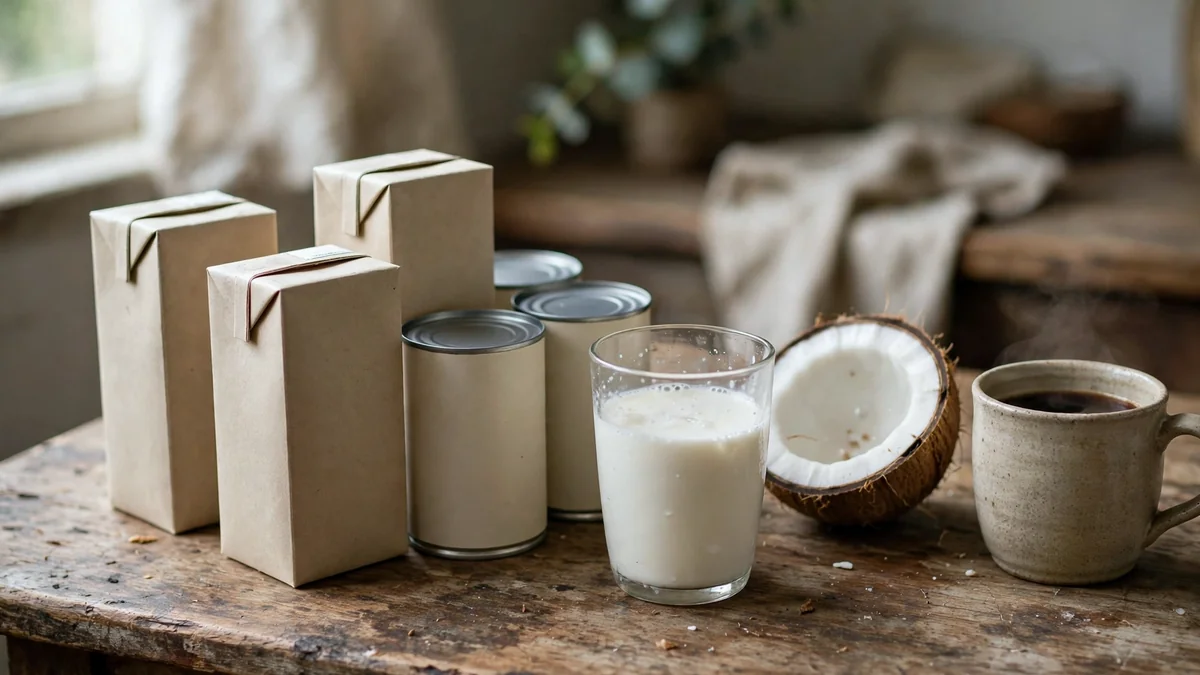
Coconut milk is the richest plant milk on the shelf, and it is the one most likely to be misunderstood. It is made from the white flesh of the coconut, grated and pressed into a thick, creamy liquid, and it carries far more fat than any other plant milk — which is exactly what makes it so good in cooking. When it is made well, a tin of coconut milk tastes warm and gently sweet, pours with real weight, and turns a curry, a soup, or a smoothie into something that feels like a treat. When it is made badly, the same tin gives you a thin, grey liquid that tastes of soap, splits the moment it meets heat, and leaves a greasy film on the glass.
The gap between the best coconut milks of 2026 and the worst is wide, and it usually shows up in four places: the coconut content, the richness, the sweetness, and the way it behaves when heated. A great coconut milk tastes of the coconut first, not of sugar or thickener, and it stays smooth from the first pour to the last. A bad one is watery enough to see through, or so sweet it belongs in a dessert, or so full of gums that it coats the tongue. This comparison puts them head to head the way you would actually use them: stirred into a curry, blended into a smoothie, poured over breakfast, and drunk cold from a glass. We look at flavour, body, sweetness, how they hold up in heat, and whether a carton or tin earns its place in the fridge or only its place on the shelf.
Key Takeaways
- A good coconut milk is thick and creamy, with a clean, gently sweet coconut flavour and no soapy or chemical aftertaste.
- Check the coconut content on the label: the best tins list more coconut and fewer thickeners, gums, and added sugars.
- Full-fat coconut milk is the right choice for curries and cooking, while light versions suit smoothies and drinking cold.
- The worst coconut milks are thin and watery, split in hot cooking, or so sweet they overpower everything they touch.
- The same honest approach sits behind our comparison of the best and worst smoothies of 2026, because coconut milk is judged hardest in the blender it is poured into.
How We Judged the Coconut Milks
We judged every coconut milk on five things that matter at the table rather than on the tin. First, flavour: whether the milk tastes warmly of real coconut, with a fresh, clean finish, or of soap, cardboard, and additives. Second, body: whether it feels rich and satisfying in the mouth, with a little weight and creaminess, or like flavoured water that vanishes before you swallow. Third, sweetness: whether the sweetness is balanced and honest, or so heavy that it turns a curry into a pudding and a smoothie into a dessert. Fourth, behaviour in heat: whether it blends smoothly into a hot curry or soup, or splits into oil and watery liquid the moment the pan gets hot. Fifth, the label itself: how much coconut is actually in the tin, what has been added to thicken or sweeten it, and whether the maker is honest about what is inside. We tested every carton and tin cold, in cooking, and in a smoothie, because a milk that is fine on its own can still fail badly in a hot pan.
The Best Coconut Milks of 2026
The best coconut milks of 2026 share one quality above all: they taste like the coconut itself, not like a formula. They are made from real coconut flesh, they carry real richness, and they pour with a thick, creamy weight that makes a curry feel generous rather than thin. The flavour is warm and gently sweet, with a clean finish and no soapy aftertaste. In a curry they behave beautifully, blending into the sauce and rounding off the spice without turning the pan greasy. In a smoothie they add body and a tropical note that no other milk can match. Drunk cold, they are satisfying on their own, with enough richness to feel like a proper drink rather than a flavoured water.
What sets the top tins and cartons apart is how little they need to hide behind. The ingredient list is short: coconut, water, and perhaps a little stabiliser to keep the cream from separating in the tin. There is no long parade of gums, emulsifiers, and flavourings, because a well-made coconut milk does not need them. The best full-fat tins are the most versatile of all for cooking, while the best drinking cartons are lighter, smoother, and made to pour cold. Both kinds keep well, pour cleanly to the last spoonful, and never leave a greasy film on the tongue. A good tin also separates honestly in the fridge — a thick cream on top, a thinner milk below — which is a sign of real coconut, not a fault.
Reading the Tin: What the Label Really Tells You
The front of the tin tells you what the maker wants you to believe; the back tells you the truth. Start with the coconut content: a good full-fat tin gives around sixty percent coconut or more, and anything under forty percent is a warning sign that the tin is mostly water. Next, look at the fat: full-fat coconut milk is rich by nature, and a tin that claims to be full-fat while listing very little fat has been watered down. Then check the sugar: unsweetened should mean no added sugar at all, and a sweetened carton should stay modest if it is going to work in cooking as well as in a smoothie.
The additives list matters too. A little guar gum is normal and harmless in small amounts, but a long list of thickeners usually means the maker is bulking out a thin milk rather than making a good one. Watch for preservatives and flavourings, which are usually there to cover a weak base, and for the word light, which can mean anything from slightly thinner to mostly water — the numbers on the back are the only honest guide. The best tins and cartons are honest about all of this, with clear percentages and no vague claims. If the label hides the coconut content, buries the sugar, or leans on words like natural and tropical instead of numbers, put the tin back. The best coconut milks are the ones whose labels read like a recipe, not like a holiday brochure.

The Worst Coconut Milks of 2026
The worst coconut milks fail in ways that are hard to forgive, because the coconut is generous by nature and the method is simple. The most common failure is thinness: a tin that is mostly water, with barely enough coconut in it to colour the glass, let alone flavour it. It pours like skimmed milk, tastes of nothing much, and turns a curry into a watery disappointment. The second failure is the soapy taste: a stale, chemical note that comes from old or poorly handled coconut, and no amount of sugar can hide it. The third is splitting in the pan, which is the failure that shows up in front of guests and ruins the dinner.
Coconut Milk in Curries, Smoothies, and Breakfast
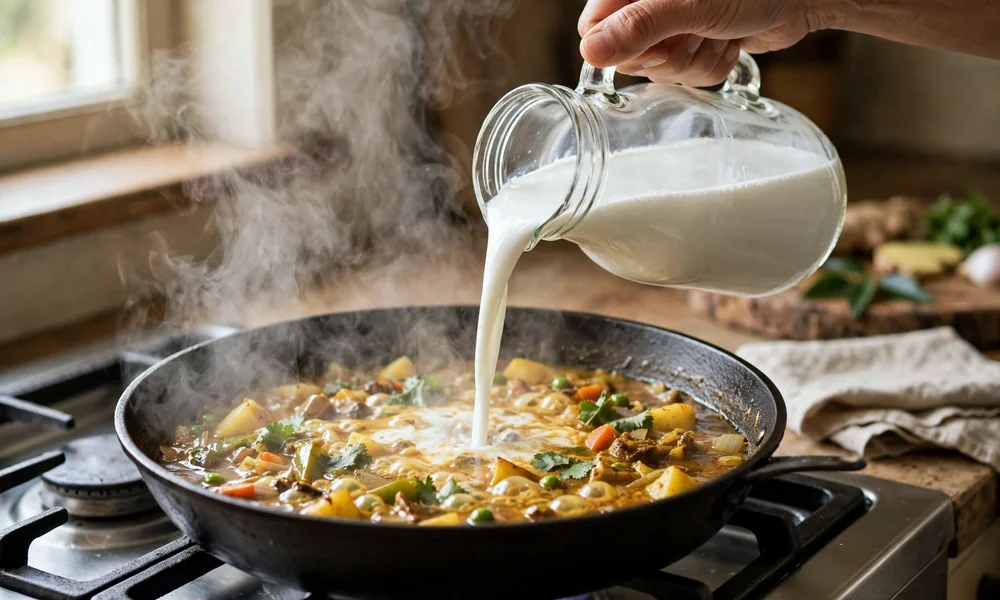
In a curry, coconut milk is the ingredient with the most to prove and the most to gain. A good tin blends smoothly into a hot pan, softens the spice, and gives the sauce a silky body that water or stock never could. A bad one splits, and the split is unmistakable: pools of oil floating on a thin, grey sauce, and a greasy note that no amount of stirring will fix. The trick is to add the milk late, to keep the pan off a fierce boil once it goes in, and to use a full-fat tin if the curry is the main event. Coconut milk is also one of the few plant milks that can stand up to strong spice without vanishing into it, which is why cooks who take curries seriously usually keep a good tin in the cupboard.
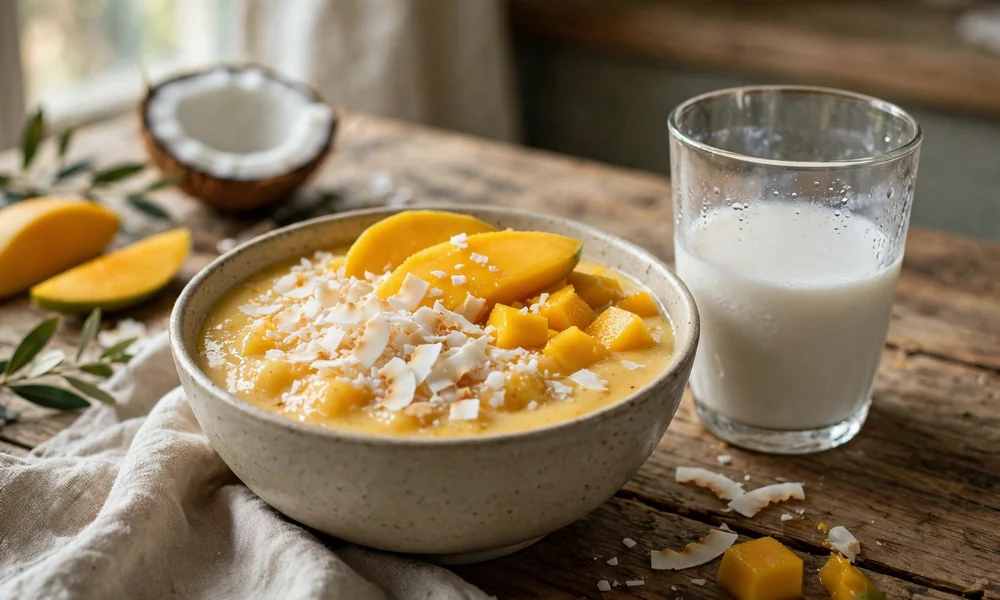
In a smoothie, coconut milk is at its most forgiving. Its richness gives the blender something to work with, and its tropical flavour suits mango, banana, and pineapple better than any other milk. Light cartons work well here, and so do full-fat tins if the smoothie is meant to be a meal rather than a snack. Over breakfast, coconut milk softens porridge and cereal without drowning them, though its flavour is strong enough to dominate a plain bowl, so it suits tropical toppings and sweet breakfasts best. In baking, it enriches cakes and puddings, and it is the safer choice for a creamy dessert than almond milk, which is far too thin for the job. Used with a little care, it is one of the most versatile milks in the kitchen.
How to Choose a Coconut Milk by How You Use It
The best coconut milk for a curry cook is not always the best for a smoothie drinker, so start with how you actually use it. If cooking is the main job, choose a full-fat tin with a high coconut percentage, and test it in a hot pan before you commit to a second tin. If smoothies and drinking cold are the main jobs, a light carton is fine, and the flavour matters more than the richness. If you bake with it, pick unsweetened every time, because a sweetened carton will quietly sweeten every cake and pudding it touches. A household that uses coconut milk for everything should keep two kinds: one full-fat tin for cooking, and one light carton for smoothies and cold drinking.
Think about the rest of the household too. Coconut milk is not suitable for anyone with a coconut allergy, however good the tin is, and it is worth remembering that it is far richer in fat and far lighter in protein than soy — a point our comparison of the best and worst soy milks of 2026 makes clear, since soy is the protein milk and coconut is the richness milk. Buy the smaller tin first if you are trying a new one, keep it cold once opened, use it within a few days, and trust your own mouth over the claims on the front. The best coconut milk is the one that tastes good in your curry, your smoothie, and your glass, and the worst is the one that only looks good on the shelf.
The Verdict
The best coconut milks of 2026 are the quiet, honest ones: real coconut, real richness, a short label, and a flavour that tastes of the nut itself. They pour thickly, they behave in a hot pan, and they make cooking taste better without shouting about it. The worst are thin, soapy, or drowned in sugar, and they fail exactly where it matters most, in the pan and in the glass. Between the two sits a wide middle of perfectly drinkable cartons that do the job without ever delighting anyone. Pick by how you use it, read the label before you buy, and keep a tin you trust in the cupboard. The same care that goes into choosing a good cereal makes the milk on top of it worth pouring, as our comparison of the best and worst cereals of 2026 shows, because breakfast is only as good as its weakest part.