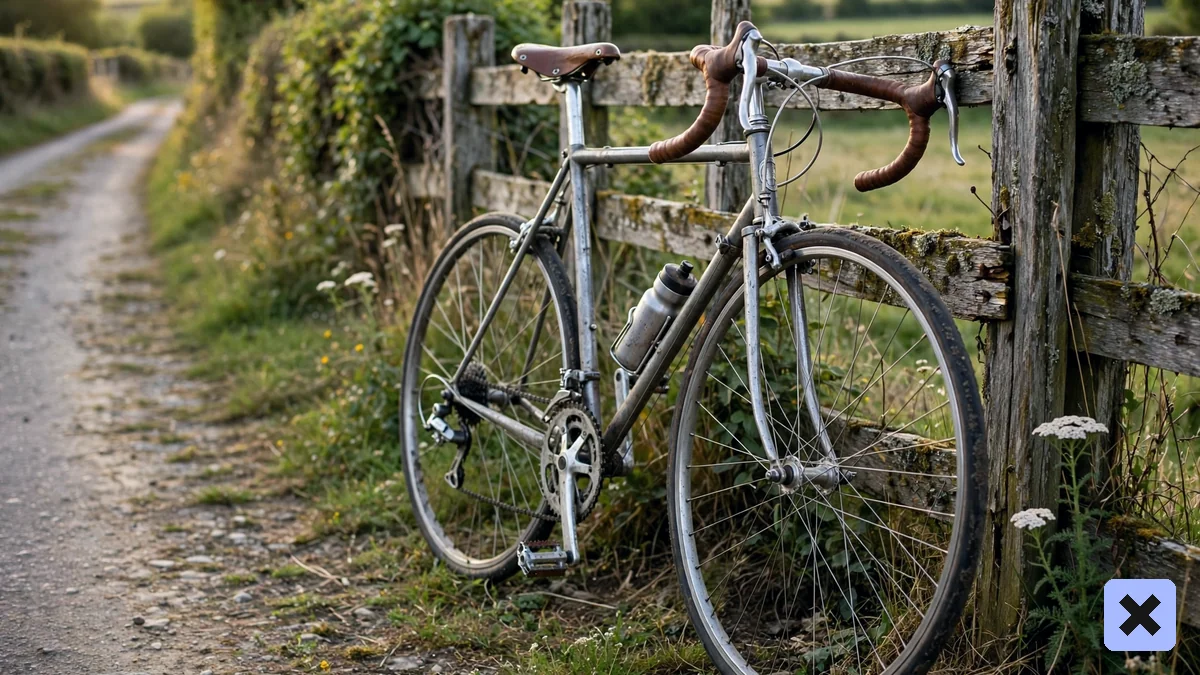
An electric bike can be the best purchase a commuter ever makes, or the most expensive mistake in the garage. The two kinds look almost identical in a shop, yet one will carry you to work every day for years while the other starts cutting out and draining its battery within months. The difference is not the badge on the frame. It is the motor, the battery, the brakes, and the parts you cannot see until they fail.
This guide puts the best e-bikes of 2026 against the worst, side by side, so you can tell them apart before you spend. If you want the winners only, our roundup of the best electric bikes for city commuting covers the strongest city bikes, and the best electric bikes for commuting guide compares nine commuter models. If you are still choosing between two wheels and a platform, our e-bike vs scooter for city commuting comparison settles that question. Here, both sides share one page, because the fastest way to spot a bad bike is to know what a good one does differently.
Key takeaways
- A good e-bike motor feels like stronger legs, not a moped: smooth, quiet, and steady on hills.
- Real-world range is usually about two thirds of the claimed figure, so buy a bigger battery than you think you need.
- Hydraulic disc brakes, a torque sensor, and a removable battery separate good bikes from bad ones.
- The worst e-bikes fail on parts you cannot replace: odd batteries, dead displays, and no dealer support.
- Test ride with the motor off, on a hill, and with a load, because the worst faults only show up under strain.
How an e-bike actually works
An e-bike is an ordinary bicycle with a motor and a battery that assist your pedalling. A sensor measures how hard you press the pedals and tells the motor how much help to give. On most city bikes the motor stops helping at around 25 kilometres per hour, and you still have to pedal. The battery usually sits in the frame and can often be removed so you can charge it indoors.
There are two kinds of motor. A mid-drive motor sits at the cranks, where you pedal, and drives the chain. It feels natural and climbs hills well. A hub motor sits in the centre of a wheel and pushes it directly. It is simpler and cheaper, and a strong one is fine on flat ground, but it can struggle on steep hills. Neither type is automatically good or bad. What matters is the quality of the motor, the sensor, and the battery cells.

The best side: what the best e-bikes get right
The best e-bikes are not the most powerful or the most expensive. They are the ones that work the same way on the hundredth ride as on the first: the motor is smooth, the battery lasts, the brakes stop the bike in the wet, and nothing rattles loose. A good bike disappears underneath you.
A motor that feels like stronger legs, not a moped
The best motors use a torque sensor, which measures how hard you are pedalling and matches it instantly. Push gently and you get a gentle push back. Stand up on a hill and the motor digs in with you. Cheap bikes often use a cadence sensor instead, which only knows whether the pedals are turning. The motor switches on and off in jerks, surges away from traffic lights, and keeps pushing for a second after you stop pedalling. In slow traffic that can be genuinely unnerving.
Power figures tell you less than you might think. A 250-watt motor with 65 Nm of torque or more will climb a loaded hill far better than a motor that claims bigger wattage but only manages 40 Nm. Torque is the pulling force, and it is what you feel when the road rises. The best bikes deliver it smoothly and quietly.
A battery that tells the truth
Battery size is measured in watt-hours. For a daily commute you want at least 400 Wh, with 500 Wh or more if your route is hilly or longer than ten miles each way. But the spec-sheet number is only half the story. A good battery uses quality cells from a known maker and a management system that protects it from overcharging. A bad battery uses cheap cells that lose capacity fast: a bike that once managed forty miles now manages twenty-five within a year.
The best bikes also make the battery easy to live with. It slides out with a key, so you can charge it at your desk, and a spare is available to buy. The display shows a realistic range that changes with the assist level and the terrain. And when the battery eventually wears out, after several years and hundreds of charges, the maker still sells a replacement. That last point matters more than most buyers realise.
Brakes, tyres and lights built for real streets
An e-bike is heavier and faster than an ordinary bicycle, so its brakes work harder. The best bikes use hydraulic disc brakes, which stop the bike firmly with one finger, even in the rain. Mechanical disc brakes are acceptable on a light, flat-route bike, but rim brakes on a heavy e-bike are a warning sign: they fade in the wet and wear the wheel rim. Ask the shop what the brakes are before you ask about the motor, because the brakes are what keep you safe when a car pulls out.
Tyres matter just as much. Wide tyres of 40 mm or more, with a puncture-resistant layer, soak up potholes and shrug off the glass and thorns on city streets. The best commuter bikes arrive with mudguards, integrated lights, a rack, and a kickstand already fitted. These sound like small things until you ride without them: road spray up your back, a dead clip-on light on a dark evening, a laptop in a sweaty backpack.
The worst side: where the worst e-bikes go wrong
The worst e-bikes are not always the cheapest. Some cost as much as a good bike and fail just as fast, because the money went into the paint and the display rather than the motor and the battery. What they share is a pattern: impressive numbers on the spec sheet, disappointing behaviour on the road, and no one willing to fix them when they break.
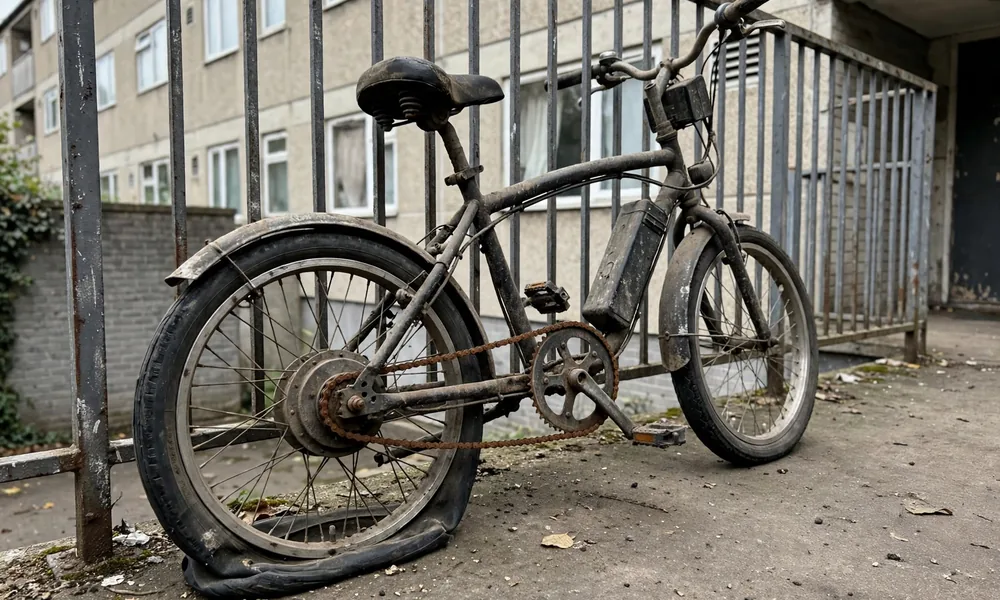
The motor that surges, cuts out or gives up on hills
The most common complaint about bad e-bikes is the motor. It surges forward when you start pedalling, then cuts out for no reason halfway up a hill. Or it fades as the battery drops below half, so the last miles home are the hardest. Or it makes a grinding noise that gets louder every week until one day it stops altogether. These are signs of a cheap motor, a poor controller, or a sensor that cannot keep up with your legs.
A bad motor also wastes the battery. Because it delivers power in jerks rather than smoothly, it draws more current for the same journey, and the range falls far short of the claim. If a test ride shows the range dropping fast, or the motor hesitating when you need it most, walk away. No software update will fix a motor that was never good enough.
The battery that fades in a year
A bad battery does not usually fail all at once. It fades. The first summer it manages the commute with charge to spare. By winter it needs charging every night. By the second year it dies on the way home. Cheap cells and poor battery management are the cause, and they are invisible from the outside. The only clues are a brand you have never heard of, a battery that cannot be removed, and a warranty that covers the frame for years but the battery for only six months.
Worse still, some bad e-bikes use batteries that no one sells any more. The maker has vanished, the importer has moved on, and the battery is a shape no other brand uses. A replacement, if you can find one, costs almost as much as the bike did. Before you buy, search for a replacement battery and a replacement display for the exact model. If neither exists, you are not buying a bike. You are renting one until the first major part fails.
Best vs worst: head to head
Put the two sides next to each other and the pattern is clear. The best e-bike gives smooth, quiet assist from a torque sensor and a motor with at least 65 Nm of pull. The worst gives jerky, noisy assist from a cadence sensor and fades on the first hill. The best bike has a 500 Wh battery from a known cell maker, a removable pack, and a replacement you can still buy in three years. The worst has a small battery from an unknown brand, sealed into the frame, with no spare available anywhere.
The gap shows in the details too. The best bike stops in the wet on hydraulic discs, rolls on wide puncture-resistant tyres, and arrives with lights, mudguards, and a rack fitted. The worst stops slowly on cheap brakes and punctures often on thin tyres. The best bike weighs around 22 kilograms and fits you properly. The worst weighs over 30 kilograms and comes in one size that fits nobody well. None of this is visible in a glossy photograph. All of it is obvious within ten minutes of a real test ride.
The verdict
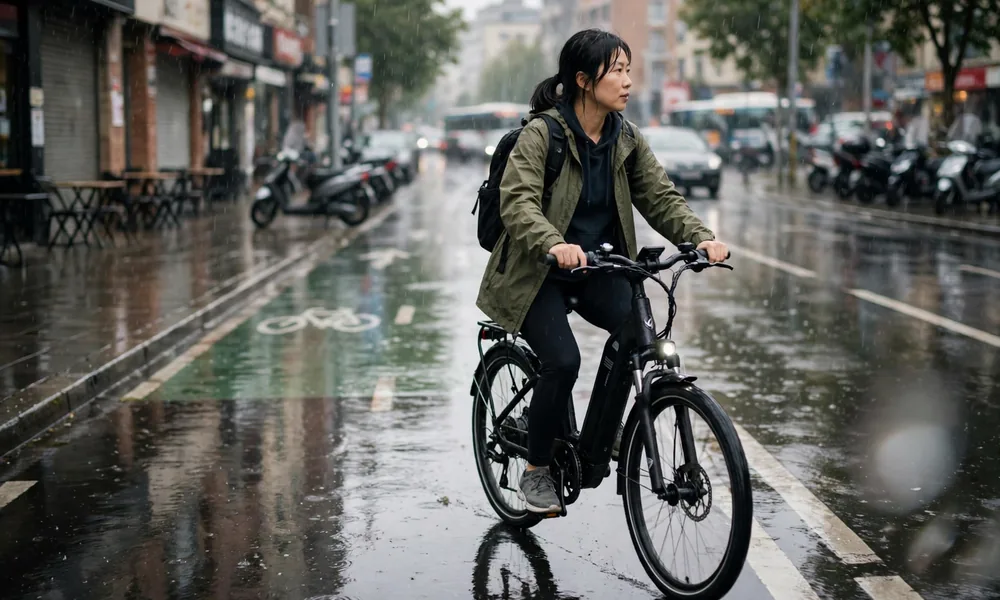
The best e-bikes of 2026 are genuinely good machines. A well-made commuter e-bike will replace car journeys, flatten hills, and make a daily ride something to look forward to. The worst e-bikes are a trap: they look like the good ones, cost nearly as much, and fail in ways that are expensive or impossible to fix. Torque, battery quality, brakes, and dealer support matter far more than top speed or screen size.
If you remember one rule, make it this: buy the bike, not the spec sheet. A test ride on a hill, with the motor off and on, tells you more than any brochure. A shop that services what it sells is worth more than a discount from a seller you will never see again. Spend your money on the motor, the battery, and the brakes, and the rest of the bike will take care of itself.
Who each side is for
The best e-bikes are for anyone who will ride most days: commuters with hills on their route, riders returning to cycling after years away, and anyone who wants to arrive at work fresh rather than sweaty. They suit people who see the bike as transport, not a toy, and who will pay for reliability because they depend on it. Buy the best bike you can afford from a dealer who will service it, and it will pay you back every working day.
The worst e-bikes suit almost nobody, but they do have one honest use: a very cheap bike for very short, flat trips, bought with your eyes open, can still beat walking. If you ride two flat miles to the shops and back, a basic hub-motor bike may be enough, as long as you accept that it will not last long and cannot be repaired easily. For everyone else, the worst side of this market is a false economy. A bad e-bike that you stop riding is an expensive ornament in the hallway, and a good bike would have cost less in the end.
Choose carefully, test ride properly, and buy from someone who will still be there when you need a new brake pad or a replacement battery. The best e-bike is the one you ride every day without thinking about it.