
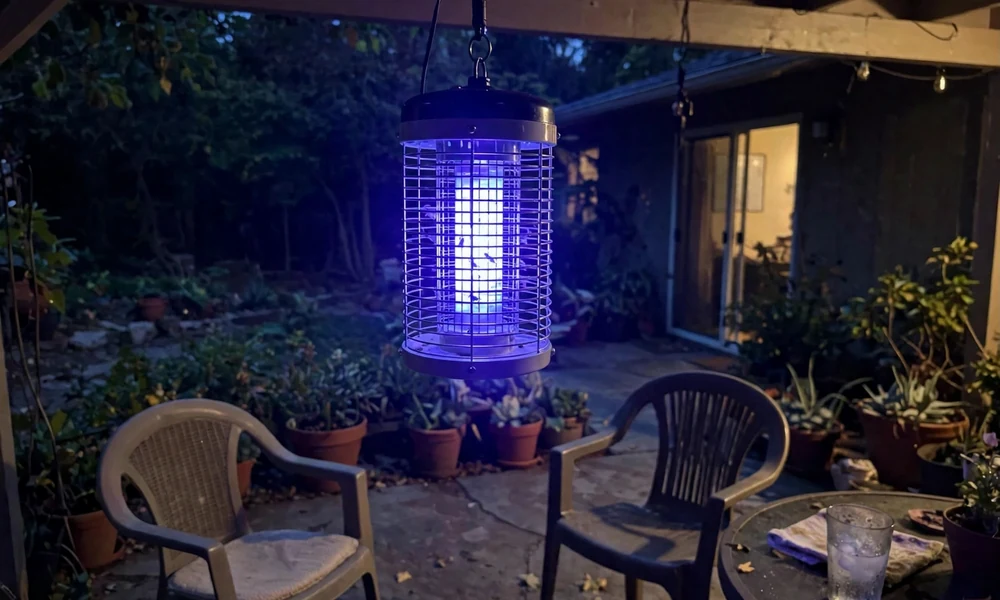
An outdoor bug zapper has one job: to kill the biting insects around a patio, quietly and reliably, all evening. The worst bug zappers for outdoor use of 2026 cannot do it. They kill almost nothing, their grids are too weak to finish a moth, and they die after the first rainy night. The photograph shows a glowing zapper on a quiet patio, no insects in sight. What arrives is a zapper that hums, flickers, and draws in more insects than it kills, while the mosquitoes bite happily a metre away. A bug zapper has to kill bugs and survive outdoors, and a bad one fails at both.
What Makes an Outdoor Bug Zapper Bad
The first thing to understand about a bug zapper is that it works by light. A good zapper uses an ultraviolet bulb that biting insects cannot resist, and a grid strong enough to kill them the moment they touch it. A bad zapper uses a weak bulb that insects ignore, or a grid so feeble that insects bounce off it and fly away. The zapper glows, the owner hears the occasional crackle, and the mosquitoes keep biting. The light is the lure, and the grid is the kill, and a zapper that fails at either one is a lamp with a noise.
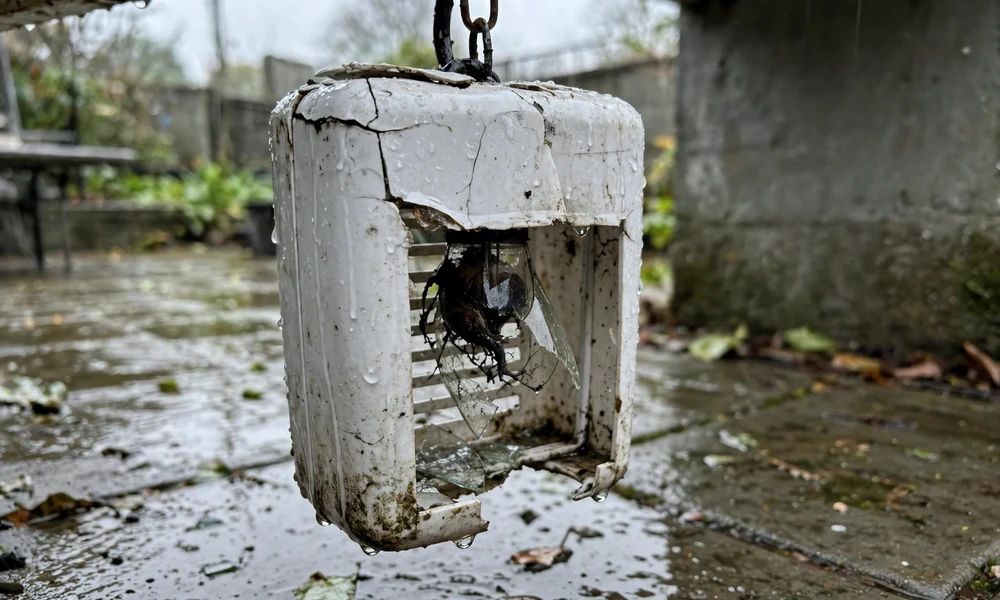
The second problem is that a bug zapper lives outdoors, in rain, wind and dust, and cheap zappers do not survive that life. The worst zappers have no weather sealing at all, so rain gets into the electrics, the bulb blows, and the unit dies after one storm. Others have a tray that fills with dead insects and cannot be emptied, so the zapper stops working within a week. A zapper that cannot survive outdoors is not an outdoor zapper. It is an indoor lamp with an outdoor label, and it earns its place among the worst bug zappers for outdoor use of 2026.
Zappers That Kill Almost Nothing
A zapper that kills nothing is the most common complaint of all, and it is also the most frustrating, because the zapper looks as though it is working. The light glows, the grid hums, and the occasional moth dies with a crackle. But the mosquitoes, the insects that actually bite, are barely affected. The cause is usually the wrong light. Mosquitoes are drawn to carbon dioxide and warmth far more than to ultraviolet light, and a zapper that relies on light alone will catch moths and harmless insects while the mosquitoes feed undisturbed a metre away.
The test is to empty the tray after a night and look at what is inside. A good zapper catches a mix of insects, including the small biting ones. A bad one catches moths and midges and almost no mosquitoes. If you want to know what actually catches mosquitoes, read our guide to the best mosquito traps and notice how the winners use lures and fans, not just light. The worst zappers are the ones that kill everything except the insects that bite, and a summer evening always finds them out.
Grids Too Weak to Finish the Job
A weak grid is the fault that lets insects escape, and the worst zappers all have one. The grid is made of thin wire with a low voltage, so a moth touches it, gets a shock, and flies away stunned but alive. A large insect bridges the grid without dying, and a small insect passes straight through the gaps. The zapper crackles, the owner thinks it is working, and the insects come back an hour later, unharmed. A grid that cannot kill is a grid that does nothing but make a noise.
The test is to watch the zapper for an evening and see whether insects die or escape. A good grid kills on contact, with a single sharp crackle, and the insect falls into the tray. A bad grid crackles weakly, and the insect flies off. Check the voltage on the label too. A good outdoor zapper runs at a high voltage, with a grid that is tight enough to catch small insects. A bad one runs at a low voltage, with wide gaps, and it will never kill reliably. A zapper that cannot kill is not a zapper. It is a light with a sound effect, and the insects know the difference.
Zappers That Die in the Rain
Rain is the fault that kills a cheap zapper fastest, because a zapper is an electrical device that lives outdoors. The worst zappers have no weather sealing at all: rain runs down the cord into the housing, the bulb blows, and the unit trips the power. Some zappers survive one shower and die in the second. Others have a cover that looks waterproof and leaks at the seam, so water pools inside and corrodes the grid. A zapper that dies in the rain is a zapper that will not survive a summer, because a summer has rain in it.
The test is to check the weather rating before you buy. A good outdoor zapper is rated for rain, with a sealed housing, a covered bulb, and a cord that is protected where it enters the unit. A bad one has no rating at all, or a rating that only covers a light shower. Look at the housing too. If the seams are open, if the tray does not fit tightly, or if the cord enters through a bare hole, water will get in. A zapper that cannot survive rain is a zapper that will die in the first storm, and the mosquitoes will be back the next evening.
Cords Too Short and Lights Too Dim
Some bug zappers fail not because of the grid or the rain, but because of the cord and the light. The worst zappers have a cord so short that the unit has to hang beside the door, where it draws insects towards the people instead of away from them. Others have a bulb so dim that insects do not notice it from more than a metre away, so the zapper guards a circle the size of a table and nothing else. A zapper that has to hang beside the door is a zapper that brings the insects to the people, and a zapper with a dim bulb is a zapper that guards nothing.
The test is to hang the zapper where it will actually live and see whether the cord reaches. A good zapper has a long cord, or a socket nearby, so it can hang at the edge of the garden, away from the chairs. A bad one has a cord barely a metre long, and the owner has to run an extension lead across the patio. Check the bulb too. If it is dim, small, or a warm white rather than ultraviolet, insects will ignore it. A zapper that cannot be placed properly and cannot be seen by insects is a zapper that will never work, whatever its price.
Zappers That Attract More Bugs Than They Kill
The strangest fault of a bad bug zapper is that it can make the insect problem worse. A bright ultraviolet light draws insects from across the garden, and if the grid cannot kill them all, the patio ends up with more insects than it had before the zapper was switched on. Moths, midges and beetles arrive in clouds, circle the light, and settle on the table, the food and the people. The zapper kills a few and attracts a hundred, and the evening is worse than it was without it.
The test is to switch the zapper on and watch the patio for an hour. A good zapper is placed at the edge of the garden, away from the chairs, so it draws insects away from the people and kills them there. A bad zapper is placed beside the table, where it draws insects straight to the food. Placement matters more than most buyers think, because a zapper is a lure, and a lure placed in the wrong spot lures insects to the people. If you want a trap that works differently, our guide to the best fly traps shows what a quiet trap does indoors. A zapper that attracts more bugs than it kills is a zapper that has made the problem worse, and the patio deserves better.
How to Spot a Bad Outdoor Bug Zapper Before You Buy It
The best time to spot a bad bug zapper is in the shop, before any money changes hands. Check the bulb. If it is dim, warm white, or small, insects will ignore it. Check the voltage. If it is low, the grid will not kill reliably. Check the weather rating. If there is none, rain will kill the unit. Check the cord. If it is barely a metre long, the zapper will have to hang beside the door. Check the tray. If it cannot be emptied without tools, it will fill up and stop working within a week. Look at the housing. If the seams are open, water will get in.
Then think about the patio it is going onto. A zapper that has to hang beside the table will draw insects to the food, and a zapper that cannot survive rain will die in the first storm. The right zapper has a bright ultraviolet bulb, a high-voltage grid, a sealed housing, a long cord, and a tray that empties easily, and it hangs at the edge of the garden, away from the chairs. Everything else is a lamp with a noise. If you are lighting the whole patio, our guide to the best outdoor lanterns will help you judge the light side of the garden. Get the zapper right, and summer evenings stay pleasant. Get it wrong, and the zapper will hum, the insects will arrive, and the mosquitoes will bite a metre away.
The Verdict on the Worst Bug Zappers for Outdoor
The worst bug zappers for outdoor use of 2026 all fail in the same few ways. They kill almost nothing, their grids are too weak, they die in the rain, or they attract more insects than they kill. They look fine in a photograph and fail on a real patio, and the mosquitoes are the ones who notice first, biting happily a metre from a glowing zapper that cannot kill them. A zapper that cannot kill, cannot survive rain, and cannot be placed properly is not a bug zapper. It is a lamp with a noise, and a noise does not keep mosquitoes away. The good news is that the faults are easy to spot before you buy: check the bulb, the voltage, the weather rating, and the cord. A zapper that passes those four tests will serve a patio all summer. A zapper that fails even one of them will be dead after the first storm, and the mosquitoes will be back the next evening.


