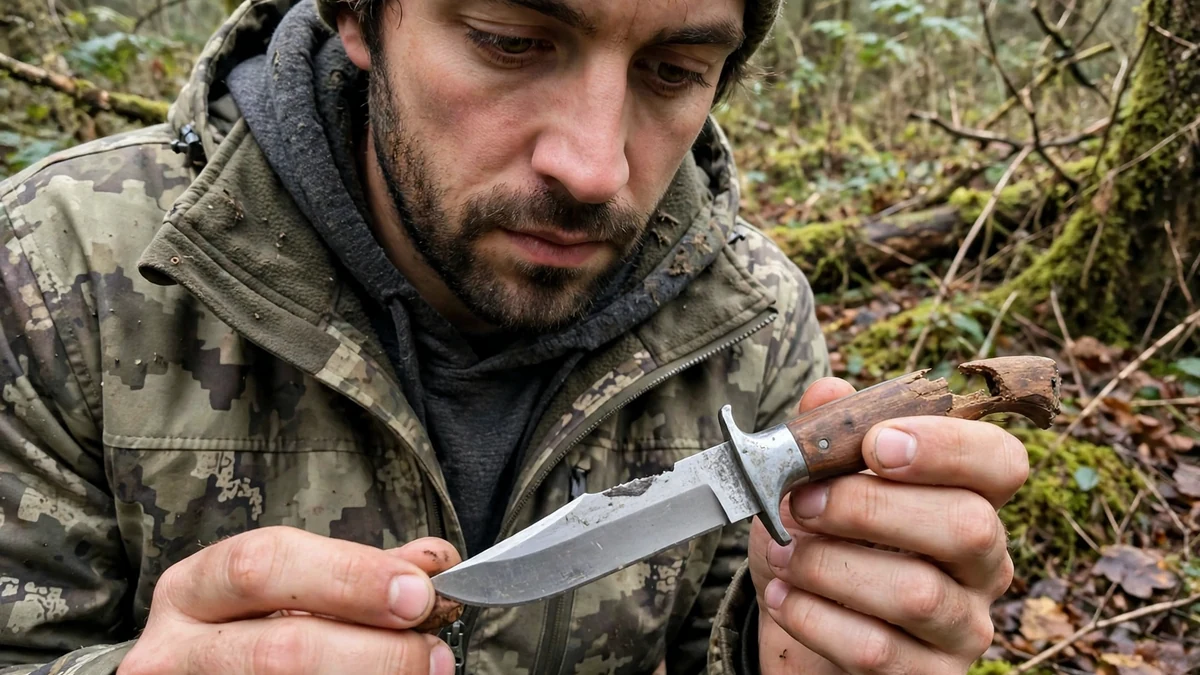
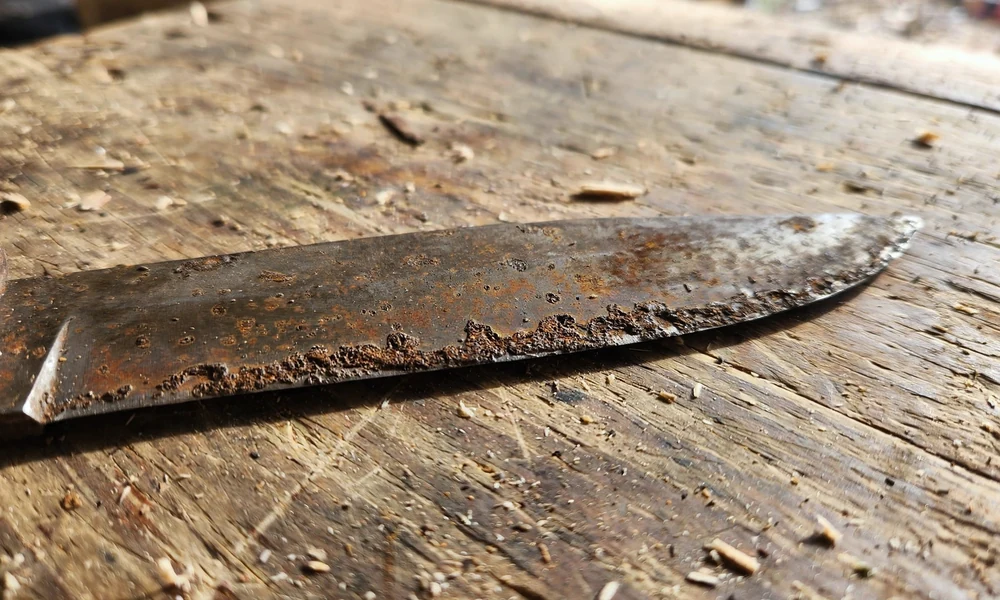
A hunting knife is a working tool, and in the field it is the tool you reach for most: cutting rope, opening packages, dressing game, and shaping a tent peg when the light is going. What nobody tells a first-time buyer is that a bad knife makes every one of those jobs harder, slower, and more dangerous. A good hunting knife holds an edge through a long day, sits steady in a wet hand, and feels like an extension of the arm. A bad one goes blunt on the first cut, slips when it is wet, and rusts in the sheath before the season ends.
What Makes a Hunting Knife Bad
A hunting knife has one job above all others: it must cut cleanly, and keep cutting. A blade that goes dull after a few cuts is not a knife but a piece of shaped metal, and it forces the user to push harder with every stroke. Pushing harder is how accidents happen, because a dull blade slips off the material instead of biting into it, and the hand behind it keeps moving. Cheap knives are often made from soft stainless steel that sharpens easily and loses its edge just as easily, or from mystery metal that will not take an edge at all, no matter how long you work it on a stone.
The second problem is the handle, which is where a bad knife becomes a dangerous one. A good handle is shaped to the hand, textured enough to grip when wet, and fixed to the blade so solidly that it never moves. A bad handle is smooth plastic that turns to soap the moment it gets wet, or a piece of varnished wood that is pretty in the shop and useless in the rain. The worst handles are held on with a single small pin, or with glue alone, and they loosen within a season. A loose handle wobbles with every cut, and a wobbling handle means the blade goes where it wants, not where the hand wants.
The Main Types of Hunting Knife, and Where They Go Wrong
Fixed-blade knives are the usual first recommendation, and they are the hardest to get badly wrong, which is exactly why the bad ones stand out. A good fixed blade has a full tang, which means the steel runs the whole length of the handle, and the handle scales are pinned and glued so firmly that the knife feels like one solid piece. A bad one has a rat-tail tang, a thin spike of steel hidden inside the handle, and the joint between blade and handle is the weak point. The first time the knife is used to pry or twist, the tang bends or snaps, and the blade comes away in the hand.
Folding hunting knives are sold as the practical option, a blade that rides safely in a pocket until it is needed. A good one locks open with a solid click, and the lock holds through hard cutting without the slightest give. A bad one has a lock that wears out, a blade that wobbles side to side when open, and a spring so weak that the blade can fold back onto the fingers. Because the lock is hidden inside the handle, the buyer cannot see it wearing out, and the first sign of trouble is the blade closing on a fingertip. The blade is usually shorter than a fixed blade, which is fine, but the handle is often too slim to grip properly, and the whole knife feels like a toy.
Gut-hook and skinning knives are the third common type, and they split sharply between decent ones and dreadful ones. A good skinning knife has a wide, curved blade that sweeps cleanly under a hide, and a gut hook that is sharp enough to open a belly without nicking what lies beneath. A bad one has a hook that is dull from the factory and cannot be sharpened, because the curve is too tight for a stone to reach. The blade is often made from the same soft steel as the cheapest fixed blades, so it dulls halfway through the first animal, and the handle is shaped for display rather than for a long, careful cut.
How to Spot a Bad Knife Before You Buy
Start with the steel, because everything else follows from it. Look at the blade in good light: it should be even, with a clean grind and an edge that catches the light in a single straight line. If the edge wavers, or the grind is uneven, walk away. Check the maker’s mark and the steel type, and be suspicious of any knife that does not say what steel it is made from. A known steel with a known hardness is a promise; a blank blade with no markings is a secret, and secrets are rarely good news. Run a thumbnail gently across the edge: a sharp edge bites slightly and feels even all the way along, while a dull one slides smoothly and a chipped one catches in places.

Next, check the handle, because it is where cheap knives cut corners. Grip the knife firmly and twist it gently in your hand: the handle should feel like part of the blade, with no movement at all. Look at the pins and the joint between the scales and the tang: they should be flush, even, and free of gaps. If you can see a gap, or feel the scales move, the knife will only get worse. Then check the sheath, which should hold the knife firmly without rattling, and release it with a clean pull rather than a fight. A sheath that is too loose will drop the knife on the trail, and one that is too tight will force the owner to wrestle the blade out with a hand near the edge.
The Most Common Faults, One by One
Soft steel is the fault buyers notice first, and it is also the hardest to fix after purchase. A blade that will not hold an edge cannot be cured by a better stone or a different technique, because the problem is the metal itself. The owner sharpens the knife, uses it for ten minutes, and finds it dull again, and the cycle repeats until the blade is ground down to nothing. Soft steel also rolls and chips instead of wearing evenly, so the edge ends up wavy and ragged.
A loose handle comes next, and it is the fault that causes the most injuries. A handle that moves even slightly changes the angle of the blade with every cut, and the hand compensates without thinking, which is exactly how a blade slips. The loosening is often invisible at first, a tiny bit of play that only shows when the knife is wet or cold. Cheap knives use a single pin or a dab of glue to hold the scales, and both give up within a season of real use. A handle that can be wiggled by hand is already dangerous, and it should be retired at once.
A bad sheath is the fault that ruins the most trips, because it turns carrying the knife into a problem. A sheath that does not hold the knife will drop it on the trail, and a lost knife is worse than a dull one. A sheath that holds it too tightly forces the owner to pull hard, and a hard pull with a sharp blade near the hand is an accident waiting for a moment of inattention. The cheapest sheaths are thin plastic or floppy nylon with a single snap, and the snap is usually the first thing to fail. A good sheath is stiff, holds the knife with a firm click, and lets it go with a smooth draw.
Who Gets Hurt Most by a Bad Knife
New hunters suffer most, because a bad knife confirms every doubt they brought to the field. A person who is already unsure about dressing game does not need a blade that goes dull halfway through, and a person who is already nervous about a sharp edge does not need a handle that slips when wet. The result is often a single bad trip followed by a knife that sits in a drawer for years, and a person who decides hunting is not for them, when the truth is that the knife was not for anyone.

Budget buyers are the next group a bad knife punishes, because the cheapest blades are designed to look like a bargain and cut like a chore. The knife, sheath, and sharpener are bundled together at a price that seems too good to pass up, and each part is the cheapest version the maker could find. The steel is the usual weak link, but the handle is not far behind, and the sheath is often an afterthought that fails within weeks. Anyone buying their first knife should spend the money on the blade first, because a good blade with a plain handle will always out-cut a bad blade with a fancy one.
What to Buy Instead
The fix is to buy for steel and build quality first, and worry about looks later. A known stainless or carbon steel, properly hardened, will hold an edge through a long day and sharpen again without complaint. A full tang with pinned and glued scales is worth paying for, because it keeps the blade and handle moving as one piece. A handle shaped to the hand, with texture that grips when wet, is not a luxury; it is the difference between a safe cut and a slipped one.
If the budget is tight, a good used knife from a known maker is almost always a better buy than a new cheap one, because a well-made blade holds its edge for years while a cheap one is tired after one season. Check a used knife the same way you would check a new one: sight down the edge, grip the handle hard, and test the sheath. The right guide helps here too, and our look at the best pocket knives of 2026 covers the blades that get the basics right, from steel to handle, so the first trip feels like the start of a skill rather than a test of nerve.
The Bottom Line
The worst hunting knives of 2026 share the same faults: steel that will not hold an edge, handles that loosen and slip, and sheaths that fail. They are easy to spot once you know what to look for, and they are easy to avoid. Check the steel, grip the handle hard, and test the sheath before you pay. The same thinking applies to the rest of the kit: the other blades and the sharpening gear matter just as much, which is why our guides to the best camping knives of 2026 and the best knife sharpeners of 2026 start from the same advice, check the steel, check the build, and never trust a blade you have not held.