A child’s telescope should be simple enough to set up alone, light enough to carry outside, and good enough to show the Moon in sharp detail on the very first night. The worst telescopes for kids in 2026 fail at it in ways that leave a child staring at a blur, struggling with a wobbling tripod, or waiting for an adult to do everything. They are too tall, too heavy, too fiddly, or too fragile for the child they were sold to. Parents buy them hoping to spark a love of the night sky. What they get is a telescope that wobbles, a telescope that shows nothing, or a telescope that puts a child off astronomy altogether.
Too Tall and Heavy to Carry Alone
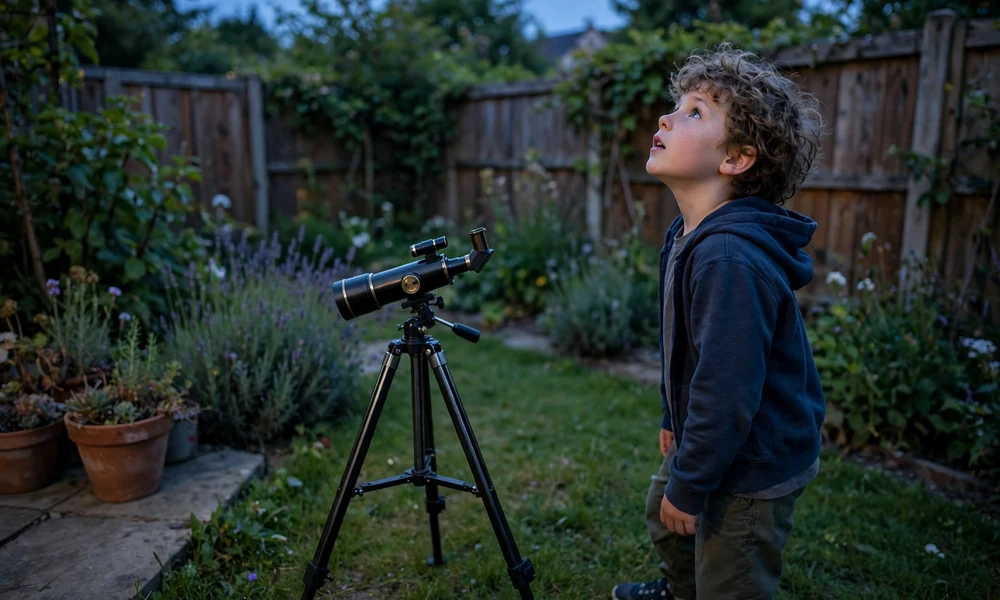
A child’s telescope has to be carried outside by the child, and the worst ones are far too tall and heavy for that. A full-size tripod with a long tube weighs more than the child can lift, so the telescope stays in the cupboard unless an adult carries it, and a child who cannot set up their own telescope is a child who does not own it. The height is just as bad: a tripod that only works at adult eye level means the child has to stand on a chair to look through the eyepiece, which is unsafe and uncomfortable. A telescope that a child cannot carry and cannot reach is a telescope that will never be used, however good the optics are.
Look for a telescope a child can carry in one trip, with a short tube and a low mount they can reach while standing on the ground. A tabletop telescope is often the best choice for a younger child, because it sits on a garden table or a sturdy stool and needs no tripod at all. Let the child carry the telescope outside in the shop, or at least lift it, and check that they can reach the eyepiece comfortably. A telescope a child can set up alone is a telescope they will use, and a telescope that needs an adult every time is a telescope that will stay indoors.
Finders a Child Cannot Use
A telescope is pointed with a finder, and the worst finders are impossible for a child to use. A tiny finder scope with a narrow view needs careful alignment before it works at all, and a child who has to align a finder scope before they can see anything will give up before they start. The problem is worst on cheap telescopes, where the finder is a small plastic tube with a crosshair that is never lined up, so the child points the telescope at the sky and sees nothing. A finder that does not work is a finder that makes the telescope useless, because a child cannot aim at something they cannot find, and the Moon is a small target in a big sky.
Look for a telescope with a red-dot finder, which projects a small red dot onto the sky and lets the child point at the Moon by simply putting the dot on it. A red-dot finder needs no alignment, no peering through a tiny tube, and no patience, which is exactly what a child needs. Check that the finder is included and that it works, because some cheap telescopes ship with a finder that is decorative rather than useful. A finder a child can use is a finder that gets them looking at the Moon in minutes, and a finder they cannot use is a finder that will end the evening before it starts.
Eyepieces Too Small for Small Eyes
A child looks through an eyepiece with small eyes, and the worst eyepieces make it hard work. A tiny eyepiece with a narrow opening forces the child to hold their eye in exactly the right spot, and the smallest movement loses the view, so the child spends the evening chasing the Moon around the eyepiece instead of looking at it. The problem is worst on cheap telescopes, where the eyepieces are small, uncomfortable, and made of hard plastic, and where the highest-power eyepiece is the one the box shouts about, even though it is the hardest to use. An eyepiece that a child cannot look through comfortably is an eyepiece that will put them off, however good the telescope is.
Look for a telescope with two eyepieces: a low-power one, around 25 millimetres, which gives a wide, bright view that makes finding the Moon easy, and a higher-power one for a closer look. The low-power eyepiece is the one the child will use most, so it should be comfortable, with a reasonable eye relief and a smooth rim. Avoid telescopes that boast about a high-power eyepiece, because high power makes the view dimmer, shakier, and harder to find. An eyepiece a child can look through easily is an eyepiece that shows them the Moon, and an eyepiece they cannot is one that will frustrate them.
Mounts That Wobble
A telescope is only as good as the mount underneath it, and the worst mounts wobble so much that the view never settles. A thin plastic tripod shakes for seconds after every touch, so the Moon jumps out of the eyepiece every time the child adjusts the focus, and the child learns that touching the telescope ruins the view. The problem is worst on cheap telescopes, where the mount is an afterthought: thin legs, plastic joints, and a head that will not lock, so the tube drifts and sags while the child is looking. A mount that wobbles is a mount that makes the telescope unusable, because astronomy is about a steady view, and a steady view needs a steady mount.
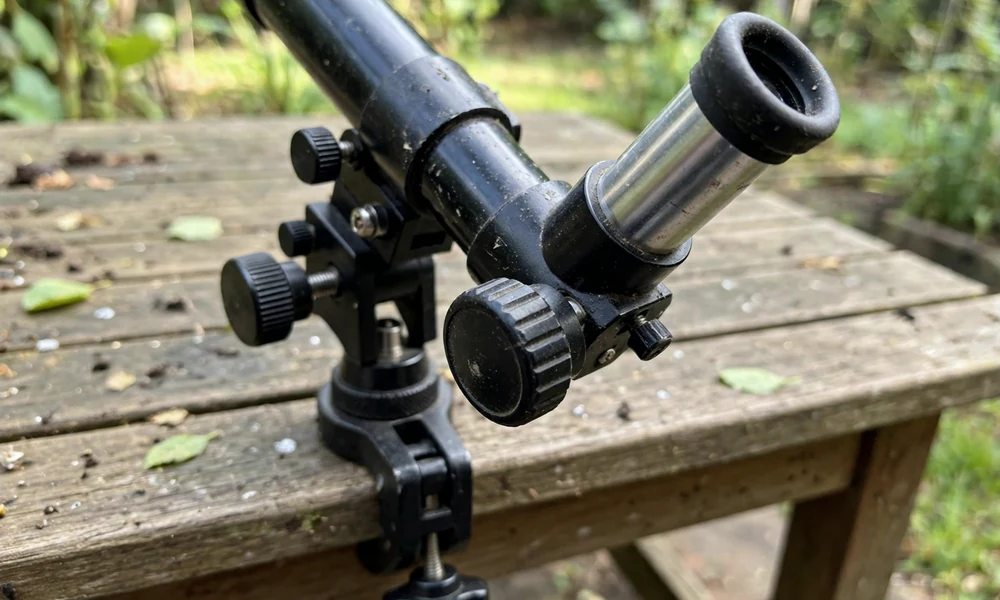
Check the mount before you buy: push the tube gently and watch how long the shake lasts, because a good mount settles within a second or two and a bad one shakes for much longer. Look for a mount that moves smoothly by hand, with no stiff knobs or sticky joints, and a tripod with legs that lock firmly. A tabletop telescope avoids the problem altogether, because its short tube sits on a solid base with a low centre of gravity. A mount that holds still is a mount that lets a child see the Moon, and a mount that wobbles is a mount that will end the evening. For the wider picture, our comparison of the best and worst telescopes of 2026 explains the same mount and optics lessons for grown-up telescopes.
Setup That Needs an Adult
A child’s telescope should be ready in minutes, and the worst ones need an adult, tools, and half an hour. A telescope with a dozen small parts, a fiddly assembly, and instructions that only an adult can follow will not be set up by a child, and a child who has to wait for an adult to build the telescope is a child who loses interest before the first night. The problem is worst on telescopes sold as kits, where the assembly is part of the fun for an adult and a barrier for a child, and where the telescope that is finally assembled is never taken apart again, so it lives in a corner gathering dust. A telescope that needs an adult to set up is a telescope that belongs to the adult, not the child.
Look for a telescope that is ready out of the box, with no tools needed and no assembly beyond unfolding the legs or setting it on a table. Let the child set it up in the shop, or at least watch how quickly it goes together, because a telescope that takes a minute to set up will be used every clear night, and one that takes half an hour will be used once. Keep the evenings short and shared, and stop while it is still fun, because a child who enjoys the first night will come back for the second. A telescope a child can set up alone is a telescope they own, and a telescope that needs an adult is one they will never love.
Plastic That Breaks on the First Knock
A child’s telescope will be knocked over, and the worst ones break the first time it happens. A tube made of thin plastic cracks, a focuser made of loose plastic strips its thread, and a tripod leg snaps, so the telescope that was fine yesterday is broken today. The problem is worst on the cheapest telescopes, where every part is plastic, the mirror coating flakes, and the mount head cracks under the weight of the tube. A telescope that breaks on the first knock is a telescope that was never made for a child, because children drop things, and a telescope that cannot survive being dropped is a telescope that will not survive childhood.
Look for a telescope with a metal tube or a sturdy plastic one, a focuser that moves smoothly and feels solid, and a mount that holds the tube firmly without flexing. Check that the parts fit together properly, with no wobble and no force needed, and that the telescope feels solid in the hands. A good kids telescope survives being knocked over on grass and bumped against a garden table, because it was built for the way children actually use things. A telescope that survives a knock is a telescope that keeps working, and a telescope that breaks is one that will end up in a cupboard. If the daytime sky is the next interest, our guide to the binoculars that make birdwatching worth it covers the binoculars that suit a young watcher in daylight.

What to Buy Instead
The telescopes for kids worth buying share a short list of features, and none of them is expensive on its own. A short tube a child can carry, with a low mount they can reach while standing on the ground. A red-dot finder they can use without alignment, two eyepieces with a low-power one for finding the Moon, and a mount that settles within a second. A telescope that is ready out of the box, with solid parts that survive a knock. If a telescope fails any one of those checks, keep looking.
Fit matters as much as build, and the telescope should suit the child in front of you rather than the child in the photograph. Let the child carry it, set it up, and look through it before you buy, and start with the Moon, because it is bright, easy to find, and spectacular through even a small telescope. A telescope that fits the child is one they will use on every clear night, and one that fights them will be left in a cupboard. If the whole family is starting out, our guide to the best telescopes for beginners of 2026 covers the telescopes that suit a beginner of any age.
The Bottom Line
The worst telescopes for kids in 2026 share a pattern: too tall and heavy to carry alone, finders a child cannot use, eyepieces too small for small eyes, mounts that wobble, setup that needs an adult, and plastic that breaks on the first knock. Avoid those six failures and you avoid almost every kids-telescope regret. Let the child carry it, set it up, and find the Moon alone. Do that, and the telescope you buy will be the one that opens the night sky, not the one that puts a child off astronomy altogether.